

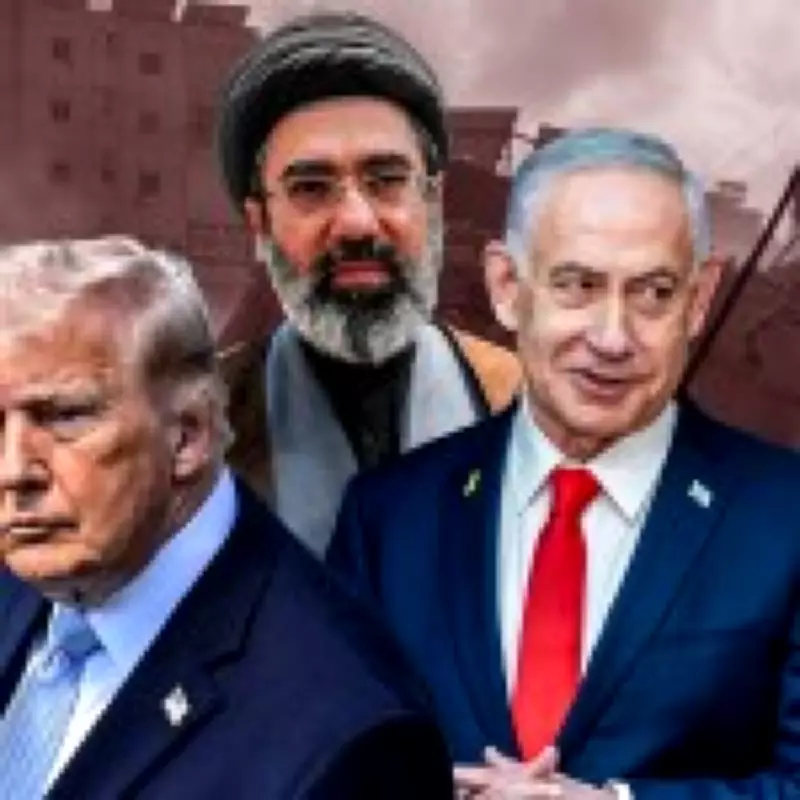
US-Iran Ceasefire Shows Cracks as Regional Tensions Escalate
The United States and Iran have declared a fragile ceasefire, but the agreement is immediately facing significant challenges, raising doubts about its durability. Both nations claimed victory after reaching the tentative truce, yet drone and missile attacks continued to target Iran and Gulf Arab countries shortly after the announcement. This development underscores the precarious nature of the deal, which aims to de-escalate ongoing conflicts in the Middle East.
Key Issues Threatening the Ceasefire
Critical unresolved matters include the scope of the truce, Iran's rights to nuclear enrichment and ballistic missiles, and access to the vital Strait of Hormuz. The US president had threatened to end an 'entire civilisation' if Iran did not reopen the strait, leading to the ceasefire. However, Iran appears to have closed the waterway again, contradicting US claims that it was reopened as part of the agreement. Dr Katayoun Shahandeh from SOAS, University of London, emphasized the fragility of the ceasefire, stating it may hold only briefly as all sides pause, but it lacks stability.
Israeli Strikes in Lebanon Complicate the Situation
A major point of contention is the continued Israeli military action in Lebanon. Israel has intensified attacks, resulting in at least 182 deaths in a single day, according to Lebanon's health ministry. This raises questions about whether Lebanon is covered by the ceasefire, with Dr Shahandeh noting conflicting messages that could quickly unravel the deal. She highlighted a growing divergence between US and Israeli objectives, with Washington framing the ceasefire as a victory while Israel pursues a continued military campaign.

Potential Consequences if the Ceasefire Fails
If the ceasefire breaks down, the US is likely to escalate strikes and potentially deploy troops in Iran. Dr Shahandeh explained that President Trump has warned of renewed military action if Iran does not comply, focusing on coercive pressure over the Strait of Hormuz. Iran, despite sustaining damage, retains control over the strait and could resume missile and drone attacks. Israel, described as the least patient actor by Dr Bamo Nouri of the University of West London, is poised to resume high-intensity operations if it feels constrained by the ceasefire.
Divergent Interpretations and Future Prospects
The ceasefire is undermined by differing interpretations among the US, Iran, and Israel. The US emphasizes limiting Iran's nuclear activity and securing maritime stability, while Iran insists on its enrichment rights and links the deal to broader regional conditions, including Israeli operations in Lebanon. For the ceasefire to hold, Dr Shahandeh outlined three necessities: clear written terms covering geography and violations, a de-escalation mechanism for the Strait of Hormuz, and transforming the ceasefire into a political process rather than just a pause in hostilities. Without these, the agreement risks becoming a short-lived interval before renewed escalation.






