Heightened Terror Threat Emerges Amid US-Iran Military Conflict
Security experts are sounding alarms that the ongoing military campaign against Iran by the United States and Israel has dramatically increased the likelihood of terrorist attacks on American soil. According to counter-terrorism specialists, the current threat level represents the most significant danger since the devastating al-Qaida assaults of September 11, 2001.
Recent Attacks Highlight Escalating Dangers
Two separate incidents on Thursday demonstrated the immediate risks facing the nation. In Virginia, a gunman shouting "Allahu Akbar" opened fire in a classroom at Old Dominion University, killing one person and wounding two others. The shooter was identified as a former national guardsman who had previously admitted attempting to provide material support to the Islamic State.
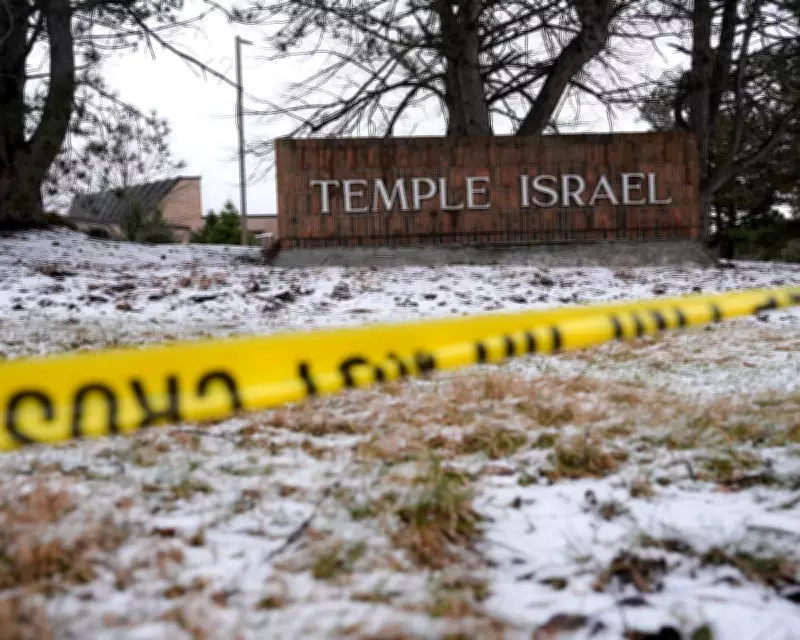
Meanwhile, in Michigan, a Lebanese-born American citizen drove a truck into the Temple Israel synagogue in West Bloomfield Township before being fatally shot by security guards. The attacker, Ayman Mohamad Ghazali, had lost family members in an Israeli raid on Lebanon earlier this month.

These events followed another deadly attack on March 1st in Austin, Texas, where a man wearing clothing with Iranian flag designs shot two people dead and wounded fourteen others before police fatally shot him.
Iran's Response and Capabilities
While direct evidence linking these incidents to Iran remains elusive, analysts emphasize that "asymmetric" attacks ordered or inspired by Tehran represent a genuine and present danger. Matthew Levitt, a counter-terrorism specialist at the Washington Institute for Near East Policy, noted that threats from Iran were escalating even before the current military campaign began on February 28th.
"The fact that many of the plots do not seem particularly capable doesn't mean that they won't ultimately succeed," Levitt argued. "We need to get it right every time, they need to get it right once."
Iran is believed to have plotted against several high-profile American figures, including former President Donald Trump and senior officials from his administration. The regime has demonstrated both the willingness and capability to target individuals on American soil, as evidenced by recent convictions in New York courts.
Security Readiness Concerns
Compounding the threat is what experts describe as significant instability within key security agencies. The FBI and Department of Homeland Security face challenges that have left the United States potentially underprepared for escalating threats.
Colin Clarke, executive director of the Soufan Center, expressed serious concerns about readiness: "We've shifted longtime terrorism experts to other portfolios, like China, Russia, emerging tech. This is ramping up at the same time that we're the least prepared to deal with it."
John Donohue, a former assistant head of intelligence in the New York Police Department, highlighted the strategic nature of Iranian operations: "If you look at the history of the attempts of the Iranian regime against American interests, you don't see small, limited types of events. They're looking for mass-casualty assets."
Political Implications and Election Year Dynamics
The timing of these developments carries significant political weight during an election year. Some observers suggest that a terrorist attack could potentially benefit certain political interests by providing justification for extraordinary security measures.
Historian Timothy Snyder warned that provoking a terrorist attack might even serve as strategic reasoning behind military actions: "A purpose of the war on Iran might well be to provoke a terrorist attack inside the United States. This would provide Donald Trump with a pretext to try to cancel or 'federalize' the coming congressional elections."
Steven Cash, executive director of the Steady State, echoed these concerns: "Of course there's going to be retaliation – it's a rational response on their part. It may be that this is what Trump's interested in."

Long-Term Security Implications
Experts warn that the threat environment will likely persist even after military operations conclude. Levitt emphasized the enduring nature of the danger: "Once the war ends, the threat is maybe not as immediately acute, but it'll hang over us. There'll be a tail to this because from the Iranian perspective, all kinds of lines have been crossed."
The combination of heightened threat levels, potential security agency shortcomings, and political dynamics creates what analysts describe as a perfect storm of vulnerability. As the conflict continues to evolve, security professionals remain vigilant against what they characterize as the most significant domestic terror threat in over two decades.