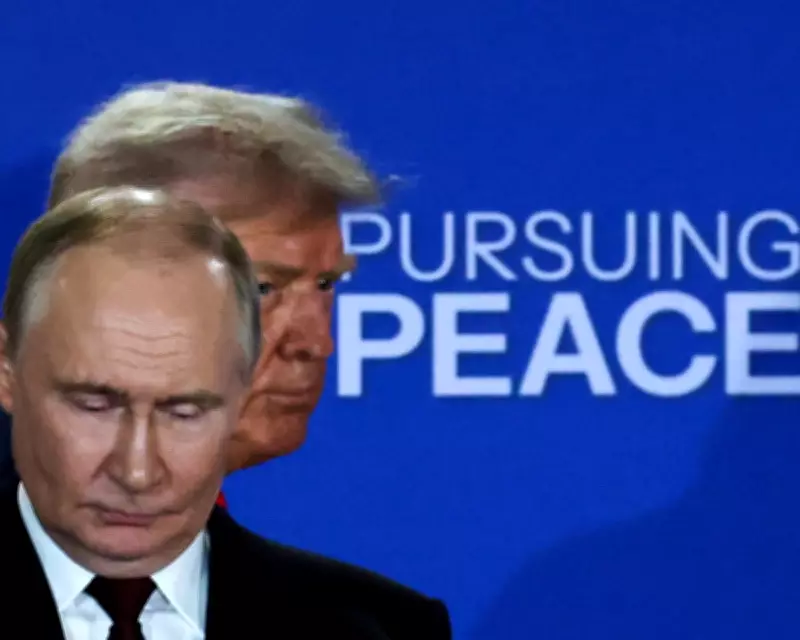
Parallels Emerge: US-Israel Iran Campaign Echoes Russia's Ukraine Invasion
The US-Israel military campaign against Iran exhibits curious and unsettling parallels with Vladimir Putin's full-scale invasion of Ukraine, according to recent analysis. Both conflicts feature shifting objectives, dubious legal justifications, and a notable reluctance by leaders to explicitly term their actions as war, highlighting broader strategic patterns in modern warfare.
Shifting Goals and Dubious Pretexts
In both campaigns, the stated aims have evolved significantly over time. Initially, US officials framed airstrikes against Iran as a defensive measure to prevent nuclear proliferation and degrade missile capabilities. However, goals have increasingly become maximalist, with former President Donald Trump openly advocating for regime change in Tehran and demanding unconditional surrender. Similarly, Putin's invasion of Ukraine began with claims of demilitarization and denazification, interpreted as a push for regime change, before shifting focus to protecting Russian speakers and annexing territories. Scholars note that the legal justifications for both actions are largely nonexistent, raising questions about international norms.
Defensive Framing and Language Parallels
The language used by both sides reveals striking similarities. US Defense Secretary Pete Hegseth recently asserted that the United States did not start the war with Iran but is finishing it under Trump's leadership. Putin employed almost identical phrasing in 2022, stating Russia did not initiate the conflict in Ukraine but aimed to conclude it. Both leaders have portrayed their campaigns as defensive, citing dubious claims of imminent threats, despite evidence suggesting otherwise. This rhetorical strategy serves to legitimize aggressive actions in the eyes of domestic and international audiences.

Reluctance to Acknowledge War and Elite Reactions
A curious aspect of both conflicts is the reluctance to label them as wars. Putin insists on calling the Ukraine invasion a special military operation, enforced through strict censorship laws. In the US, House Speaker Mike Johnson described actions against Iran as a limited operation, avoiding the term war. This semantic avoidance suggests an expectation of brief conflicts, though reality has proven otherwise. The political and media elites in both countries have shown parallels in their reactions, with initial horror giving way to alignment behind the war effort. For instance, former US Ambassador Michael McFaul, a critic of Trump, expressed support for US military success in Iran despite disagreements, mirroring the consolidation seen in Russia.
Risks of Escalation and Strategic Pitfalls
The US campaign now faces risks similar to those that ensnared Russia in Ukraine. Reports indicate Trump has considered deploying elite troops to secure Iran's enriched uranium, reminiscent of Russia's failed airborne operation near Kyiv early in the invasion. Experts like Danny Citrinowicz warn that overly ambitious goals can lead to protracted wars of attrition. He emphasizes the need for clear, realistic objectives to avoid this outcome. Retired Russian diplomat Vladimir Frolov's dry response, Sounds familiar, underscores the eerie parallels. As the conflict continues, the question remains whether the US can learn from Russia's mistakes or if more similarities will emerge, shaping the future of international conflicts.