US and Israel Launch Coordinated Military Strikes Against Iran
The United States and Israel have initiated coordinated military strikes against Iran, with former President Donald Trump announcing that the US operation is "massive and ongoing." This significant escalation in Middle East tensions follows the collapse of nuclear talks and aims to address what both nations describe as imminent threats from the Iranian regime.
Trump Announces 'Massive and Ongoing' US Operation
In a video statement released on social media, Donald Trump declared that the US has launched "major combat operations" in Iran. The objective, according to Trump, is to eliminate "imminent threats" posed by the Iranian government. He emphasized that the operation involves "overwhelming strength and devastating force" to destroy Iranian missile capabilities and prevent the development of nuclear weapons.
"The hour of your freedom is at hand," Trump told Iranian citizens, urging them to "take over your government" once the military actions conclude. This call for regime change underscores the broader political goals behind the strikes.

Israeli Strikes Aim to 'Remove Existential Threat'
Israeli Prime Minister Benjamin Netanyahu stated that the attacks are designed to "remove the existential threat" posed by the Iranian regime. He echoed Trump's sentiments by encouraging the Iranian people to overthrow their government. Shortly before the US announcement, Israel confirmed it had launched "preventative" strikes on Iran.
The Israel Defense Forces reported that Iran responded with a "barrage of missiles," and Israeli forces are actively working to intercept them. In response to the escalating conflict, Israel has closed its airspace as a precautionary measure.
Explosions and Smoke Reported in Tehran and Other Cities
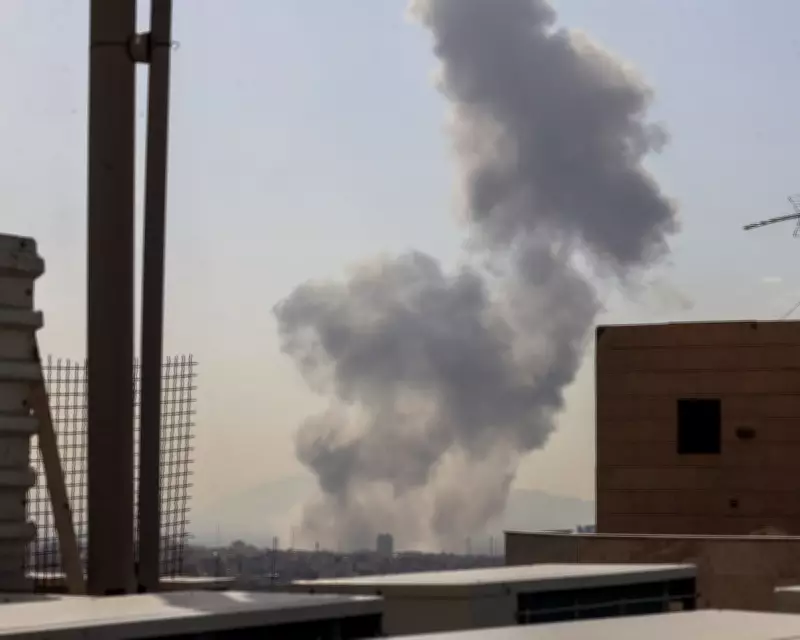
Explosions were heard in Tehran, Iran's capital, where plumes of smoke were visible rising over the skyline. Similar incidents were reported in several other Iranian cities, indicating widespread military activity. Iran has also closed its airspace in response to the attacks.
An official told Reuters that Iran's supreme leader, Ayatollah Ali Khamenei, is not in Tehran and has been relocated to a secure location, highlighting the regime's preparations for potential escalation.
Background: Failed Nuclear Talks and Rising Tensions
The strikes come after talks between the US and Iran regarding Tehran's nuclear program ended inconclusively on Friday. Although further discussions were tentatively scheduled for next week, Trump expressed dissatisfaction with the progress, stating he was "not happy" with the negotiations.
This military action represents a dramatic shift from diplomatic efforts to direct confrontation, reflecting heightened tensions in the region. The coordinated nature of the US and Israeli strikes suggests a strategic alliance aimed at curbing Iranian influence and capabilities.