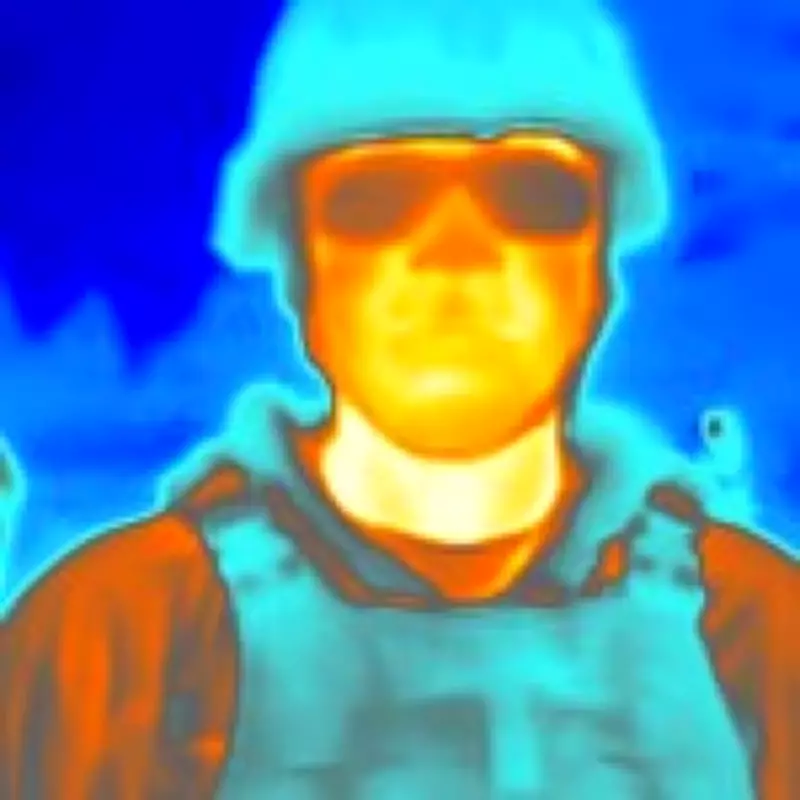
The concept of an invisibility cloak, once relegated to the realms of science fiction and fantasy literature, is rapidly transitioning into a tangible and potentially game-changing asset for modern military operations. The United States Marine Corps has officially initiated a procurement search for advanced camouflage technology specifically engineered to render troops undetectable to thermal-imaging systems, a critical vulnerability on contemporary battlefields.
The Thermal Detection Challenge
Traditional camouflage patterns and materials, effective against visual identification, are now largely obsolete in the face of pervasive thermal sensor technology. These infrared systems can pinpoint human combatants and military vehicles solely based on their heat signatures, rendering conventional concealment tactics ineffective. The urgency of this technological gap has been starkly illustrated by the conflict in Ukraine, where drones equipped with thermal imaging capabilities have been deployed with devastating accuracy against Russian forces.
The US military has taken explicit note of these battlefield developments. In a formal 'sources sought' notification published recently, the Marine Corps detailed its requirement for a 'Multispectral Camouflage Overgarment.' This specialized cloak is intended to operate across multiple spectral bands, mitigating detection not only in the visual and near-infrared ranges but crucially suppressing thermal signatures in the mid-wave and long-wave infrared spectra to evade thermal sensors.

Specifications and Strategic Vision
The desired garment is envisioned as a single-piece, generously sized draped design capable of providing full-body coverage, including a soldier's individual gear and equipment. Key performance requirements mandate that the cloak can be donned within 15 seconds and remain functional under extreme temperature conditions. The scale of this initiative is substantial, with the Marine Corps aiming to procure more than 61,000 of these advanced cloaks by the year 2030.
This pursuit aligns with long-standing military interest in signature management. Former Army Chief of Staff General Mark Milley emphasized to lawmakers in 2019 the critical importance of systems that disrupt electronic and heat signatures, stating that advanced adversary target acquisition makes such camouflage technologies essential for survival and operational success.
Global Precedents and the New Battlefield Reality
The United States is not pioneering this field in isolation. Ukrainian forces have been at the forefront of developing and fielding anti-thermal technology. The 56th Separate Motorized Infantry Mariupol Brigade previously released footage showcasing their own thermal imaging suits, declaring the technology a reality of modern warfare that changes battlefield rules for assault teams, reconnaissance units, snipers, and evacuation missions.
Secretary of the Army Dan Driscoll candidly acknowledged the pervasive surveillance challenge last year, noting that soldiers 'cannot move without being seen' under current thermal detection regimes. This stark admission underscores the driving imperative behind the Marine Corps' latest technological hunt. The development of effective invisibility cloaks represents a strategic effort to reclaim tactical mobility and surprise, fundamental elements of warfare that have been eroded by the proliferation of infrared surveillance on the modern front line.