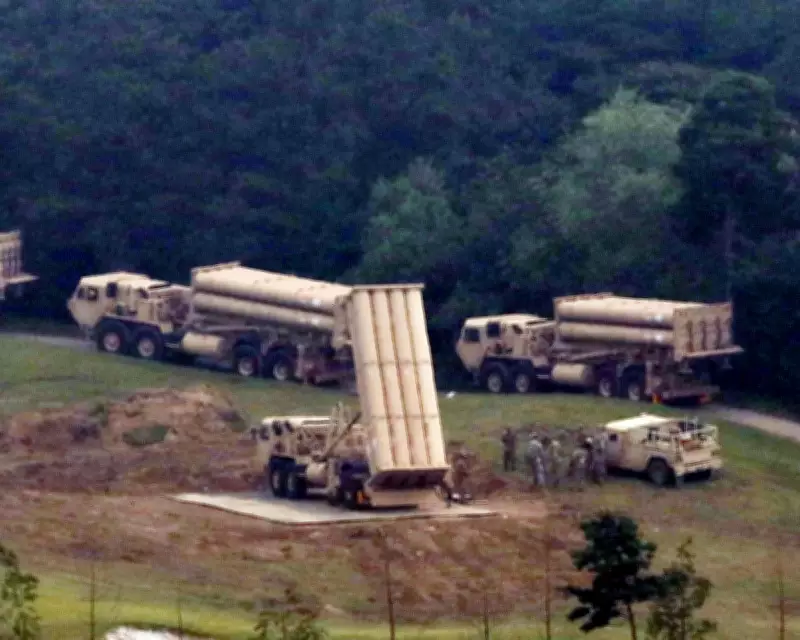
US Rapidly Moves THAAD Missiles from South Korea to Middle East, Sparking Security Concerns
The United States has reportedly initiated a significant redeployment of military assets, moving parts of the Terminal High Altitude Area Defense (THAAD) missile defense system from South Korea to the Middle East. This strategic shift comes amid escalating tensions in the region and has triggered widespread concern among South Korean officials and security analysts.
Historical Context and Initial Deployment
Nearly a decade ago, the quiet village of Seongju in South Korea became a focal point of national defense strategy. In 2017, camouflaged trucks transported the advanced US-made THAAD system into the area, despite vigorous protests from local residents who feared becoming targets for North Korean ballistic missiles. The conservative government in Seoul, with strong backing from Washington, championed the deployment as essential for detecting and destroying incoming missiles before they could threaten South Korean territory or the approximately 28,500 US troops stationed there.
The installation also drew sharp criticism from China and Russia, both of which argued that the powerful radar capabilities of the THAAD system could potentially compromise their own national security. This geopolitical friction underscored the complex balance of power in Northeast Asia.

Sudden Redeployment and Regional Implications
According to recent reports from US media outlets citing Pentagon officials, components of the THAAD system are now being transferred to support military operations in the Middle East. This move has ignited serious doubts about the durability of US security commitments to South Korea, a key ally in East Asia alongside Japan. Critics are questioning the long-term viability of investing substantial political capital in a defense system that appears to be relocatable based on shifting global priorities.
The rapid redeployment has raised alarms that North Korea, which possesses nuclear weapons, might interpret this as an opportunity to increase pressure on its southern neighbor. Military experts warn that Pyongyang could engage in low-level provocations to test the defensive posture of the US-South Korea alliance in the absence of these critical assets.
Official Responses and Reassurances
South Korea's liberal president, Lee Jae Myung, has moved swiftly to calm public anxieties. During a cabinet meeting, he emphasized that the country retains robust capabilities to deter threats from North Korea, even with the potential withdrawal of certain US military resources. "If asked whether that would seriously hinder our deterrence strategy against North Korea, I can say with certainty that it would not," Lee stated confidently.
He further highlighted that South Korea's defense budget ranks among the highest globally and is estimated to be approximately 1.4 times larger than North Korea's entire gross domestic product. This financial commitment, he argued, ensures a strong independent defense capacity.
Additionally, South Korean Foreign Minister Cho Hyun disclosed on Friday that discussions are underway between US and South Korean militaries regarding the possible redeployment of some US Patriot missile defense systems to the Middle East. While specific details remain classified for operational security reasons, South Korean media have speculated that missile batteries could be headed to US bases in Saudi Arabia and the United Arab Emirates.
Broader Regional and Strategic Concerns
The relocation of THAAD components is not an isolated incident but part of a broader pattern of US military adjustments. Japan, which hosts around 50,000 US troops—more than half stationed on Okinawa—is also adapting to the hurried movement of American hardware to the Middle East. Reports indicate that two US guided-missile destroyers based in Yokosuka, south of Tokyo, are currently deployed in the Arabian Sea.

This development has prompted criticism from Japanese opposition figures, such as Junya Ogawa, who expressed concerns that US forces in Japan are being utilized for missions beyond their originally intended scope. "Japan has not permitted the stationing of US forces so they can sortie from those bases to fire missiles towards the Middle East," Ogawa told parliamentarians this week.
The conservative South Korean newspaper JoongAng Daily editorialized that any diminution of the country's defensive capabilities "inevitably raises concerns." The publication urged the government to ensure that redeployed assets return promptly after their missions conclude, thereby minimizing potential gaps in deterrence against North Korea. It also called for accelerated efforts to bolster South Korea's indigenous defense capabilities.
Ultimately, the hasty redeployment of THAAD missiles from South Korea to the Middle East underscores the dynamic and often unpredictable nature of global military strategy. While Seoul seeks to project confidence in its own defensive strengths, the episode highlights the intricate interdependencies within international alliances and the ongoing challenges of maintaining security in a volatile world.