

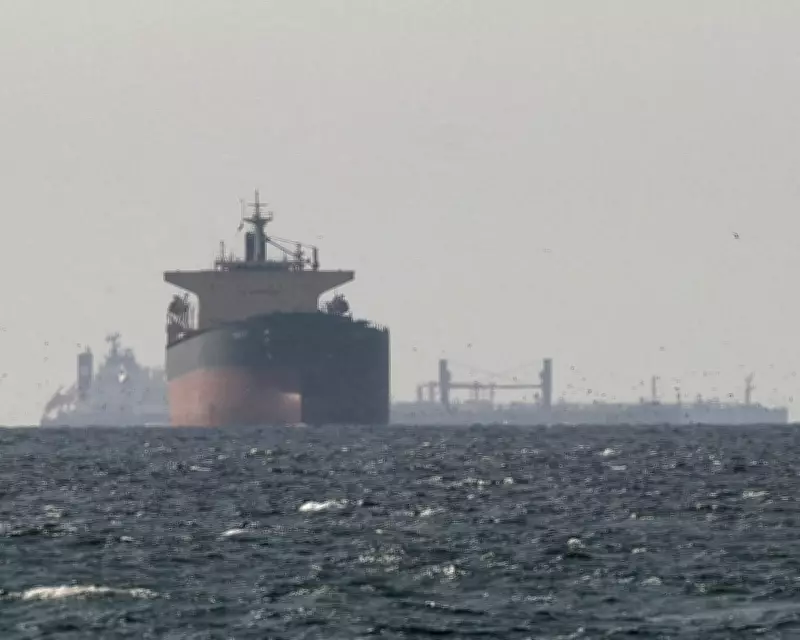
US Naval Blockade of Iranian Ports Commences in Gulf Region
The United States has officially begun enforcing a naval blockade on Iranian ports in the Gulf, marking a significant escalation in the ongoing US-Israeli conflict with Iran. This strategic move transforms the geopolitical struggle into a direct test of economic endurance, with profound implications for regional stability and global energy markets.
Blockade Details and Enforcement Strategy
US Central Command (Centcom) confirmed the blockade's implementation, which started on Monday at 5:30 PM Iranian time. The blockade specifically applies to all vessels entering or departing Iranian ports and coastal areas, while ships utilizing non-Iranian ports remain unaffected. American naval forces are positioned to enforce the blockade east of the Strait of Hormuz, in the Gulf of Oman, a location strategically chosen to minimize vulnerability to Iranian missile and drone attacks.
The primary objective of this blockade is to severely damage Iran's economy, which relies heavily on oil exports. By restricting maritime access, the US aims to compel Tehran to reopen the Strait of Hormuz to ships from Gulf ally ports and accept a comprehensive ban on uranium enrichment activities. Iranian officials have countered by warning that the blockade, attributed to former President Donald Trump's policies, will result in higher fuel costs for ordinary American citizens.

Enforcement Mechanisms and Potential Risks
The exact methods Centcom will employ to enforce the blockade remain unclear. However, analysts suggest that direct military intervention, such as missile strikes on non-compliant tankers, could pose significant environmental hazards. Alternatively, US forces may opt to board and seize vessels that defy blockade instructions, a tactic that carries its own set of diplomatic and operational challenges.
Political Fallout in US Congress
In related political developments, two US congressmen have announced their resignations amid expulsion threats. Republican Representative Tony Gonzales of Texas stepped down after admitting to an extramarital affair with a staffer who later died by suicide. Simultaneously, Democratic Representative Eric Swalwell, who was campaigning for California governor, resigned following multiple allegations of sexual assault and misconduct. Swalwell cited the distraction from his duties and the threat of expulsion without due process as key factors in his decision.
Canadian Political Landscape Shifts
Across the border, Canadian Prime Minister Mark Carney's Liberal party has secured a majority government after winning three special elections in Ontario and Quebec. This victory grants Carney 174 seats in the 343-seat House of Commons, enabling him to advance his political agenda without opposition reliance. Carney emphasized that a majority government would enhance Canada's ability to navigate the trade war initiated by Donald Trump, with the next national election now flexible in timing due to the majority status.
Additional Global Developments
- The US military reported eliminating two individuals in a boat strike in the eastern Pacific Ocean, alleging their involvement in narco-trafficking operations, though evidence was not provided.
- A 16-year-old from Florida faces charges for the sexual assault and murder of his 18-year-old stepsister aboard a cruise ship in November.
- Donald Trump removed a social media post featuring an AI-generated image depicting him as a Christ-like figure after sparking outrage among Christian communities.
- Iran has unfrozen the assets of the captain of its women's football team, which were seized following her asylum claim and subsequent withdrawal in Australia last month.
Health and Environmental Insights
A recent study projects that metabolic liver disease will affect 1.8 billion people globally by 2050, a 143% increase from current estimates, primarily driven by rising obesity and blood sugar levels. Concurrently, climate research indicates that summer conditions are intensifying and extending, with summer length increasing by an average of six days per decade due to human-induced global heating.

Cultural and Social Highlights
In entertainment, the third season of HBO's Euphoria has faced criticism for its delayed production and perceived decline in quality, described by some reviewers as "grubby" and "humourless." Meanwhile, UN rapporteur Francesca Albanese has garnered attention for her bold accusations of genocide against Israel in Gaza, resulting in US sanctions and death threats against her. On a lighter note, Dolly Parton topped a US favourability poll, surpassing figures like Barack Obama and Volodymyr Zelenskyy by a significant margin.





