US Navy's HELIOS Laser Weapon Successfully Downs Four Drones in Sea Trial
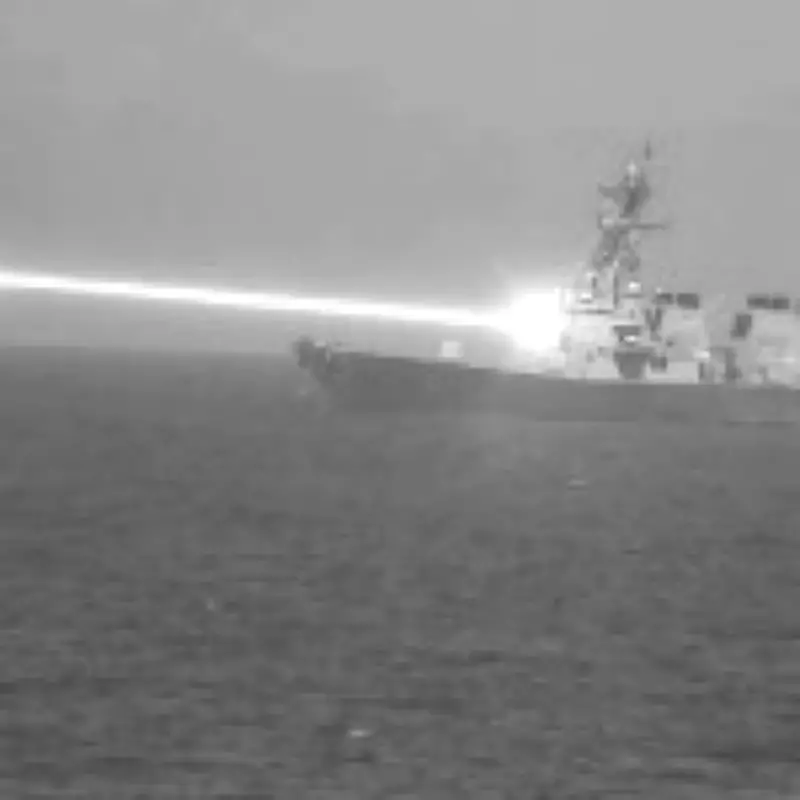
The United States Navy has achieved a significant milestone in modern warfare technology, successfully deploying a revolutionary ship-mounted laser weapon to shoot down four drones during a recent demonstration at sea. This latest trial involved the Arleigh Burke-class destroyer USS Preble, which is equipped with Lockheed Martin's High-Energy Laser with Integrated Optical Dazzler and Surveillance (HELIOS) system.
Lockheed Martin's Breakthrough in Directed Energy
During a quarterly earnings call last week, Lockheed Martin's Chief Executive, Jim Taiclet, confirmed the successful test, stating that the shipboard laser was used to knock a drone 'right out of the sky'. He elaborated, 'The HELIOS weapon system successfully neutralised four drone threats in a U.S. Navy-operated counter-UAS (uncrewed aerial systems) demonstration at sea, showcasing an opportunity to eliminate drone attacks using lasers, and saving U.S. and allied air defence missiles for more advanced threats.'
The HELIOS laser, a 60-kilowatt-class directed energy weapon, has been mounted on the bow of the USS Preble since 2022, making it the only US Navy vessel currently carrying this advanced system. Designed to destroy or damage targets such as drones or small boats, it can also function as a so-called 'dazzler', intended to disrupt or blind optical sensors. Lockheed Martin has indicated that the system could potentially be scaled up to 150 kilowatts in the future.

Strategic Shift in Naval Defence
This development aligns with the US Navy's strategic vision, as articulated by the service's most senior officer, who expressed a desire for directed energy weapons to become the preferred option for crews defending warships against close-range threats. Vice Admiral Brendan McLane emphasised this point at the Surface Navy Association's annual symposium in January, stating, 'The Surface Navy has a rare opportunity with leadership aligned on delivering lethality, capability, and capacity at speed. As an enterprise, we must continue to think big as we develop the future platforms in the world. We must lay the foundations for the systems on those ships now so that they deliver on their promise to the American people.'
The successful test comes at a critical time, as defending against multiple drones simultaneously has become an increasing concern for navies worldwide. This is particularly relevant following recent operations in and around the Red Sea, where large-scale drone attacks, especially when combined with threats like cruise or ballistic missiles, risk overwhelming traditional air defence systems.
International Context and Broader Implications
Britain and Germany have also been trialling similar directed energy systems, indicating a global shift in how military forces address the growing threat posed by drones. For instance, a British warship in the Red Sea previously shot down a suspected drone attack aimed at a merchant ship in the region. This defensive action followed incidents in 2023, where cargo ships off the Arabian Peninsula were targeted by drone attacks from Houthi rebels in Yemen, including an attack on the Bahamas-flagged Unity Explorer, owned by a UK company.
The integration of laser weapons like HELIOS represents a transformative step in naval warfare, offering a cost-effective and efficient means to counter low-cost drone threats while preserving more expensive missile systems for higher-priority targets. As navies continue to adapt to evolving security challenges, directed energy technologies are poised to play a pivotal role in enhancing maritime defence capabilities and ensuring the safety of naval assets in contested waters.