US Congressional Report Raises Doubts Over Aukus Submarine Delivery to Australia
A new report from the United States Congressional Research Service has sparked significant debate by openly exploring the option of not delivering any nuclear submarines to Australia under the Aukus security pact. The report suggests that the US might retain control of Virginia-class submarines originally earmarked for Australia to maintain military readiness for potential conflicts, particularly with China over Taiwan.
Growing Skepticism Over Aukus Progress
While Australian defence officials maintain that the $368 billion Aukus agreement is progressing "at pace and on schedule", critics argue that the likelihood of the US ever selling promised Virginia-class submarines to Australia is becoming increasingly remote. The Australian Submarine Agency continues to express unwavering commitment to the partnership, but political opposition is mounting on both sides of the Pacific.
Former Australian prime minister Malcolm Turnbull has been particularly vocal in his criticism, stating that the Australian government is engaged in "an exercise of denial" about the agreement's challenges. "The Aukus deal is a very attractive one for the Americans because they get a submarine base and dockyard at Australia's expense in Western Australia," Turnbull remarked, highlighting what he sees as fundamental imbalances in the arrangement.

Strategic Considerations and Military Division of Labour
The congressional report presents a compelling argument for an alternative "military division of labour" arrangement. Under this scenario, submarines intended for Australia would remain under US command while operating from Australian bases. This approach, the report suggests, would ensure immediate deployment capability in the event of a crisis with China over Taiwan, whereas Australian-commanded vessels could not be guaranteed to participate in such conflicts.
"This could weaken rather than strengthen deterrence and warfighting capability in connection with a US-China crisis or conflict," the report states, highlighting the strategic complexities of the current arrangement. Australia has consistently maintained that it cannot offer guarantees of supporting the US in a conflict with China, creating potential operational limitations.
Industrial Capacity and Production Challenges
Significant concerns exist about America's ability to meet both its own submarine requirements and those of Australia. The US navy currently operates only 49 submarines against a force-level goal of 66, representing just three-quarters of its required capability. Furthermore, US shipyards have consistently failed to meet production targets, building only 1.1 to 1.2 Virginia-class submarines annually against a requirement of two per year to meet domestic needs.
To supply submarines to Australia, production rates would need to increase to 2.33 boats per year, a target many experts consider unrealistic given current industrial constraints. US legislation explicitly prohibits submarine sales to Australia if they would degrade America's own undersea capabilities, creating a significant legal and practical barrier to the agreement's implementation.
Political Responses and Sovereignty Concerns
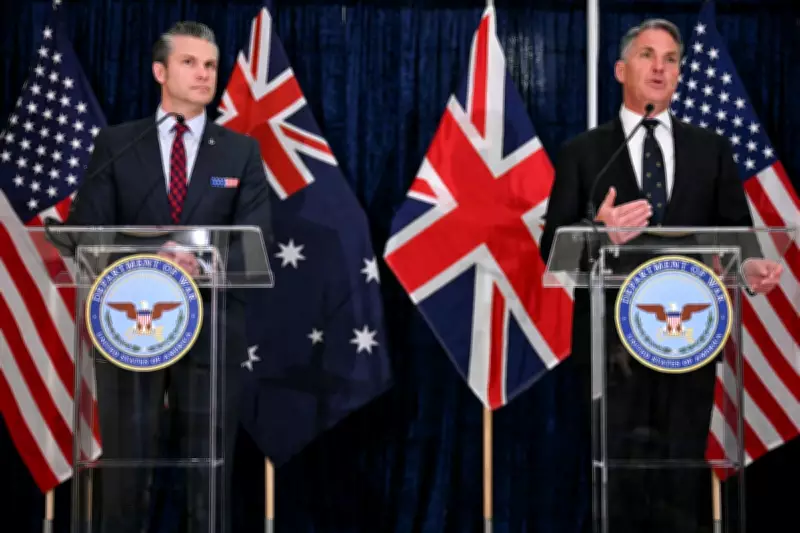
Australian defence minister Richard Marles has dismissed the congressional report as mere "commentary", insisting that Aukus remains "full steam ahead". However, political opposition continues to grow, with Greens senator David Shoebridge describing the agreement as a "pantomime" that dangerously compromises Australian sovereignty.
"No matter what flag is painted on the side of any nuclear submarines Australia gets, they will be US-controlled and US-directed," Shoebridge asserted, echoing concerns that the arrangement serves American interests more than Australian defence needs. The senator further noted that former US president Donald Trump's support for the deal should raise red flags for Australia, given his "America First" approach to international relations.

The Path Forward for Aukus
The Aukus agreement represents one of the most significant defence partnerships in recent history, but its implementation faces substantial challenges. The congressional report highlights fundamental questions about strategic alignment, industrial capacity, and political will that must be addressed for the agreement to succeed.
As the debate continues, all three partners - Australia, the United States, and the United Kingdom - face difficult decisions about how to balance national interests with collective security objectives. The coming years will reveal whether the ambitious goals of Aukus can be realised or whether alternative approaches to regional security will need to be developed.