

US Military Expands Presence in Iran Amid Contradictory Statements from Trump
The Pentagon is preparing to dispatch thousands of additional troops to the Middle East this week, a move that comes in stark contrast to recent assertions from former President Donald Trump that the war in Iran is nearing its conclusion. This significant deployment underscores the ongoing volatility in the region, even as diplomatic rhetoric shifts.
Troop Deployment Details and Strategic Implications
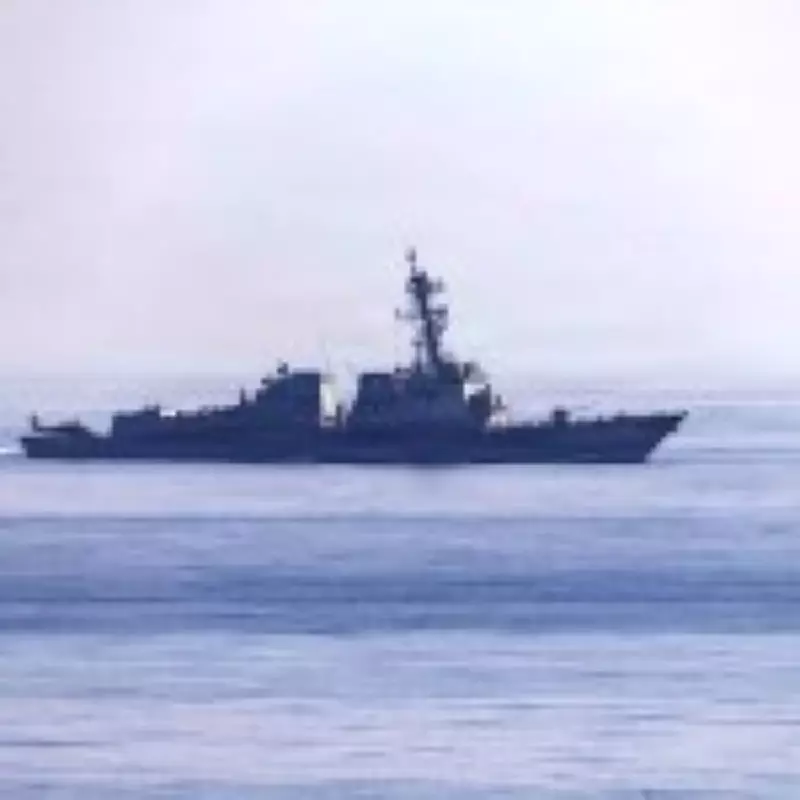
According to reports from the Washington Post, approximately 6,000 extra troops aboard the USS George H.W. Bush and other warships are scheduled to enter the region imminently. Furthermore, an additional 4,200 personnel from the Boxer Amphibious Ready Group and a Marine Corps task force are expected to arrive by the end of April. This buildup signals a substantial reinforcement of US military capabilities in the area, raising questions about the true state of the conflict.
The announcement follows closely on the heels of Trump's comments, where he transitioned from aggressive posturing on Truth Social regarding the Strait of Hormuz to suggesting that collapsed negotiations with Iran might be revived. In an interview with Fox News, Trump remarked, 'I think it's close to over, yeah. I view it as very close to being over.' However, he quickly pivoted, implying that the US retains the option to resume offensive actions if desired, stating, 'If I pulled up stakes right now, it would take them 20 years to rebuild their country, and we're not finished. We'll see what happens. I think they want to make a deal very badly.'

Blockade of the Strait of Hormuz and Expert Warnings
Trump's recent blockade on the Strait of Hormuz, initiated earlier this week, has further destabilized an already fragile ceasefire agreement between Iran and the United States. This critical waterway, a 60-mile-wide segment of the Persian Gulf, has been a focal point of regional tensions for decades. Military analysts indicate that US forces will likely encounter significant challenges, not only in enforcing the blockade but also in countering threats from Iranian drones and missiles.
Dr. Andreas Krieg, an Associate Professor at King's College London, emphasized the risks, telling Metro, 'The closer the US Navy moves to the Strait itself, the more US Navy ships would become sitting ducks in range of Iranian drones and missiles.' This perspective highlights the precarious nature of the military operation, suggesting that proximity could increase vulnerability to asymmetric warfare tactics employed by Iran.
Logistical and Political Constraints of the Blockade
The US military has clarified that the blockade will specifically target shipping to and from Iranian ports, rather than attempting to halt all traffic through the Strait of Hormuz. This targeted approach indicates a recognition of the complexities involved. Dr. Katayoun Shahandeh of the University of London noted, 'This tells you that even Washington seems to recognise that a full closure would be extraordinarily dangerous and difficult to sustain.'
Dr. Shahandeh further elaborated on the scale of the undertaking, pointing out, 'This is a major military undertaking, not a simple switch Trump can flip and can lead to a prolonged operation and presence. Trump himself has admitted it would "take a little while," which suggests the logistics are already constraining the politics.' This analysis underscores the interplay between military strategy and political maneuvering, suggesting that operational realities may temper aggressive postures.
The deployment of thousands of troops, coupled with the blockade, reflects a multifaceted approach to the Iran conflict, blending military pressure with diplomatic overtures. As tensions persist, the situation remains fluid, with experts cautioning that any miscalculation could escalate into a broader confrontation. The coming weeks will be critical in determining whether Trump's claims of an impending end to the war align with the on-ground realities of increased military presence and ongoing hostilities.






