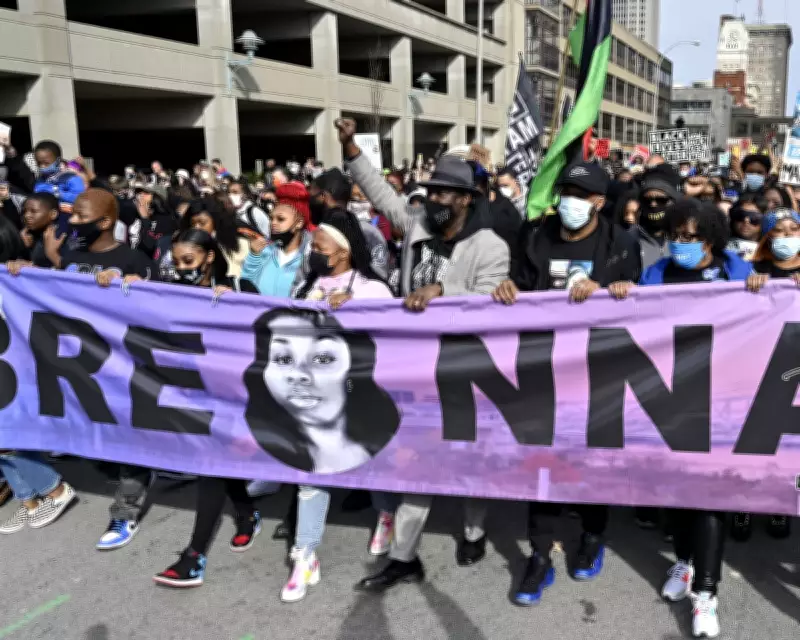
Six Years After Breonna Taylor's Killing, America Weakens Rules That Could Have Saved Her
In the quiet of a Louisville night, Breonna Taylor, a 26-year-old emergency room technician, met a tragic end. Police officers executed a no-knock warrant, forcing open her apartment door. Confusion erupted, gunfire followed, and Taylor was struck multiple times, dying in her hallway. Her death on March 13, 2020, sparked a national reckoning, exposing the dangers of no-knock warrants—tactics allowing police to enter homes without warning, often in the dead of night.
The Brief Era of Reform and Its Quiet Reversal
Following Taylor's killing, a wave of reform swept across the United States. Louisville banned no-knock warrants entirely, while Kentucky and other states imposed strict limits. The Justice Department, under previous leadership, tightened federal rules to restrict such warrants, acknowledging the volatility they create. The logic was clear: if Breonna Taylor's death revealed real peril, the practices behind it needed stringent controls.
However, earlier this month, the Trump administration's Department of Justice quietly rescinded those federal limits. Deputy Attorney General Todd Blanche eliminated a nearly five-year-old policy, arguing in a memo that law enforcement must be allowed to carry out duties "to the fullest extent permitted by law." This change restores broader discretion to federal agents, rolling back safeguards born from Taylor's death without public explanation or accountability.

The Persistent Danger of No-Knock Raids
No-knock raids never fully disappeared, as thousands of local police departments retain authority to use them. Experts note that these raids are often deployed for drug warrants in predominantly Black communities, terrorizing residents and yielding little evidence. In Taylor's case, the raid produced nothing—she and her boyfriend were not the targets of the investigation. Instead, such tactics reliably create chaos: residents, believing intruders have broken in, may reach for weapons, while officers, expecting danger, enter prepared for lethal force.
This reversal sends a stark message: restrictions meant to save lives and protect civil rights are viewed as impediments to law enforcement. It underscores how little Breonna Taylor's life and the lessons from her death matter to this administration, willing to impose similar risks on others.
Historical Context and Legal Implications
The home holds a special place in American law, with the Fourth Amendment designed to shield citizens from sudden state power. No-knock raids collapse this protection entirely, treating doors as obstacles rather than boundaries. History offers grim parallels, such as the 1969 Chicago police raid that killed Fred Hampton and Mark Clark of the Black Panther Party, an episode marked by false claims and political surveillance.
Breonna Taylor's death forced a fleeting recognition that such risks are unacceptable. Yet, bipartisan legislation like the Justice for Breonna Taylor Act, which aims to ban no-knock warrants nationwide, has repeatedly stalled in Congress. This administration's move treats such measures as mere inconveniences, signaling that Taylor's death did not catalyze lasting change.
Conclusion: A Call for Accountability
We grieve Breonna Taylor, protest in her name, and memorialize her legacy, but power structures quietly restore the conditions that led to her killing. The rules matter—their absence has proven fatal time and again. As we reflect six years later, the question remains: will we allow these protections to be expendable, or will we demand meaningful reform to prevent future tragedies? The decision carries a clear message: Breonna Taylor's death has not changed this country enough.