US Weighs Sending Forces into Iran to Secure Nuclear Stockpile
The Trump administration is reportedly considering the deployment of special forces into Iran to secure its stockpile of highly enriched uranium (HEU), which nuclear experts confirm could be used to manufacture at least ten nuclear warheads. Preventing Iran from acquiring nuclear weapons has been one of President Trump's stated war objectives, with the 440kg HEU stockpile representing the most significant nuclear threat due to its potential for relatively easy conversion into weapons-grade uranium.
Complex Mission Details Emerge
US Secretary of State Marco Rubio has informed Congress that "people are going to have to go and get it," though he provided limited specifics. Reports indicate discussions between US and Israeli officials regarding how such a mission might be executed by special forces from either or both nations. However, nuclear experts emphasize the considerable complexity and risk involved in any extraction operation.
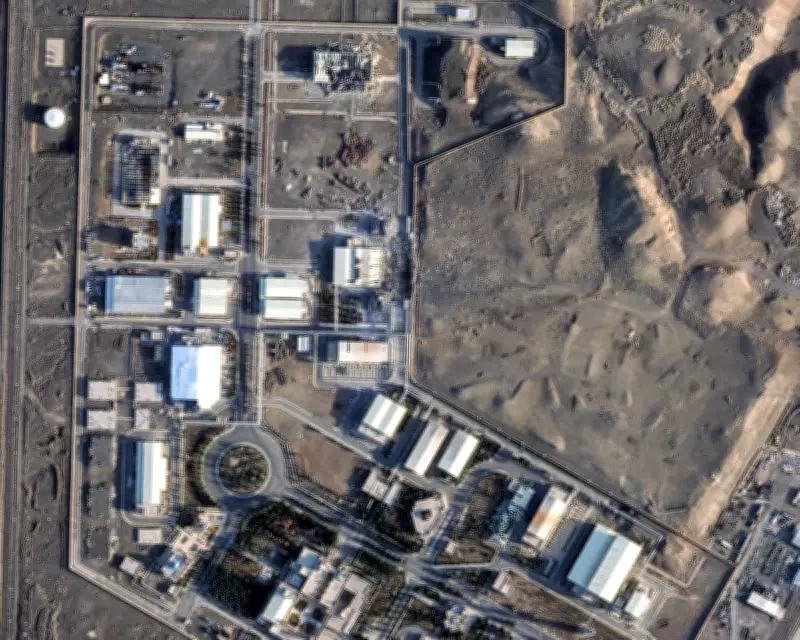
Rafael Grossi, Director General of the International Atomic Energy Agency (IAEA), revealed on Monday that the UN watchdog believes approximately 200kg of Iran's HEU stockpile is stored in deep tunnels at the nuclear complex outside Isfahan. Additional quantities are reportedly located at the Natanz facility, where Iran has constructed a new fortified, deeply buried installation known to Western analysts as Pickaxe Mountain.

Logistical Challenges and Strategic Considerations
The HEU exists as uranium hexafluoride, solid at room temperature but converting to gas when heated for further enrichment. It is believed to be stored in metal canisters resembling scuba tanks within deep shafts. While US and Israeli special forces have trained for nuclear material extraction missions, and the US has developed specialized equipment like the Mobile Uranium Facility, deploying such resources would require major ground operations at multiple sites deep within Iranian territory.
Jeffrey Lewis, a nuclear proliferation expert at the Middlebury Institute of International Studies, noted the formidable challenges: "That would be tough. It is pretty well defended and its large and bulky, so you're not going to just go in and pick it up." He questioned whether military transport planes could land in desert areas to establish security perimeters and deploy cranes, or if destruction of the material might be considered instead.
Administration Statements and Criticisms
When questioned about the operation on Saturday, President Trump acknowledged the difficulties involved and suggested such a mission was not imminent. He stated US troops would not be deployed until Iranian defensive forces "would be so decimated that they wouldn't be able to fight on the ground level." While not ruling out a future ground operation to secure nuclear materials, Trump indicated it would occur at a later conflict stage.
Administration critics have expressed astonishment that a mission to secure the HEU stockpile appears inadequately planned before the war's initiation. Democratic Congressman Bill Foster emerged from a classified briefing stating he heard nothing about addressing Iran's nuclear capabilities, remarking that "Iran's stockpile of highly enriched uranium should be the administration's primary focus. That is clearly not the case."
Expert Analysis and Alternative Solutions
Matthew Bunn, a nuclear policy analyst at Harvard Kennedy School, described the situation as "just shocking to launch a military operation like this, justified by the nuclear danger, and not have a plan for dealing with the most urgent part of the nuclear danger." He emphasized that the HEU stockpile represents "the most important element of potential nuclear weapons capability in Iran" and suggested the optimal solution would involve postwar negotiations to dilute or remove the material from the country.
Such diplomatic solutions were reportedly being discussed in US-Iranian talks mediated by Oman before the February 28th attack. Bunn noted that attempting to remove, blend down, or destroy the HEU without Iranian cooperation presents enormous difficulties. Current strategy appears to involve close monitoring of storage sites to prevent removal while longer-term solutions are developed.

Monitoring Strategy and Iranian Dilemmas
Meir Javedanfar, an Iran expert at Reichman University in Israel, explained the current approach: "As long as it stays in Iran, the plan is that if anyone gets near it, they will be killed. That is the strategy as it stands." However, he acknowledged monitoring limitations, noting that "someone could build a tunnel and go seize it. You can't be 100% sure."
Even if Iranian authorities managed to conceal the HEU, attempting to rapidly develop nuclear weapons would present significant risks. The process from further enrichment to weaponization and delivery system integration could theoretically be completed within months but would be extremely difficult to accomplish without detection.
Robert Malley, former US special envoy to Iran during the Biden administration, highlighted the persistent dilemma facing Iranian leadership: "From the moment you make the decision to the moment you acquire the bomb, that's the zone of maximum danger when you're likely to be detected. And if you're detected you're almost certain to be bombed. And that problem hasn't evaporated." He characterized any Iranian attempt to weaponize the material as "a really very dangerous gamble."