

The Illusion of Choice in Modern Conflict Zones
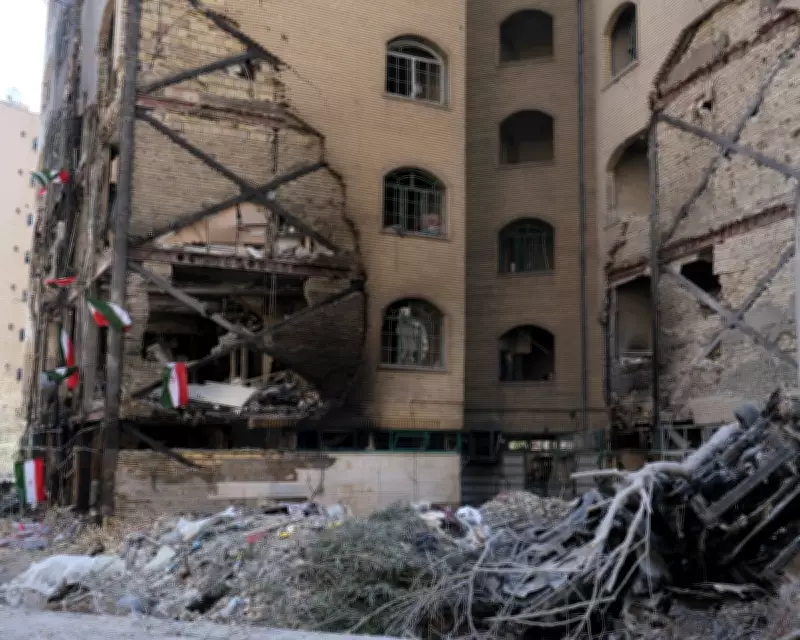
When your homeland becomes engulfed in warfare, maintaining neutrality transforms from a philosophical position into an impossible luxury. Shadi Khan Saif, reflecting from Melbourne while his brother navigates disrupted travel from London to Afghanistan, observes how missile exchanges, airstrikes, and proxy attacks have turned entire regions into continuous battlefields. The recent escalation involving Iran, Israel, and the United States demonstrates how conflicts rapidly spill across borders, placing civilians in cities far from frontlines under sudden threat.
A Personal Connection to Vanishing Mediation Spaces
Saif's ancestral home in Paktika province, southeastern Afghanistan, now largely reduced to ruins, once housed a bala khana – an upper guesthouse common in Afghan architecture. This space served not merely as physical shelter but as a moral arena where disputes were brought to cool down through Qur'anic reflection, poetry, and extended conversation. Neighbors quarreling over land, traders arguing over debts, and relatives caught in family disagreements would gather there late into the night, engaging in the traditional jirga process of community consultation.
Hospitality and mediation were fundamentally intertwined in this tradition. You could not seek justice without first being offered tea; you could not be heard without first being recognized as a guest. For generations, elders used such spaces to settle disputes among traders moving between central and south Asia, preventing conflicts from spiraling into violence through deliberate, slowed dialogue.

When War Destroys the Spaces Built for Peace
Wars rarely respect spaces designed for mediation. Afghanistan's transformation into a brutal Cold War battleground began with the Soviet invasion in 1979, uprooting millions and destroying much of the country's social fabric. Following the Taliban's toppling in 2001 through the US-led invasion – joined by allies including Australia – Afghan civilians again found themselves trapped between powerful armed actors.
In theory, villagers had choices. In reality, those choices were dangerous illusions. Across rural Afghanistan, offering food to one group might later be interpreted as enemy collaboration by another. A farmer allowing Taliban fighters to pass through his village risked being labeled an insurgent supporter, while sharing information with coalition troops could invite retaliation once those troops withdrew. Neutrality itself becomes criminalized in such environments, with what outside powers frame as "choosing a side" representing, for civilians, something closer to survival calculations.
The Global Erosion of Mediation Institutions
Afghanistan's experience is hardly unique. Across the Middle East today, civilians confront the same shrinking space for neutrality as geopolitical rivalries intensify. This deterioration is exacerbated by the weakening of institutions meant to restrain such spirals. The United Nations, founded on the promise that international disputes could be mediated before consuming entire societies, has seen repeated crises – from Syria to Ukraine, Gaza, and now tensions around Iran – reveal how easily geopolitical rivalry paralyzes the system.
When international mediation weakens, the burden of navigating conflict falls ever more heavily on ordinary people. For centuries, places like Saif's village bala khana existed precisely to prevent disputes from escalating into violence. They embodied a belief that even the angriest conflict could still be slowed through conversation. But when wars are driven by powerful states and global rivalries, those local traditions of peace and harmony struggle to survive against overwhelming force.






