

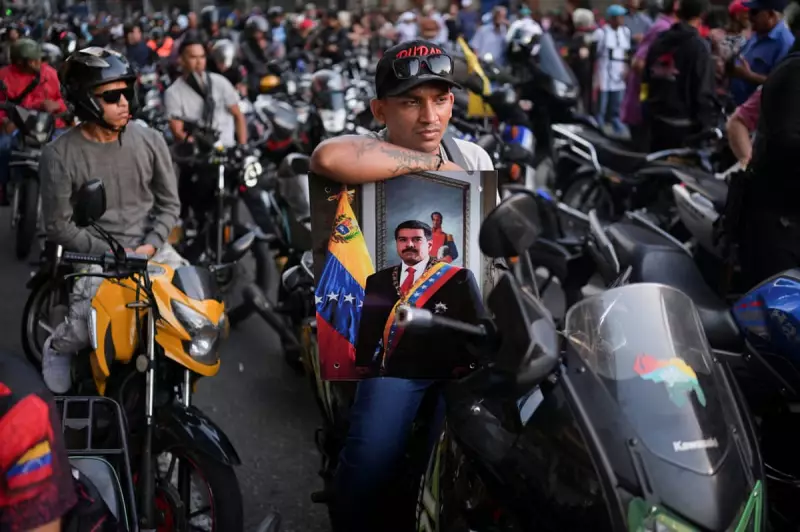
Armed paramilitary groups have flooded the streets of Caracas in a stark show of force, as Venezuela's new leadership seeks to consolidate power following the dramatic capture of President Nicolás Maduro by United States forces.
Colectivos Enforce Regime Authority on Streets
Paramilitary units known as colectivos have been deployed across the capital, patrolling on motorbikes and wielding assault rifles. They have set up checkpoints, stopping and searching cars, and are demanding access to residents' mobile phones to scrutinise contacts, messages, and social media activity.
This aggressive crackdown is a clear signal to the population that the regime remains in control, despite the abduction of Maduro and his wife over the weekend. Mirelvis Escalona, a 40-year-old resident of the Catia neighbourhood, reported that anyone suspected of supporting the US raid faces arrest. "There's fear," she said. "There are armed civilians here. You never know what might happen."

A Tense Calm and Internal Jitters
While a semblance of normality has returned, with shops reopening and people going to work, a palpable sense of uncertainty and tension pervades the city. Interim President Delcy Rodríguez, sworn in on Monday, has attempted to project calm but cannot disguise the government's profound shock.
The authorities face multiple crises: the humiliation of Maduro appearing in a New York court on narco-trafficking charges, the threat of further US military action, economic collapse, and potential fractures within the ruling party. This jitteriness was evident on Monday night when security forces opened fire on unauthorised drones, mistakenly fearing another US operation.
An emergency decree has been issued to stamp out any public celebration of Maduro's ouster, ordering police to detain anyone supporting the US attack. This has led to a wave of detentions, including at least 14 journalists and media employees on Monday, most of whom were later released.
Citizen Fear and Regime Resolve
For ordinary Venezuelans, the environment is terrifying. Jeaneth Fuentes, a 53-year-old doctor, described her commute as a gamble. "It's frightening, terrifying," she said, adding that the overnight gunfire compounded the feeling that anything could happen. "I can't plan, it's living each minute at a time."
In contrast, government supporters have vowed defiance. Finance ministry employee Willmer Flores pledged solidarity with Maduro, stating, "We are the liberators of America, and we are not intimidated by anything."
The situation is further complicated by the stance of the Trump administration, which has dismissed opposition leader María Corina Machado and tacitly endorsed continued Chavista rule under Rodríguez—provided she meets US demands, including favourable terms for American oil companies. With the regime's key figures, like Diosdado Cabello, facing US indictments, the path forward for Venezuela remains fraught and dangerously unpredictable.






