

The streets of Caracas were gripped by a palpable sense of dread and confusion on Sunday, just one day after an unprecedented US military strike on Venezuelan soil led to the capture of President Nicolás Maduro. Rather than celebration, the dominant mood among the capital's three million residents was one of anxious preparation for an uncertain future.
A City on Edge: Stockpiling Amidst Uncertainty
Griselda Guzmán, a 68-year-old pensioner, summed up the prevailing sentiment in a single word: "Uncertainty." Fighting back tears, she stood with her husband in a queue outside a grocery store, determined to stockpile essential supplies. The extraordinary events of the early hours of Saturday, when a "gigantic" explosion rocked the city at around 2am, have left citizens bracing for further turmoil.
Across the city, similar scenes unfolded. Sauriany, a 23-year-old administrative worker, and her partner Leandro joined a queue of about a hundred people waiting to enter an overcrowded supermarket. Leandro expressed shock at the audacity of the attack. "Who could have imagined that this would happen? That right at the start of the year they’d bomb our country while everyone was asleep?" he asked. While he admitted he would welcome change that improved Venezuela, he was sceptical the US intervention was the path to peace.

The nocturnal blitz, condemned by the governments of Spain, Brazil, Chile, Colombia, Mexico, and Uruguay as setting "an extremely dangerous precedent," has plunged parts of the city into darkness. Gabriel Vásquez, a 29-year-old video-maker, described his neighbourhood in central Caracas as having no water, electricity, or phone reception. "I thought that any time my house could get bombed too," he recalled of the terrifying night.
Political Fallout: A Regime Remains, A Leader Falls
The conspicuous absence of public celebration for Maduro's downfall is attributed by locals to two key factors: fear of a crackdown by his remaining regime and a belief that little has substantively changed. Despite Maduro's "cowardly kidnapping," as described by the head of the armed forces, Vladimir Padrino López, the military leadership has recognised Vice-President Delcy Rodríguez as Venezuela's acting president.
This transition has received a surprising nod from the US. Former President Donald Trump indicated a willingness to deal with Rodríguez, stating she was "essentially willing to do what we think is necessary to make Venezuela great again." For many opposition supporters, this prospect is appalling, while for some like Sauriany, Rodríguez should be allowed to "carry on Maduro’s legacy."
Nevertheless, private feelings towards Maduro's capture are bitter for many. Griselda Guzmán did not hide her contempt for the leader she blames for years of ruin and repression. "When I saw him like that – handcuffed – I saw him for what he was: the biggest fool on Earth," she said, referencing verified data showing he lost the 2024 election to Nobel laureate María Corina Machado's movement.
Regional Ripples and a Militarised Border
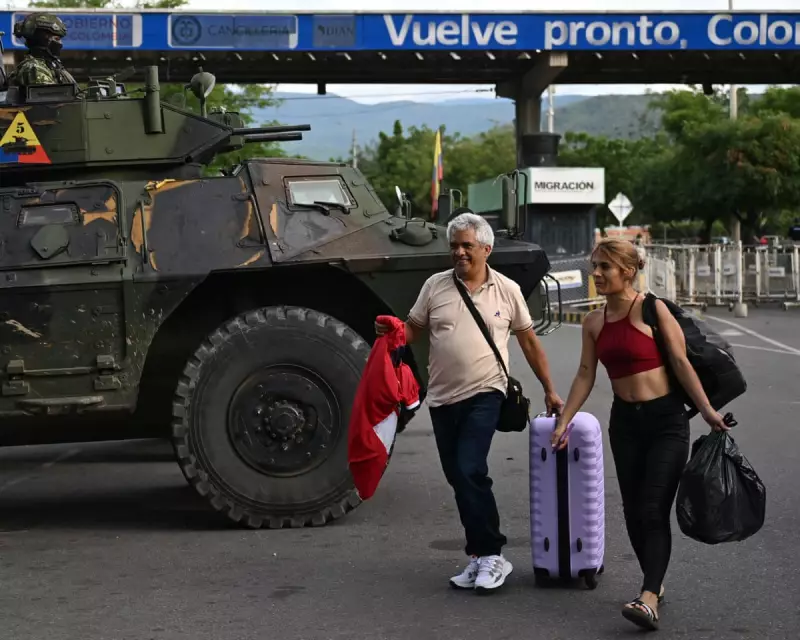
The shockwaves of the operation have spread far beyond Caracas, putting regional governments on high alert. In a significant escalation, Colombian President Gustavo Petro ordered 30,000 troops to reinforce the border with Venezuela, citing concerns over potential turmoil. Armoured military vehicles were photographed stationed at the key border crossing in the city of Cúcuta.
Adding to the regional tension, the Colombian rebel group, the National Liberation Army (ELN), condemned Trump's "imperial" onslaught and vowed to confront the attack on Venezuelan sovereignty. While there were no immediate signs of widespread violence or a dangerous military split within Venezuela on Sunday, the situation remains volatile.
As Antonio Guzmán, Griselda's 71-year-old husband, waited to stockpile food, he reflected the weary resignation of a population accustomed to crisis. "Nothing has happened yet … this only started yesterday," he predicted, viewing Maduro's arrest as merely the removal of a pawn in a larger, ongoing game. For now, the people of Caracas can do little but wait and prepare, trapped between a fallen leader and a future shrouded in doubt.






