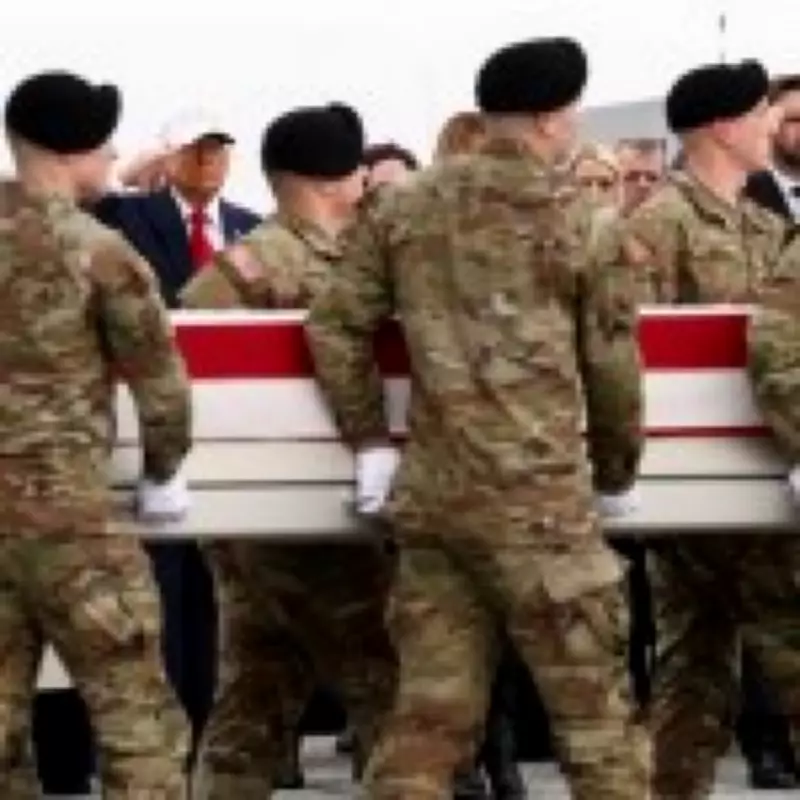
White House Declines to Eliminate Draft Possibility for Iran Conflict
In a recent Fox News interview that has ignited significant political controversy, White House Press Secretary Karoline Leavitt explicitly refused to rule out the potential reinstatement of the military draft for the ongoing Iran war. When directly questioned about the possibility of a draft, Leavitt stated, 'President Trump does not remove options off the table.' She elaborated further, emphasizing the president's strategic approach: 'The president, as commander-in-chief, wants to continue to assess the success of this military operation. It's not part of the current plan right now, but the president, again, wisely keeps his options on the table.'
Historical Context and Political Backlash
These remarks arrive amidst heightened tensions, following President Trump's previous campaign assertions during the 2024 election where he warned that Kamala Harris would 'get the US into World War III.' Trump specifically cautioned at that time: 'People's sons and daughters will end up getting drafted to go fight for a war in a country that you've never heard of.' The suggestion of a potential draft has provoked fierce backlash from across the political spectrum.
Former MAGA hardliner and Congresswoman Marjorie Taylor Greene, who has since become a vocal critic of the Trump administration, delivered a scathing response to the draft speculation. She vehemently declared: 'NO DRAFT AND NO BOOTS ON THE GROUND because we campaigned on NO MORE FOREIGN WARS OR REGIME CHANGE!!!' Greene added with intense emotion: 'Liars, every single one of them! Not my son, over my dead body.'

Internal White House Divisions and Legislative Realities
The question of deploying American ground troops in Iran has reportedly created substantial friction within the White House itself. Sources indicate that Secretary of State Marco Rubio and Defence Secretary Pete Hegseth have been 'at each other's throats' over Israel's request to position US troops in Iran. While Hegseth reportedly supports this military escalation, Rubio remains cautious and wary of such actions.
It is crucial to understand that President Trump cannot unilaterally reinstate the military draft through executive action. Congressional approval would be required to amend the Military Selective Service Act, which currently makes such authorization highly improbable. Nevertheless, Leavitt's comments regarding Trump's strategic mindset have triggered widespread alarm and concern among many observers and citizens.
Contradictions in Campaign Promises and Public Reaction
During his 2024 presidential campaign, Trump repeatedly vowed not to initiate new wars but rather to 'stop wars.' Political analyst and distinguished Service Professor Robert Spitzer, author of four books on the American presidency, provided insight into this apparent contradiction. Spitzer explained that, from Trump's perspective, a war with Iran is framed as 'America first' policy, though he noted: 'He insists this is in America's interests—though he has not produced a consistent rationale for starting this war.'
Spitzer further observed: 'But this latest action does contradict his pledge to avoid foreign wars, of which he has been harshly critical in the past. His base now finds itself split because they have mostly supported his promise to avoid wars with other nations.' This division is reflected in public sentiment, with some Trump voters expressing outrage at what they fear could become another protracted military conflict, while others praise the military action as long overdue.
The last instance of an American military draft occurred during the early 1970s Vietnam War era, making the current discussion particularly resonant and contentious. As the situation develops, the White House's refusal to eliminate the draft possibility continues to generate intense debate and scrutiny across the political landscape.