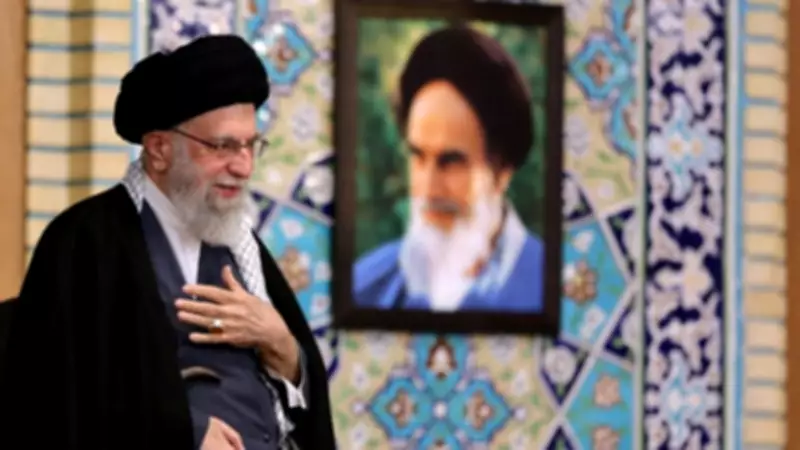
Why Iran's Regime Endures: The Complex Power Structure Explained
Nine days into the conflict, the Iranian regime remains largely intact and maintains a significant degree of control over the country. Street protests have not yet materialized, likely because opposition movements are cautiously observing whether the United States will maintain its current course of action. A sudden withdrawal by Washington would leave protesters vulnerable and at the mercy of whatever remnants of the state apparatus remain.
The Survival of a Unique System
So why, following the killing of Supreme Leader Ali Khamenei on the first day of hostilities, has the regime not collapsed like other dictatorships did in Libya, Syria, and Iraq? Its survival thus far can be attributed to a complex hybrid structure of governance meticulously developed after the 1979 revolution to withstand both external and internal challenges.
The system is deliberately engineered to be larger than any single individual, which means that eliminating the Supreme Leader does not equate to dismantling the regime. Power has been strategically distributed across multiple institutions, most of which continue to function, albeit with varying degrees of efficiency. This governance model is unlike any other government in the world today.

The Supreme Leader: Ultimate Authority
The Supreme Leader serves as the ultimate political and religious authority in Iran, a role established following the 1979 revolution. This position is held by a senior religious cleric, selected by the 88-member Assembly of Experts and appointed for life. The Supreme Leader exerts influence over nearly every aspect of governance, including the approval of key appointments such as the head of intelligence, the army commander, and other sensitive roles.
Iran has had only two Supreme Leaders in its history: Ayatollah Ruhollah Khomeini and Ayatollah Ali Khamenei. Following Khamenei's death, the Assembly of Experts is now tasked with selecting a successor, a process that will significantly shape the country's future direction.
Key Governing Bodies
Assembly of Experts: This 88-member body, composed entirely of men, holds the critical responsibility of selecting and appointing the Supreme Leader. While theoretically empowered to remove a Supreme Leader deemed unfit, in practice, the Assembly rarely intervenes in such matters.
Guardian Council: Operating beneath the Supreme Leader, the Guardian Council stands as one of Iran's most powerful institutions. It comprises twelve members: six Islamic clerics chosen by the Supreme Leader and six jurists appointed by parliament. This council reviews legislation passed by parliament, ensures compliance with strict Islamic principles, and determines eligibility for parliamentary candidates, granting it substantial control over Iranian politics.
The Judiciary: Headed by a Chief Justice appointed by the Supreme Leader, Iran's judiciary is a deeply feared institution. Beyond supervising courts and selecting prosecutors, it interprets conservative Islamic law, thereby exerting immense influence over societal norms and behaviors.
Executive and Advisory Roles
The President: Currently held by Masoud Pezeshkian, the president is elected every four years and oversees government operations, appoints ministers, and proposes the national budget. Like parliamentarians, presidential candidates must receive approval from the Guardian Council to run for office.
Expediency Council: This body advises the Supreme Leader and mediates disputes between parliament and the Guardian Council, ensuring smoother governance processes.
Military and Security Apparatus
Iranian Army (Artesh): Established during Iran's monarchical era, the Artesh primarily focuses on defending the nation's borders.
Islamic Revolutionary Guard Corps (IRGC): Founded after the 1979 revolution due to Ayatollah Khomeini's distrust of the Artesh, which he feared remained loyal to the deposed Shah, the IRGC answers directly to the Supreme Leader and exists to preserve the Islamic Republic. It expanded significantly during the eight-year Iran-Iraq War that began in September 1980.

The IRGC operates naval and air force branches and controls the Basij militia, notorious for violently suppressing protest movements, and the Quds Force, its international wing responsible for cultivating proxy networks across the Middle East, including groups like Hamas, Hezbollah, and the Houthis. Today, the IRGC is a hardline, wealthy, and politically influential force whose role in selecting the next Supreme Leader will be crucial.
Interim Leadership Mechanism
In the event of the Supreme Leader's death, as is currently the case, the Chief Justice, the President, and a member of the Guardian Council jointly assume the responsibilities of the Supreme Leader on a temporary basis, though not the title itself. This interim arrangement helps maintain continuity and stability within the regime's intricate power structure.