

Argentina's Disappeared: An Open Wound Fifty Years After the Coup
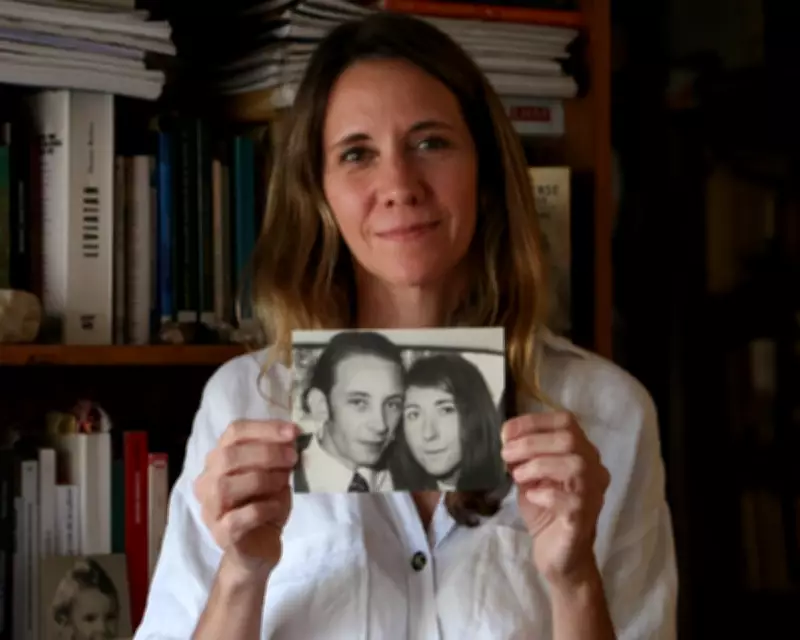
Soledad Nívoli was just four months old, sleeping in her mother's arms, when plainclothes officers stormed her family home in Córdoba, Argentina, in 1977. They were searching for her father, Mario Alberto Nívoli, a 28-year-old electrician and leftwing activist. After beating him, tying his wrists, and stealing family photographs, they dragged him away. He was never seen again.
The Brutal Legacy of State Terror
Following the military seizure of power on March 24, 1976, Argentina's armed forces launched a brutal campaign to crush leftwing groups and political opposition. They established a network of clandestine detention centers and forcibly disappeared an estimated 30,000 people—workers, students, teachers, and activists. The fate of the "desaparecidos" became a defining human rights cause, championed by groups like the Mothers of Plaza de Mayo throughout the dictatorship and after democracy's return in 1983.
Now, fifty years later, Argentina's libertarian president, Javier Milei, describes this period of state terror as a war with some "excesses," dismantling official efforts to preserve historical memory. Historian Marina Franco argues that the far-right is not merely downplaying the repression but justifying it, framing it as a necessary conflict.

Forensic Breakthroughs Bring Closure
Earlier this month, Soledad Nívoli received a life-altering phone call from her lawyer: after 49 years, investigators had found her father's remains. Overwhelmed with emotion, she collapsed in tears, hugging her eight-year-old son, Emiliano. "We felt relief when we found those little bones," Soledad said. "[Emiliano] no longer has a disappeared grandfather—he has a grandfather who is dead, who was murdered, but that, finally, we can give him a proper sendoff."
Mario was one of 12 recently identified victims from La Perla, a former concentration camp in Córdoba province. This 14,000-hectare site, located 12km from Córdoba city, served as the province's main detention center, holding an estimated 3,000 prisoners between 1975 and 1979. Reports of mass executions emerged in 1985, but it wasn't until 2004 that forensic work began in earnest.
The Painstaking Search for Truth
Forensic anthropologist Anahí Ginarte, who has worked at La Perla since 2004, explained the challenges. In early 1979, the military exhumed prisoners' bodies using heavy machinery to cover up evidence ahead of a planned visit by the Inter-American Commission on Human Rights. When Ginarte asked former Lt Col Guillermo Bruno Laborda why she should search if they were so thorough, he replied: "When you clean your house, do you clean every nook and cranny? No. There has to be something left."
This proved prophetic. The first burnt bone fragments were found in 2014, and in late 2024, aerial photographs from 1979 helped geologist Guillermo Sagripanti identify excavator traces, narrowing the search area from 14,000 hectares to just 10. Excavations in September 2025 uncovered fragmentary remains—not a mass grave, but bones left behind after the cleanup operation.
Carlos Vullo, geneticist and director of the EAAF's forensic genetics laboratory, noted that identification was largely driven by genetics due to the fragmentary nature of the remains. The team generated genetic profiles and matched them against a database of relatives, though not all cases yielded definitive answers. One tooth was identified as belonging to either Adriana or Cecilia Carranza, fraternal twins captured together in May 1976 at age 18.
Families Confront the Past
Fernanda Sanmartino, the twins' niece, remembers them as her idols—funny, loving, and stylish. "[They wore] black velvet hot pants with straps and those tall boots with lots of laces," she recalled. Both were members of the leftwing Revolutionary Workers' party, but until recently, Sanmartino wasn't certain they had been held at La Perla. "Families didn't dare to speak up … even after democracy was restored," she said. "Now, we know [they were disappeared] because they believed in something."

Instructing judge Miguel Hugo Vaca Narvaja, whose own grandfather is among the disappeared, emphasized that more identifications remain possible. "There is always the hope that someday we will be able to find his remains, just as we did with these 12 families," he said.
Political Tensions and Historical Memory
Historian Marina Franco stressed that the dictatorship is not an old story but an open wound in Argentine society. "When the far-right government justifies the dictatorship by calling it a war, it legitimises repression today," she warned. Franco noted that while Milei's government is democratic, it builds its political opposition around internal enemies—communists, Marxists, and terrorists—stigmatizing any form of political opposition.
Last week, United Nations human rights experts warned that Milei has reduced the state's role in investigating crimes against humanity, obstructed access to dictatorship archives, and weakened reparation mechanisms. Judge Vaca Narvaja suggested the government's position can only be sustained through ignorance or active commitment to the outcomes of what he called "genocide."
The Search Continues
Graciela Geuna, captured and taken to La Perla with her husband, Jorge Carzola, in 1976, recounted her torture and the moment she was shown her husband's dead body. This month, investigators unearthed a pendant engraved with her name and her 19th birthday date—a gift she had given Jorge for protection. "What one generation doesn't solve becomes a burden to the next," Geuna said. "I have to solve this myself; I don't want my children to keep looking—I want to find him. And we are finding them, right? We are finding them."
As forensic teams continue their work, the discoveries at La Perla offer both closure and a stark reminder that Argentina's darkest chapter remains unresolved, with political divisions ensuring the wounds stay fresh for generations to come.





