

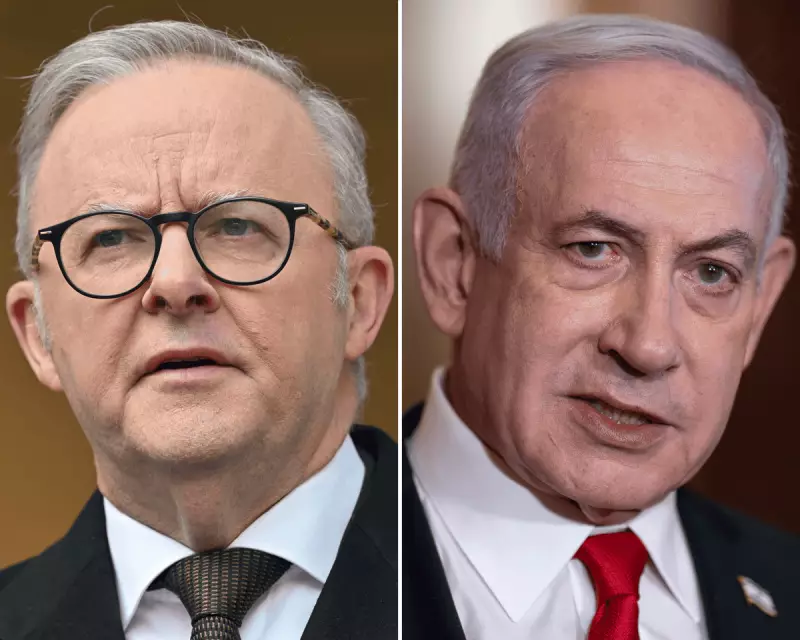
Australian Prime Minister Anthony Albanese has issued a strong rebuttal to claims made by Israeli leader Benjamin Netanyahu, who suggested Australia's recent recognition of a Palestinian state played a role in a deadly antisemitic attack in Sydney.
Diplomatic Tensions Escalate Over Comments
In a pointed interview with national broadcasters, Mr Albanese was asked directly if he accepted "any link between that recognition and the massacre in Bondi". The Prime Minister's response was unequivocal. "No, I don't," he stated, adding that a two-state solution is seen by most of the world as the necessary path forward for the Middle East.
The controversy stems from comments made by Mr Netanyahu on Sunday, following a terrorist attack at Bondi beach where fifteen Jewish people were killed and dozens more injured. Two local men opened fire on a crowd celebrating Hanukkah before being shot by police, one fatally.

The Israeli Prime Minister accused Mr Albanese's government of doing "nothing to stop the spread of antisemitism in Australia" and suggested its decision to recognise Palestine in August was a form of appeasement. Mr Netanyahu, who leads Israel's most right-wing government and faces an election within a year, described the earlier recognition as an "absurdity" and a "reward for terrorism".
Government Actions and Community Response
In his response, Mr Albanese emphasised national unity and support for the Jewish community. "This is a moment of national unity where we need to come together," he said, pledging to extend funding for physical security for Jewish community groups and pointing to existing measures like criminalising hate speech and banning the Nazi salute.
The government's special envoy on antisemitism, Jillian Segal, appointed last year to tackle a spate of attacks on synagogues and Jewish businesses, stated the Bondi attack "did not come without warning". "The writing has been on the wall," she told the Australian Broadcasting Corporation.
Community leaders echoed calls for more decisive action. Levi Wolff, lead rabbi at Sydney's Central Synagogue, warned that "when antisemitism goes unchecked from the top, these are the things that happen".
Broader Context and Political Fallout
The diplomatic rift between Canberra and Jerusalem has been widening since August, when Israel revoked the visas of Australian diplomats in occupied Palestine. Foreign Minister Penny Wong called this an "unjustified reaction" to Australia's recognition of Palestine, which the government framed as part of an international push for a two-state solution and a ceasefire in Gaza.
Opposition leader Sussan Ley criticised the government, saying Labor had allowed antisemitism to "fester" and demanded full implementation of recommendations from Ms Segal's July report, which included a focus on university campuses.
Mr Albanese has previously condemned antisemitism as an "evil scourge" and announced a A$25m security package for Jewish sites. He has also stressed the importance of distinguishing between antisemitism and legitimate criticism of the Israeli government's actions.
According to 2021 census data, Australia's Jewish community numbers approximately 116,967 people, or 0.46% of the national population, predominantly residing in inner Sydney and Melbourne.






