

Australia's Precarious Position in US Alliance Under Trump Administration
As Australia becomes increasingly integrated into the United States military apparatus, experts are raising urgent questions about the nation's ability to maintain independent foreign policy while avoiding being drawn into unpredictable conflicts. The recent escalation of hostilities between the US-Israel coalition and Iran has exposed the delicate balancing act Canberra must perform in its relationship with Washington.
The Challenge of Diplomatic Navigation
Dr. Lachlan Strahan, former Australian high commissioner and author of The Curious Diplomat, emphasizes the discomfort spreading among traditional US allies regarding recent military actions. "Everyone, among the traditional US allies, is discomforted by what has happened," Strahan explains, pointing to the lack of well-defined strategy in the Trump administration's approach to international conflicts.
The situation has created what Strahan describes as "another unpredictable, egotistical, muscular policy, which he's kind of dropped on everyone else." This unpredictability forces Australia to walk a narrow diplomatic path, attempting to express opposition or discomfort with US actions without provoking the notoriously volatile American president.

Military Integration and Its Consequences
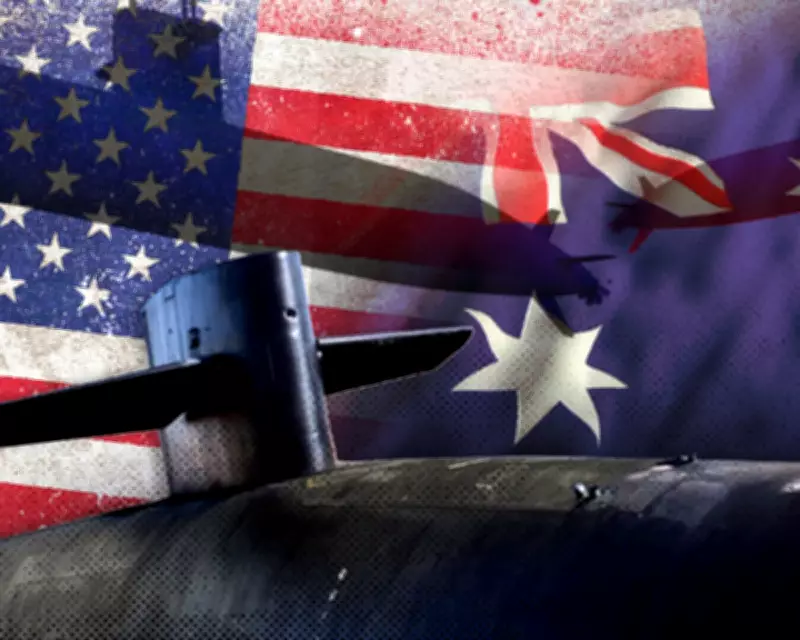
The Australian government's confirmation that three Australian service personnel were serving aboard the US nuclear-powered submarine that sank an Iranian warship in the Indian Ocean highlights the nation's direct involvement in escalating conflicts. Despite government claims that no Australian citizens participated in offensive action, their presence on the vessel that killed Iranian sailors creates undeniable complicity.
This incident occurs against the backdrop of the monumental Aukus submarine deal, which commits Australia to purchasing nuclear-powered submarines from the United States beginning next decade. The $368 billion agreement represents a significant portion of future defense budgets and creates what Strahan calls a strategic corner from which retreat becomes increasingly difficult.
The Erosion of International Norms
The current conflict reveals a troubling shift in international relations, moving away from the established rules-based order toward what Strahan describes as a "realist, Thucydidean world in which powerful countries act as they wish, the weak suffer as they must." This transformation poses particular challenges for middle-power nations like Australia that previously benefited from predictable international stability.
Annette Brownlie from the Independent and Peaceful Australia Network argues forcefully for Australian sovereignty, stating: "No matter how deep we have got ourselves into this alliance with the United States, I don't think we should ever get to a point where we cannot say 'no, this is the line in the sand.'"
Structural Military Integration
Australia's military entanglement with the United States extends far beyond submarine crews. The nation has committed $1.6 billion to upgrade RAAF base Tindal in the Northern Territory to accommodate US nuclear weapons-capable bombers. Meanwhile, the Pine Gap surveillance facility continues to expand its intelligence-gathering operations, and the presence of US troops stationed in Australia grows steadily.
Brownlie emphasizes the comprehensive nature of this integration: "Australia has enmeshed itself with the US structurally, materially and politically." This deep connection raises fundamental questions about national sovereignty and independent decision-making capacity.
The Path Forward
As Western leaders increasingly voice concerns about the Middle East conflict's legality and sensibility, Australia faces critical decisions about how to maintain its principles while managing its essential alliance with the United States. The challenge involves finding ways to stand up for Australian values and positions without engaging in confrontations that would inevitably favor the more powerful partner.

The situation demands sophisticated diplomatic maneuvering as Australia navigates between its historical reliance on a "great and powerful friend" and the realities of dealing with what Strahan describes as a "sui generis president" surrounded by "a mixture of sycophants and clowns." The coming months will test whether Canberra can maintain its independent voice while preserving the alliance that has formed the cornerstone of its security policy for generations.





