

Australia's Delicate Position in Global Power Struggles
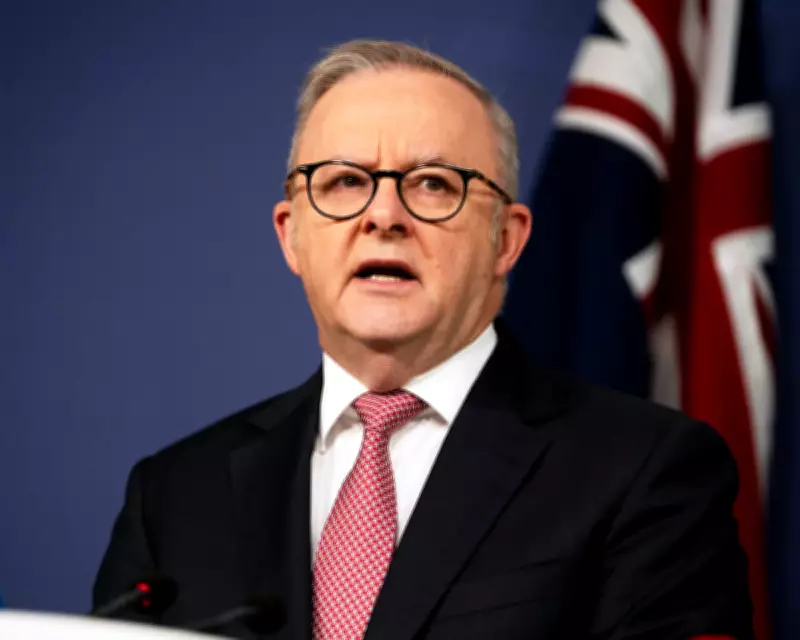
Prime Minister Anthony Albanese finds himself navigating treacherous diplomatic waters as he balances Australia's alliance with the United States against the principles of international law. His recent statements supporting American actions against Iran have sparked intense debate about Australia's role in an increasingly unstable global landscape.
The Trump Administration's Unconventional Approach
Donald Trump's presidency has fundamentally challenged traditional diplomatic norms, with the former US president famously declaring that he doesn't need international law to guide his decisions. This approach has created significant challenges for allied nations like Australia, which must decide how closely to align with American foreign policy initiatives.
Trump's Operation Epic Fury against Iran represents a particularly complex situation for the Australian government. As Liberal MP Andrew Hastie has noted, anyone who believes the global rules-based order still functions as intended is living in "fantasyland." This assessment reflects growing concerns about the erosion of international norms that have governed global affairs since the Second World War.

Historical Contrast with Labor Principles
Albanese's current position stands in stark contrast to the principled stance taken by Labor leaders in previous conflicts. In 2003, then-opposition leader Simon Crean declared Australia's participation in the Iraq war to be "illegal, unnecessary and unjust." This position has been validated by history, as the war's justification - dismantling weapons of mass destruction - proved to be based on false premises.
Current Defence Minister Richard Marles has publicly supported Crean's position, emphasizing that "the terms on which we engage in armed conflict end up being as significant a set of decisions as any government can make." This makes the Albanese government's current approach to the Iran situation particularly noteworthy.
The Fragility of International Systems
The global order established through the 1945 UN Charter appears increasingly fragile as major powers challenge established norms. Stanford Law's Allen Weiner, an expert in international law, has declared Trump's justification for attacking Iran to be "quite clearly illegal" under international law.
Weiner explains that international law explicitly prohibits "just in case" attacks based on potential future threats rather than immediate dangers. This creates a significant dilemma for Australia as it attempts to maintain its alliance with the United States while respecting international legal frameworks.
Australia's Precarious Middle Power Position
As a middle power, Australia occupies a particularly vulnerable position in the current global landscape. The nation recognizes its potential need for American protection while simultaneously risking entanglement in conflicts that may not serve its national interests. This balancing act requires careful diplomatic navigation that appears increasingly difficult as traditional alliances strain under new pressures.
The government has been careful to note that Australia is not directly participating in US-Israeli actions against Iran. However, Albanese's statement that "we support the United States acting to prevent Iran from obtaining a nuclear weapon and to prevent Iran continuing to threaten international peace and security" represents a significant departure from Labor's historical approach to international conflicts.
Political Pragmatism Versus Principle
The prime minister understands his difficult position better than most observers. While Crean stood on principle during the Iraq war debate, he ultimately lost the leadership amid accusations of being weak or unpatriotic. Albanese appears determined to avoid what he might view as a similar "domestic epic fail" by taking a more pragmatic approach to the current crisis.
This political calculation reflects the complex reality facing modern governments as they navigate between principle and practical politics in an increasingly volatile international environment. The challenge for Australia lies in maintaining its values while protecting its interests in a world where the rules-based order appears to be unraveling.

The situation with Iran represents just one facet of broader concerns about global stability. As nations grapple with how to respond to American actions that challenge international norms, middle powers like Australia must carefully consider their positions and potential consequences. The delicate balance between alliance obligations and legal principles has never been more challenging to maintain.





