

Caribbean Nations Pledge Humanitarian Support for Cuba Amid Escalating US Tensions
Caribbean countries have pledged to provide humanitarian assistance to Cuba, addressing a crisis intensified by a US fuel embargo. This commitment emerged from a four-day Caribbean Community (Caricom) summit in St Kitts and Nevis, which highlighted deep regional divisions over Washington's policies in the area.
Summit Highlights Regional Rifts Over US Intervention
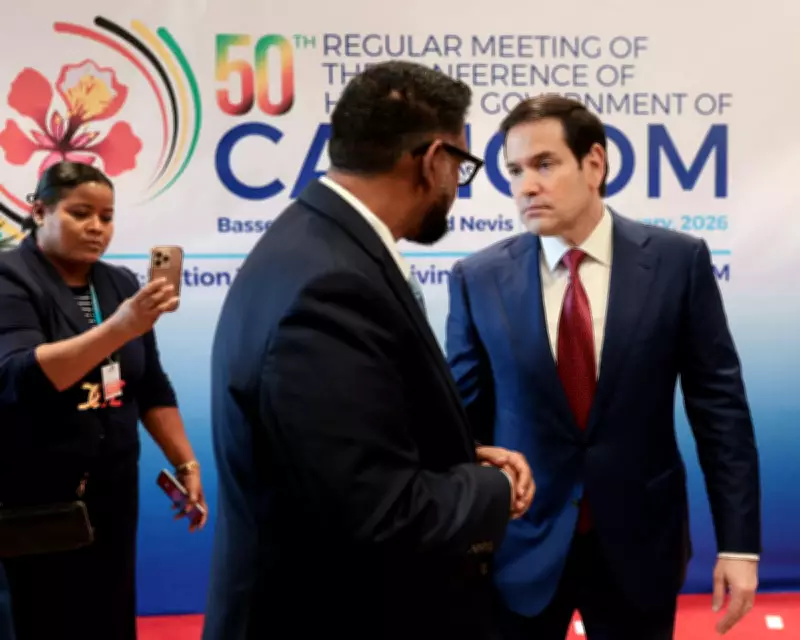
The summit, attended by US Secretary of State Marco Rubio, convened against a backdrop of rising tensions between Cuba and the United States. These strains have been exacerbated by the arrest of Venezuelan leader Nicolás Maduro, a key Cuban ally, by US forces, along with an oil blockade imposed on Cuba by the Trump administration in January.
At the conference's opening, calls for dialogue to de-escalate Cuba-US tensions were prominent. Jamaica's Prime Minister Andrew Holness expressed concerns about "severe economic hardship, energy shortages and growing humanitarian strain" in Cuba, warning of potential repercussions across the wider Caribbean region.

Humanitarian Pledge Amid Political Disagreements
Outgoing Caricom chair and St Kitts and Nevis Prime Minister Terrance Drew announced that the 15-nation bloc would respond "in a significant way to help the humanitarian situation in Cuba" within a month. However, the summit revealed significant disagreements among member states regarding US military interventions in the region.
When questioned about a potential joint Caricom statement condemning US military actions—which have included deadly strikes against suspected drug boats resulting in at least 151 fatalities without evidence of wrongdoing—Drew stated the body was investigating to ensure "a complete and comprehensive response."
Divisions Within Caricom Hinder Unified Stance
Caribbean political analyst Peter Wickham noted that disagreement among members about US policies likely prevented Caricom from adopting a clear position. This division was evident when Trinidad and Tobago's Prime Minister Kamla Persad-Bissessar challenged calls to maintain the Caribbean as a zone of peace, instead praising Trump's military interventions for reducing crime in her country.
"Don't talk to me about a zone of peace when Trinidad and Tobago recorded 623 murders in one year," Persad-Bissessar stated, attributing 40% of these killings to narcotics and firearms smuggled from Venezuela.
Wickham explained that Persad-Bissessar's staunch support for the Trump administration made consensus difficult. "Once Trinidad and Tobago is in the room and they hold a different view, there's absolutely nothing that you can do to get a common position," he added.
Calls for Stronger Regional Unity
David Abdulah, a Caribbean politician and regional executive committee member of the Assembly of Caribbean People, criticized Caricom leaders for failing to take a strong common position. He expressed concern that Rubio's visit would further divide the bloc, undermining its ability to defend Cuba's sovereignty.
Abdulah pointed to Trump's selective invitations—extended only to Persad-Bissessar and Guyana's President Mohamed Irfaan Ali from Caricom—as evidence of efforts to split Latin America and the Caribbean. "This is going to pose very grave dangers to the sovereignty of our individual countries," he warned.
Caricom's Structural Limitations and Future Cooperation
In response to concerns about disunity, Drew clarified Caricom's structural limitations. "Caricom does not have a homogeneous foreign policy—that is left up to sovereign states," he explained, noting that the organization coordinates rather than dictates national policies. He emphasized that individual invitations to meetings do not fragment Caricom.
Looking forward, Drew announced that Caricom and the US would develop a new cooperation agreement to strengthen their relationship. This framework will address migration, security, trade, investment, disaster recovery, human development, and technical assistance, superseding previous agreements like the Caribbean Basin Initiative established in 1983.

The summit ultimately underscored the complex balancing act Caribbean nations face in navigating humanitarian needs, regional unity, and relations with global powers amid escalating geopolitical tensions.





