

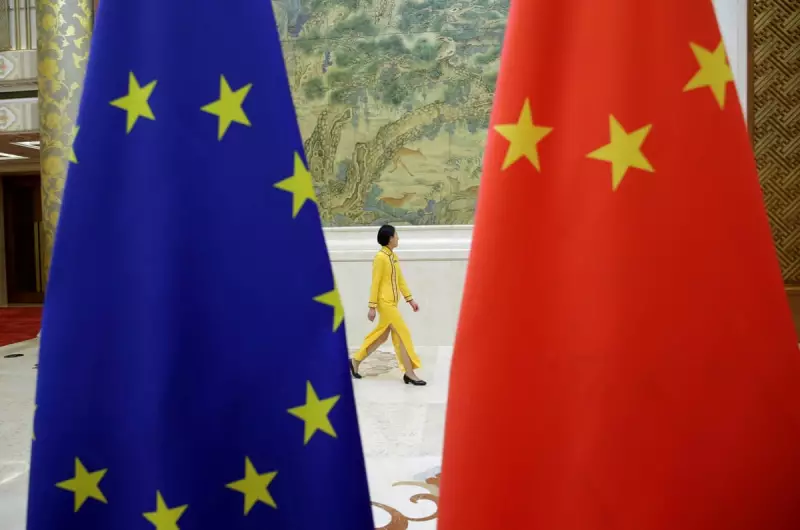
Chinese officials have been applying significant pressure on European governments, urging them to deny entry visas to Taiwanese political figures or risk crossing Beijing's "red lines," according to exclusive reports.
Diplomatic Demarches and Legal Arguments
In a series of diplomatic approaches during November and December, Chinese representatives contacted multiple European embassies in Beijing and capital cities. The communications, delivered via written notes verbale and in-person meetings, warned against allowing visits by Taiwanese officials, including the island's current vice-president and foreign minister, and a former president.
The core of Beijing's argument rests on a novel interpretation of European Union regulations. Chinese officials cited the Schengen Borders Code, which states that non-EU nationals can be barred if considered a threat to the international relations of member states. Beijing's position is that permitting entry to Taiwanese politicians constitutes such a threat to relations with China.

In some instances, officials also referenced the Vienna Convention on diplomatic relations and suggested European countries follow the United Nations' example in barring Taiwanese personnel from government buildings.
European Responses and Taiwanese Condemnation
The foreign ministries of Norway and Finland confirmed receiving the advice, stating that visa regulations concerning Taiwan are determined by relevant Schengen bodies. A UK Foreign Office spokesperson asserted that entry permission is "determined solely by our own laws and immigration rules."
Taiwan's foreign ministry strongly rejected China's actions, stating that officials' visits to Europe are "entirely unrelated to China, and China has no right to interfere." A spokesperson accused Beijing of using coercive measures that undermine global peace and are the real force damaging international relations.
A Long-Running Strategy of Isolation
Analysts view this campaign as part of Beijing's sustained effort to diplomatically isolate Taiwan, which it claims as part of its territory. Claus Soong, an analyst at Merics, said the move fits China's strategy of using all possible means to deter closer cooperation with Taiwan.
Zsuzsa Anna Ferenczy, an assistant professor at Taiwan's National Dong Hwa University, called Beijing's interpretation "bold," noting that the perception in Europe does not align with the Chinese assertion that EU-Taiwan ties threaten relations with Beijing. She suggested the warnings aim to generate unease, particularly among smaller nations keen on Chinese investment.
The EU maintains a delicate balance, with formal relations with Beijing but also "solid" unofficial ties with Taipei through trade and parliamentary exchanges. However, Beijing's increasingly assertive tactics are testing that equilibrium, as it seeks to block Taiwan from any form of multilateral engagement on the global stage.






