

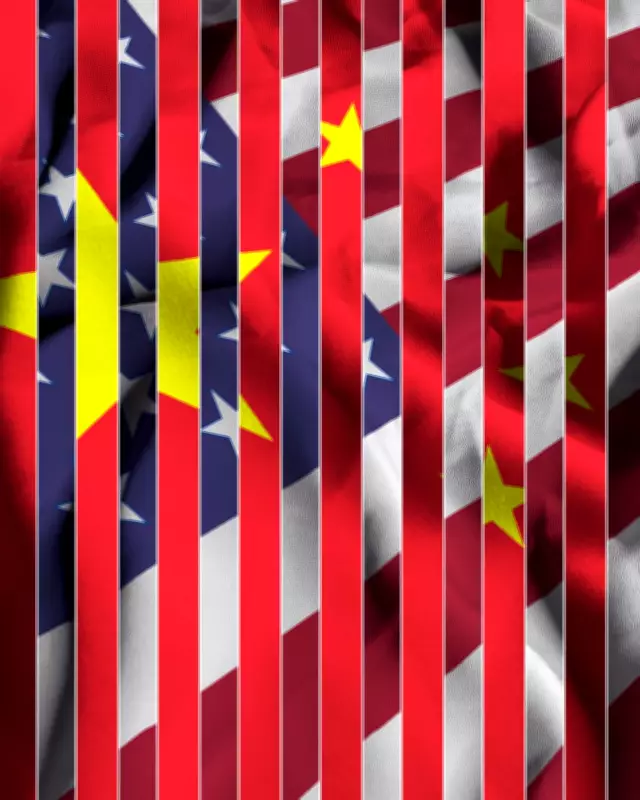
The Social Media Mirror: How China and America See Each Other Through Viral Trends
Across the digital divide, two contrasting social media phenomena have emerged that reveal how younger generations in China and the United States perceive each other's societies. While American teenagers enthusiastically adopt Chinese lifestyle habits under the banner of "Chinamaxxing," their Chinese counterparts are engrossed in discussions about the so-called "kill line" in American society—a concept suggesting life in the US is perpetually one step from disaster.
The American Fascination with Chinese Culture
On platforms like TikTok and Instagram, a significant trend has taken root among American Gen Z users who are embracing various aspects of Chinese culture. This movement, dubbed "Chinamaxxing," involves adopting traditional Chinese practices ranging from drinking hot water for health benefits to playing mahjong and wearing indoor slippers. The trend's popular slogan, "You've met me at a very Chinese time in my life," encapsulates this cultural embrace that has gained substantial traction among young Americans seeking alternative lifestyle approaches.
The Chinese government has actively encouraged this positive attention, implementing tourism initiatives and relaxing visa requirements for visitors from numerous European countries, including the United Kingdom. Beijing has welcomed influencers who highlight appealing aspects of Chinese life while generally avoiding more sensitive topics like human rights and political oppression. This strategic soft power approach contrasts sharply with how American society is portrayed within China's digital ecosystem.

The Chinese Perception of American Vulnerability
Meanwhile, on Chinese social media platforms, particularly Weibo, a dramatically different narrative has gained extraordinary momentum. The concept of the "kill line" has become a viral phenomenon, with related hashtags accumulating over 600 million views. Originally a gaming term referring to the point where a player's strength is so depleted that one more blow could cause total defeat, the phrase has been adapted to describe perceived vulnerabilities in American society.
Chinese media and social media users have extensively discussed this concept, portraying the United States as a dystopian capitalist environment where the middle class faces constant risk of plunging into poverty. Viral content includes videos of homeless individuals, with one particularly shared clip featuring a man claiming to have previously earned a six-figure salary—though this specific video was actually filmed in London, not the United States. Another widely circulated case involves former Nickelodeon star Tylor Chase, who was reportedly seen homeless in California, with Chinese commentators presenting this as evidence of America's social fragility.
Historical Context and Shifting Perceptions
Chinese propaganda has historically depicted Western nations, particularly the United States, as lands of poverty and moral decay. During the Cultural Revolution in 1968, the People's Daily published multiple articles describing America as "a paradise for the rich, a hell for the poor." However, following China's opening up in the 1980s and increased information flow between the two nations, many Chinese citizens began viewing the United States as a land of opportunity and prosperity.
This perception has shifted dramatically in recent years according to analysts. Wang Haolan, a research associate at the Asia Society in New York, notes that while China previously looked up to the United States "regardless of the official rhetoric," events including the 2008 economic crisis, Donald Trump's election, and the US handling of the COVID-19 pandemic have transformed admiration into curiosity about American "turmoil."
Ren Yi, an influential nationalist commentator known online as Chairman Rabbit, identifies Trump's re-election and the US-China trade war as primary factors in declining Chinese regard for America. "Chinese people are much more critical of the US now," Ren states. "Their attitude toward America has been shifting constantly, which is closely linked to the changing balance of power between the two nations."

Diverging Social Realities and Government Narratives
The discussion around homelessness illustrates fundamental differences in how both societies address social issues. In the United States, homelessness reached record levels in 2024, with over 771,000 people experiencing homelessness according to the National Alliance to End Homelessness—an 18% increase from the previous year.
China's situation is more complex due to its hukou household registration system, which counts people based on their official registration location rather than current residence. While millions of domestic migrants live in challenging conditions on urban fringes, they are not officially classified as homeless. The Chinese government has actively promoted its success in eradicating extreme poverty, a milestone President Xi Jinping announced in 2021, though severe destitution remains largely hidden from public view.
Ren argues that cultural factors make homelessness less likely in China: "In China, you can always get support from both close and extended family, you always have someone to help you." This perspective contributes to why many Chinese internet users "don't understand" American social problems when viewing them through the kill line framework.
Political Dimensions and Domestic Considerations
Some analysts interpret the kill line phenomenon as serving domestic political purposes in China. With approximately one in five young people aged 16-24 unemployed according to official statistics—and potentially higher according to some economists—alongside concerns about low wages and sluggish growth, the government faces significant economic challenges.
Wang Qinglin, a Chinese writer based in Germany, suggests that highlighting Western difficulties "creates an image that provides people with a sense of psychological comfort. Someone who might have originally been critical of the Chinese government may, after seeing these problems in western society, shift toward a more positive attitude."
Henry Gao, a professor at Singapore Management University, observes that official promotion of the US kill line concept follows a recurring pattern: "This is a recurring pattern in China, where attention is often diverted toward perceived issues in other countries whenever significant internal challenges arise—with the United States typically being the first target."
This dynamic has created commercial opportunities within China's digital landscape. Legal blogger Li Yuchen, in a since-deleted essay, described US-bashing nationalism as "a lucrative niche for influencers" that functions like "a cheap dose of 'patriotic aphrodisiac'" that doesn't solve domestic problems but provides emotional satisfaction.
A Window into Cross-Cultural Understanding
These parallel social media trends offer revealing insights into how younger generations in both countries perceive each other's societies. While American youth explore Chinese cultural practices with genuine curiosity and enthusiasm through Chinamaxxing, Chinese internet users engage with a narrative of American vulnerability through the kill line framework. Both phenomena reflect broader geopolitical tensions and domestic considerations, creating a fascinating digital mirror where each society sees reflected what they either aspire toward or fear becoming.
The contrast between these trends highlights how social media platforms have become battlegrounds for soft power and national narrative construction. As information flows continue to shape cross-cultural perceptions, these viral concepts demonstrate how digital spaces both connect and divide global citizens in an increasingly interconnected yet politically complex world.





