

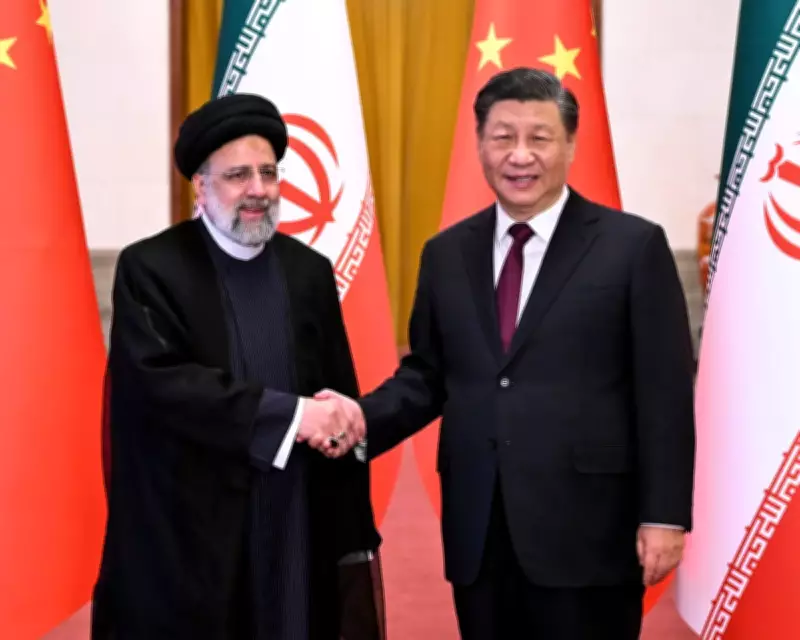
China's Calculated Restraint in the Iran Conflict
The ongoing war between the United States, Israel, and Iran has placed China in a delicate diplomatic position, exposing the surprising limits of its much-touted strategic partnership with Tehran. While official Chinese rhetoric has long emphasized shared historical grievances against Western aggression and a comprehensive $400 billion investment deal signed in 2021, Beijing's response to the conflict has been notably muted. This cautious approach underscores a broader reality: China's relationships in the Middle East are primarily transactional, focused on economic gains rather than deep security commitments.
A Partnership of Convenience, Not Depth
Despite decades of bilateral ties and grand civilizational narratives, the Sino-Iranian relationship lacks substantive depth. China openly pursues arms sales to Iran but steadfastly avoids providing security guarantees, a stark contrast to the pre-Trump United States. Economically, the partnership is similarly lopsided: while Iran sells 90% of its exported oil to China, these shipments constitute only about 13% of China's total crude imports, often purchased at discounted rates due to Western sanctions. Beijing has further insulated itself by building vast reserves of oil, food, and fertilizers, and by diversifying its energy sources across the Gulf Cooperation Council members.
China's broader Middle East strategy reflects a pragmatic shift. As U.S. dependence on Gulf fossil fuels has declined, regional states have sought to hedge their bets, while sanctions on Russia have highlighted the benefits of diversified investment for Chinese firms. Although Beijing expresses concern over the war's destabilizing effects, it also spies opportunities. Investors anticipate a surge in demand for renewable technologies, potentially benefiting Chinese industries. Additionally, China may secure reconstruction contracts in the Middle East and acquire cut-price assets, as evidenced by India's recent requests for assistance in accessing fertilizers.

Geopolitical Calculations and Taiwan Ambitions
The war presents complex geopolitical implications for China. The U.S. national security strategy, reiterated in November, prioritizes challenging China, yet the conflict is diverting American attention and resources from the Indo-Pacific region. Estimates suggest the war costs the U.S. approximately half a billion dollars daily, consuming vast quantities of military assets. This distraction may offer Chinese President Xi Jinping a growing opportunity to advance ambitions regarding Taiwan, potentially through negotiations with a preoccupied and transactional U.S. administration.
Furthermore, the conflict erodes belief in a rules-based international order, positioning China as a more predictable actor compared to the volatility of Donald Trump's America. However, Beijing now faces expanded responsibilities. With growing economic and diplomatic interests to protect, including an expatriate population of perhaps one million in the Middle East alone, China's limited security contributions become increasingly conspicuous. Its pride in brokering the 2023 Saudi-Iranian thaw appears hollow as tensions escalate, revealing the limits of its "strategic ambiguity."
The Enduring Challenge of American Dominance
Some analysts argue that this war underscores the enduring nature of American dominance and China's constrained ability to respond when U.S. hard power targets its partners. The larger issue for Beijing is navigating a world where the United States is as likely to disrupt order as uphold it. As former U.S. President Barack Obama once remarked, China has been a "free rider" in global security for three decades, benefiting from relative stability. Now, Beijing and others must confront the uncertain future of this arrangement, balancing opportunistic gains against the risks of a more volatile international landscape.






