Cuban President Confirms Talks with US Officials Amid Economic Crisis
Cuban President Miguel Díaz-Canel has publicly confirmed that Cuban officials have engaged in discussions with the United States government, aiming to resolve the longstanding blockade and bilateral tensions between the two nations. In a video broadcast on national television, Díaz-Canel emphasized that these talks are focused on finding diplomatic solutions through dialogue, conducted on principles of equality and respect for each country's sovereignty and political systems.
Addressing Economic and Political Pressures
The announcement comes at a critical time for Cuba, which is grappling with a severe economic crisis marked by frequent power blackouts, fuel shortages, and widespread hardship. Díaz-Canel's rare media appearance, scheduled shortly after the video aired, underscores the increasing pressure on the Communist government, exacerbated by policies from the Trump administration, including an oil blockade that has intensified the island's struggles.
In his address, Díaz-Canel framed the negotiations as a continuation of earlier warnings, referencing a February event where he cautioned that Cuba might need to take "extreme measures" due to the deteriorating conditions. The talks are seen as an effort to mitigate these challenges and seek relief from the US-imposed sanctions that have crippled the Cuban economy for decades.

Background and Diplomatic Engagements
Recent diplomatic activities have included discussions between US officials and Raúl Guillermo Rodríguez Castro, the grandson of former Cuban president Raúl Castro, during the Caricom meeting in St Kitts and Nevis. Although Rodríguez Castro holds no official government position, his close ties to his grandfather, who remains influential in Cuba's power structure, suggest informal channels are being utilized to facilitate dialogue.
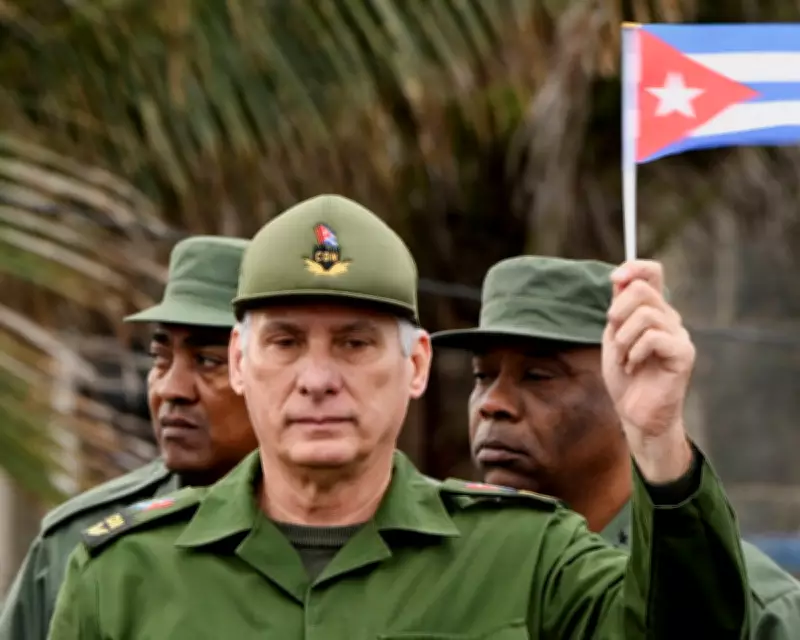
Díaz-Canel's statement highlights Cuba's commitment to pursuing peaceful resolutions while maintaining its political autonomy. The Cuban leader waved a Cuban flag during a march outside the US embassy in Havana earlier this year, symbolizing national pride amid the ongoing disputes.
Implications for Bilateral Relations
The confirmation of these talks signals a potential shift in US-Cuba relations, which have been strained under the Trump administration's hardline policies. By seeking solutions to "bilateral differences," Cuba aims to address not only the economic blockade but also broader geopolitical tensions that have impacted the Caribbean region.
As details continue to emerge, observers are closely watching for developments that could lead to eased sanctions or improved diplomatic ties, offering hope for Cuba's beleaguered population facing daily hardships.