

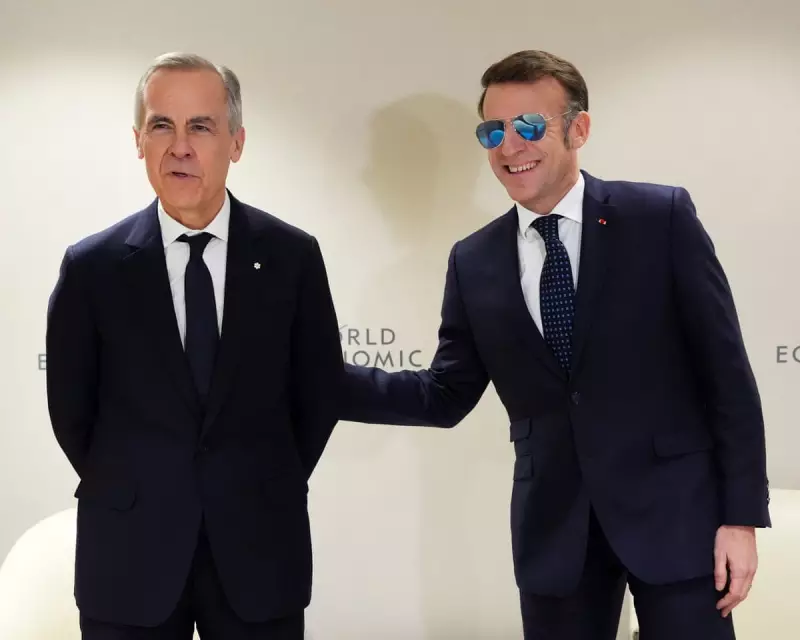
Davos 2026: Western Leaders Forge New Alliances Amid Trump's Isolationist Stance
The World Economic Forum in Davos, Switzerland, has become a focal point for a significant geopolitical shift, as prominent figures like Mark Carney and Emmanuel Macron gather to discuss the future of international cooperation. Against the backdrop of Donald Trump's contentious second term, the forum has highlighted a growing consensus among Western leaders that reliance on the United States is no longer tenable. This year's discussions have centred on the urgent need for middle powers to unite and create alternative alliances, marking a potential turning point in global diplomacy.
A Call to 'Live in Truth'
In a powerful address, Canadian Prime Minister Mark Carney invoked the words of Czech dissident Vaclav Havel, urging leaders to 'live in truth' and abandon the pretence of a reliable US partnership. Carney emphasised that the old rules-based order has been dismantled, describing the current era as 'the end of a pleasant fiction and the beginning of a brutal reality'. His speech resonated widely, with many attendees acknowledging that Trump's policies, including threats to invade Greenland and aggressive tariff tactics, have eroded trust in American leadership.
European Voices Echo Concerns
European leaders have been vocal in their assessments. Ursula von der Leyen, President of the European Commission, warned of a 'lawless world' defined by raw power, advocating for Europe to develop its own strategic levers. French President Emmanuel Macron, who faced mockery from Trump during the forum, painted a stark picture of a 'rule-free' global system where multilateral institutions are weakened. He accused the US of openly seeking to subordinate Europe, underscoring the urgency for independent action.

The Middle-Power Dilemma
Finnish President Alexander Stubb, author of 'The Triangle of Power: Rebalancing the New World Order', provided a nuanced analysis. He argued that liberal Europe is caught in a double bind: the US no longer prioritises European interests and views the region as an ideological opponent. Stubb noted that Trump's movement represents a fundamental shift against liberalism and globalisation, forcing middle powers to reconsider their alliances.
UK's Strategic Crossroads
The implications for the UK are profound. Carney's message to Keir Starmer was clear: bilateral negotiations with a hegemon like the US lead to weakness, and the only viable path for 'in-between' countries is to form coalitions for greater impact. While Starmer has historically been pragmatic about the US relationship, there is growing pressure within Labour to align with middle-power alliances. Ed Miliband's praise for Carney's speech signals internal divisions, with some advocating for closer defence ties with Europe to counterbalance US influence.
Looking Ahead: Salvage and Solidarity
Leaders at Davos agree that while some aspects of the US relationship should be preserved—such as cooperation on Greenland or Ukraine—the overarching strategy must involve 'naming reality'. This means building resilient networks among middle powers to withstand pressures from China, Russia, and the US. For Starmer, this could mean revisiting stalled defence talks with Europe, a move that would break with decades of UK foreign policy tradition. As the forum concludes, the question remains whether this collective awakening will translate into tangible action or remain rhetorical.






