

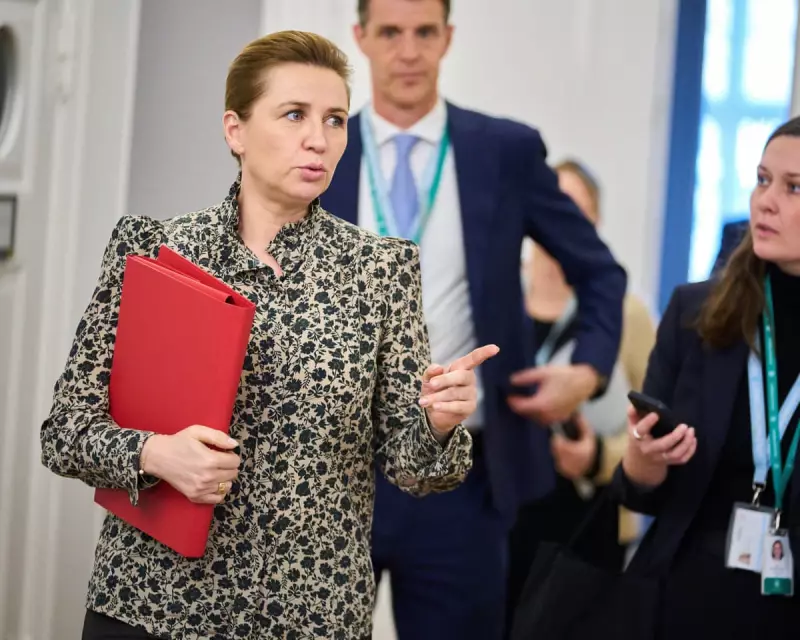
Denmark's Prime Minister Advocates for Respectful Greenland Dialogue Following Trump's Deal Framework Announcement
Danish Prime Minister Mette Frederiksen has emphasised the need for constructive negotiations concerning Greenland, while firmly stating that the island's sovereignty remains off the table. This declaration comes in response to former US President Donald Trump's assertion that a framework for a future deal has been established to resolve the ongoing dispute over the Arctic territory.
Frederiksen's Stance on Sovereignty and Security
Frederiksen clarified that while Denmark is open to discussing various political aspects such as security, investment, and the economy with its allies, the sovereignty of Greenland is not up for negotiation. She made these remarks after Trump indicated that a resolution was imminent following a meeting with NATO Secretary General Mark Rutte in Davos, Switzerland.
The Prime Minister confirmed that she had received assurances that the discussions between Trump and Rutte did not involve any compromise on the territorial integrity of Denmark or Greenland. Frederiksen expressed Denmark's willingness to continue a constructive dialogue on enhancing Arctic security, including considerations related to the US Golden Dome missile-defence system, provided it respects their sovereignty.

Trump's Shift in Approach and European Reactions
Trump recently stepped back from earlier threats to use tariffs or force to seize Greenland, a move that had escalated tensions and risked a significant breakdown in transatlantic relations. Instead, he announced the discovery of a deal framework that he described as making everybody very happy and positioning all parties favourably, particularly regarding security and mineral resources.
European leaders responded with cautious optimism to this development. NATO's Mark Rutte highlighted the importance of collective efforts to ensure Arctic security, specifically aiming to prevent Chinese and Russian access to Greenland's economy and military infrastructure. Other European officials, including those from Italy, the Netherlands, Germany, and France, welcomed the de-escalation while stressing the need for continued cooperation within NATO.
Background and Broader Implications
The dispute over Greenland, which Trump first proposed acquiring in 2019, intensified in recent weeks with aggressive rhetoric and tariff threats against several European nations. This prompted the European Union to consider retaliatory measures, such as tariffs on US imports and the use of its anti-coercion instrument. The situation had raised concerns about irreparable damage to transatlantic ties, leading to an emergency EU meeting in Brussels.
Frederiksen's call for respectful negotiations underscores the delicate balance between maintaining strong alliances and protecting national sovereignty. As discussions progress, the focus remains on fostering dialogue that upholds territorial integrity while addressing shared security interests in the strategically vital Arctic region.






