

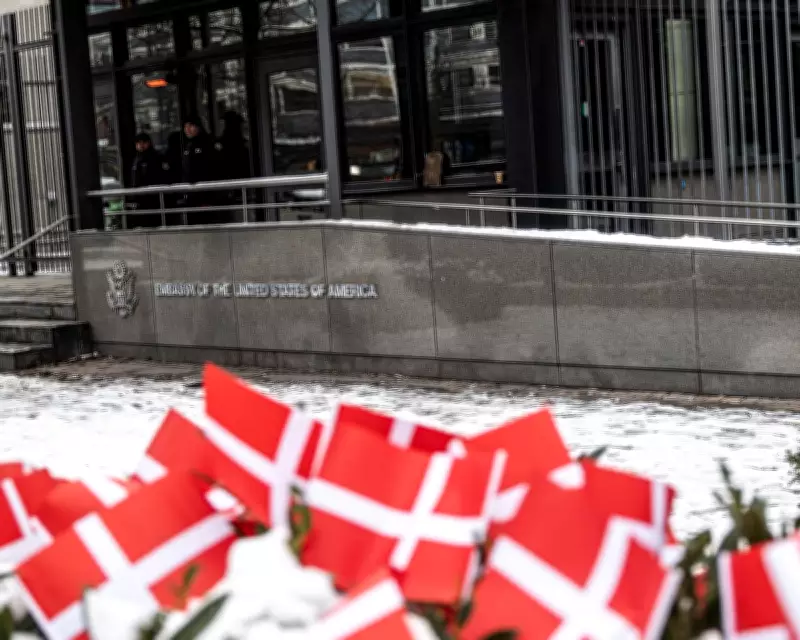
Danish Foreign Minister Lars Løkke Rasmussen has indicated a cautiously optimistic outlook following recent high-level discussions with United States officials concerning Greenland. In a statement, Rasmussen revealed that he is "slightly more optimistic today than a week ago" that a mutually acceptable solution can be reached, describing the talks as constructive.
Washington Discussions Aim to Reset Diplomatic Process
The minister confirmed that he met with US Secretary of State Marco Rubio in Washington for further negotiations, effectively putting the dialogue back on the track established two weeks prior. Rasmussen acknowledged that the process had experienced "a major detour" with escalating tensions, but emphasised that discussions are now progressing positively again.
This development comes precisely one week after former US President Donald Trump's controversial remarks at Davos, where he repeatedly asserted a desire to take control of Greenland. The comments had initially heightened diplomatic strains between the two nations.

Low-Profile Format Avoids Media Attention
Secretary Rubio informed the US Congress that both parties have deliberately maintained a low-profile format for these discussions, specifically intended to avoid creating what he termed "a media circus" around the sensitive negotiations. This approach suggests both sides are committed to substantive dialogue without unnecessary public spectacle.
While Rasmussen declined to provide specific details about the talks' content, he maintained that discussions have focused on identifying ways to address US security interests while respecting Denmark's fundamental red lines on territory and sovereignty. The Danish government has consistently emphasised that Greenland remains an integral part of the Kingdom of Denmark.
Broader European Diplomatic Context
As EU foreign ministers convene in Brussels for a comprehensive agenda addressing multiple global hotspots, Rasmussen is expected to offer more detailed insights during closed-door sessions. The ministerial meeting will cover numerous international issues including the situations in Ukraine, the Middle East, and other regions experiencing conflict.
Simultaneously, German Chancellor Friedrich Merz is delivering a significant foreign policy address in the Bundestag, outlining Germany's strategic priorities on the international stage. Both developments reflect Europe's active diplomatic engagement across multiple fronts.
Regional Security Developments
Separately, security concerns persist in Eastern Europe following a rare late-night incident where weather balloons from Belarus violated Polish airspace. This occurrence underscores the continuing tensions in the region amid broader geopolitical challenges.
The constructive tone emerging from the Greenland discussions represents a notable shift from the heightened rhetoric of recent weeks, suggesting both Washington and Copenhagen recognise the value of diplomatic channels in resolving complex territorial and security matters.






