

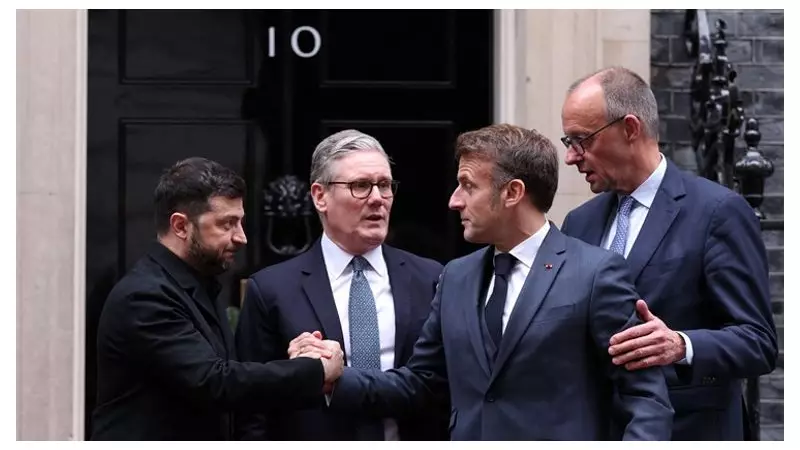
European Union leaders are gathering in Brussels today for a pivotal summit that could determine the future financial and military support for Ukraine in its war against Russia.
A €210 Billion Lifeline Hangs in the Balance
The central item on the agenda is the proposed release of €210 billion (£184bn) derived from Russian state assets frozen after Moscow's full-scale invasion in 2022. The vast majority of these funds are held by the Belgium-based financial clearing house, Euroclear. For Ukraine, this money is not merely helpful but essential for national survival.
The Ukrainian government faces a stark reality: without a significant new injection of international assistance, the country risks bankruptcy by early 2026. Such a financial collapse would mean Kyiv could no longer pay its soldiers, police, and civil servants, nor procure the weapons needed to defend its sovereignty.

Overcoming Belgian Hurdles and Proving European Resolve
The path to unlocking these funds is fraught with diplomatic and legal challenges. The Belgian government has so far blocked the move, fearing retaliatory lawsuits from Russia. To address these concerns, the EU is racing to pass emergency legislation that would secure sanctions against Russia indefinitely, removing the need for renewal every six months and insulating the process from vetoes by Russian-leaning member states like Hungary and Slovakia.
This summit is widely seen as a critical moment for Europe to assert its strategic autonomy. With US financial support under President Donald Trump becoming unreliable, the EU must demonstrate it can act decisively without Washington. German Chancellor Friedrich Merz, a leading advocate for releasing the funds, warned that failure would severely damage Europe for years, emphasising that the step is about ending the war, not prolonging it.
Strategic Stakes and the Road to Peace
The decision carries immense weight beyond immediate finances. Successfully accessing the frozen Russian assets would grant Brussels greater leverage in any future peace negotiations while reducing Kyiv's dependency on the United States. Conversely, failure would deal a severe blow to the EU's credibility, potentially rendering it irrelevant in peace talks and encouraging Russian President Vladimir Putin to exploit a divided Europe.
Ahead of the meeting, Ukrainian President Volodymyr Zelenskyy, who is expected to brief the leaders, urged a strong outcome. He stated on social media that Europe's result must make Russia feel its desire to continue the war is pointless, asserting that this responsibility "rests entirely with Europe." The EU's unity and its ability to navigate internal objections will be tested as never before, with the future of Ukraine and European security on the line.






