

Historical Tensions: European Resistance to US Foreign Policy Through Decades
As European countries reject President Trump's call for assistance in reopening the Strait of Hormuz, it's worth examining the long history of friction between Western allies over foreign policy matters. This resistance is not a new phenomenon but rather a recurring theme in transatlantic relations.
The Vietnam War: Wilson's Strategic Refusal
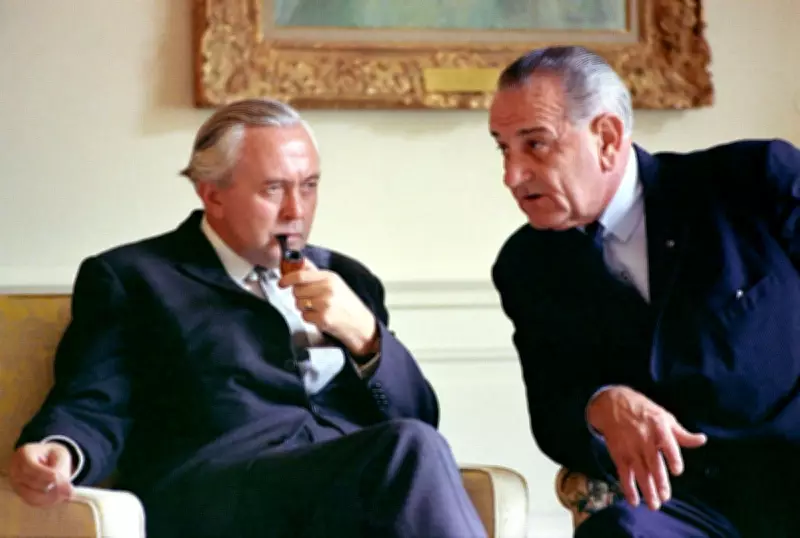
One of the earliest and most significant examples occurred in December 1964 when Prime Minister Harold Wilson met with President Lyndon B. Johnson. During their discussions, President Johnson made a direct request for British military support in Vietnam, hoping to share America's growing burden in Southeast Asia.
Wilson, however, presented a compelling counterargument. He demonstrated that Britain was already making substantial contributions elsewhere, particularly in Malaysia where the country maintained 8,000 troops in Borneo and a total of 20,000 across Malaysia. This commitment, Wilson argued, was directly comparable to the 20,000 American "advisers" operating in Vietnam at that time.

The Prime Minister further strengthened his position by highlighting Britain's potential role in defending India following China's nuclear test. Wilson informed Johnson about increasing demands within India for a nuclear weapons program to counter the Chinese threat, positioning Britain as a crucial ally in this emerging strategic landscape.
Despite Johnson's persistent pressure, which reportedly included late-night phone calls, Wilson maintained his refusal. In one particularly revealing anecdote from 1981, Wilson recalled Johnson's "almost pathetic request" for Britain to send "six Highlanders in kilts with bagpipes" to Vietnam—a request that was ultimately denied.
Economic Conflicts: The Nixon Shock
Tensions extended beyond military matters into economic policy. In August 1971, President Nixon imposed a 10% surcharge on import duties, a move defended by Deputy Under-Secretary of State Nathaniel Samuels with the argument that "what is good for America is good for the world."
The European Economic Community responded with strong opposition. EEC spokesman Ralf Dahrendorf declared the surcharge "totally unacceptable" and warned that the Community reserved the right to defend itself against the measure's impact. European leaders argued that the tariff would harm America's trading partners without solving the underlying US payments deficit.
The Siberian Pipeline Dispute
Another significant conflict emerged in the early 1980s over the Siberian natural gas pipeline project. Despite serious objections from the US government, European nations moved forward with what would become the biggest East-West trade deal in history.
When the Reagan Administration extended its embargo to include European companies using US technology for the pipeline, the EEC responded forcefully. In August 1982, Brussels informed Washington that the ban was illegal under international law and represented "unacceptable interference in the independent commercial policy of the European Community."
The pipeline, scheduled to become operational in 1984, would transport up to 40 billion cubic yards of natural gas from Siberia to several Western European countries. The US embargo affected companies in Britain, Italy, France, and West Germany, but European determination ensured the project's continuation.
The Iraq War: Media Backlash and Diplomatic Resistance
Perhaps the most public confrontation occurred in 2003 as France and Germany united against the proposed Iraq war. American media responded with unprecedented vitriol, labeling European leaders as part of an "axis of weasels" and describing France in particularly unflattering terms.
Newspapers like Rupert Murdoch's New York Post ran inflammatory headlines and cartoons, with one showing an ostrich with its head in the sand captioned "The national bird of France." Columnists questioned European commitment to security matters, with Steve Dunleavy asking "Where are the French now?" and accusing them of "wimping out."
This media frenzy reflected deeper frustrations with European diplomatic resistance, which American commentators often portrayed not as legitimate policy disagreement but as inherent weakness in the European character.

Enduring Patterns in Transatlantic Relations
These historical episodes reveal consistent patterns in European-American relations. European nations have repeatedly demonstrated their willingness to resist American pressure when they perceive conflicts with their own strategic interests, economic priorities, or diplomatic principles.
From Wilson's careful balancing act during the Vietnam era to European unity against the Iraq war, these moments of tension highlight the complex dynamics within the Western alliance. They demonstrate that European resistance to US foreign policy is neither new nor isolated but rather an enduring feature of transatlantic relations that continues to shape global politics today.
The current rejection of Trump's Hormuz initiative fits squarely within this historical pattern, suggesting that European nations will continue to assert their independence in foreign policy matters even when it creates friction with their most powerful ally.





