

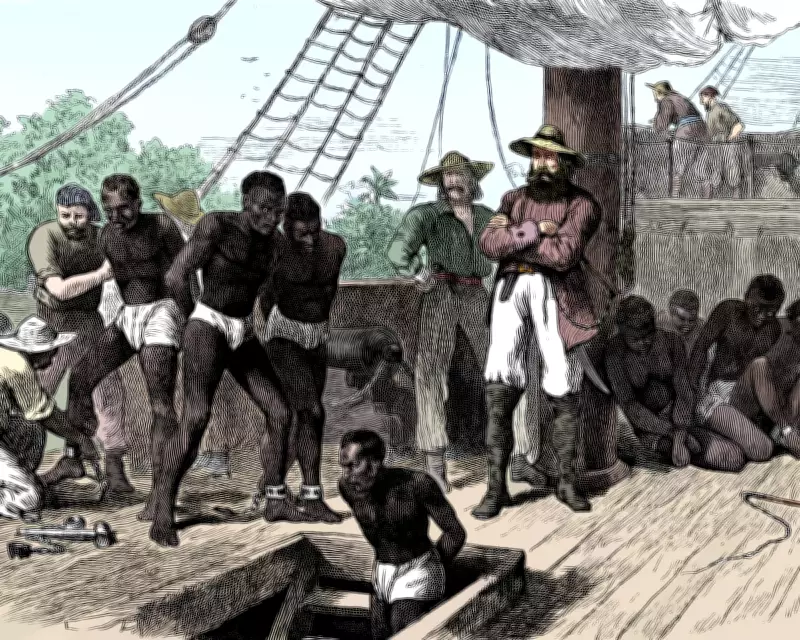
Ghana Champions UN Resolution to Declare Transatlantic Slave Trade a Crime Against Humanity
In a landmark diplomatic initiative, Ghana is spearheading a United Nations General Assembly resolution to formally recognize the transatlantic trafficking and enslavement of Africans as a crime against humanity. This bold move, announced by President John Dramani Mahama during Ghana's 69th independence celebrations, seeks to establish an international framework for reparatory justice and historical acknowledgment.
Building on Centuries of Advocacy
The resolution represents the culmination of centuries of resistance and moral reasoning, tracing back to early African leaders who protested against human capture and sale. This tradition has evolved into institutional forms through several key declarations:
- The 1993 Abuja Proclamation first recognized the enslavement and trafficking of Africans as an unprecedented crime
- The Caricom Reparations Commission developed a comprehensive framework for reparatory justice
- The 2023 Accra Proclamation reaffirmed Africa's collective commitment to this cause
- The African Union has declared 2026-2035 as the Decade of Action on Reparations and African Heritage
International Coalition for Justice
Ghana's initiative carries significant international weight, enjoying support from the African Union, the Caribbean Community (Caricom), and numerous countries across the global south. This growing coalition emphasizes that their goal is not to reopen old wounds but to acknowledge historical truths honestly and work collectively toward healing and justice.

"This is not about assigning collective guilt to present generations," President Mahama emphasized. "Rather, it is about understanding how historical injustices have shaped contemporary inequalities, and how a more honest reckoning can contribute to a fairer, more inclusive global order."
From Recognition to Action
The UN resolution aims to move beyond mere acknowledgment toward structured dialogue and practical pathways for repair. While the 2001 Durban Declaration and Programme of Action acknowledged the transatlantic slave trade as a crime against humanity, Ghana's initiative seeks to translate that recognition into meaningful action.
The proposed process envisions engagement between states, institutions, scholars, and communities to explore constructive approaches to reparatory justice. These may include investments in education, health systems, cultural restoration, and economic opportunities designed to address enduring gaps and build shared prosperity.
Addressing Enduring Legacies
The transatlantic slave trade's impact extends far beyond its historical timeframe, having disrupted societies, extracted human and economic value on an unprecedented scale, and created enduring legacies that continue to influence global patterns of development, opportunity, and vulnerability.
President Mahama highlighted the particular impact on women and families, noting that "a full accounting of this past requires us to acknowledge these dimensions and to ensure that any process of repair is inclusive and comprehensive."
A Call for Global Partnership
Ghana's UN initiative represents an invitation to the international community for honest reflection, constructive dialogue, and collective action. As the world faces interconnected challenges including inequality, underdevelopment, climate crisis, and global instability, addressing historical injustices becomes integral to building the trust and cooperation necessary for comprehensive solutions.
"A crime of this magnitude calls not only for remembrance but for responsibility," President Mahama concluded. "And in meeting that responsibility together, we take a step toward a more just and united world."
The resolution represents Africa's perspective that injustice does not simply fade with time but requires deliberate effort to address and redress, aligning with broader principles of international law and human rights that affirm certain wrongs demand enduring accountability.






