

Global South Unites in Condemnation of US-Israeli Military Action Against Iran
Countries across the developing world have issued strong condemnations of the US-Israeli war on Iran, labeling the military action as illegal and reminiscent of colonial-era power exercises. The conflict has sparked widespread diplomatic outrage, with numerous nations arguing that peaceful negotiations were abruptly abandoned in favor of unilateral aggression.
International Law Violations and Sovereign State Concerns
China delivered one of the most pointed criticisms, stating it was completely unacceptable to "blatantly kill the leader of a sovereign state," referring to the death of Iranian Supreme Leader Ayatollah Ali Khamenei. This sentiment was echoed by Pakistan's Prime Minister Shehbaz Sharif, who emphasized that international law explicitly prohibits targeting heads of state.
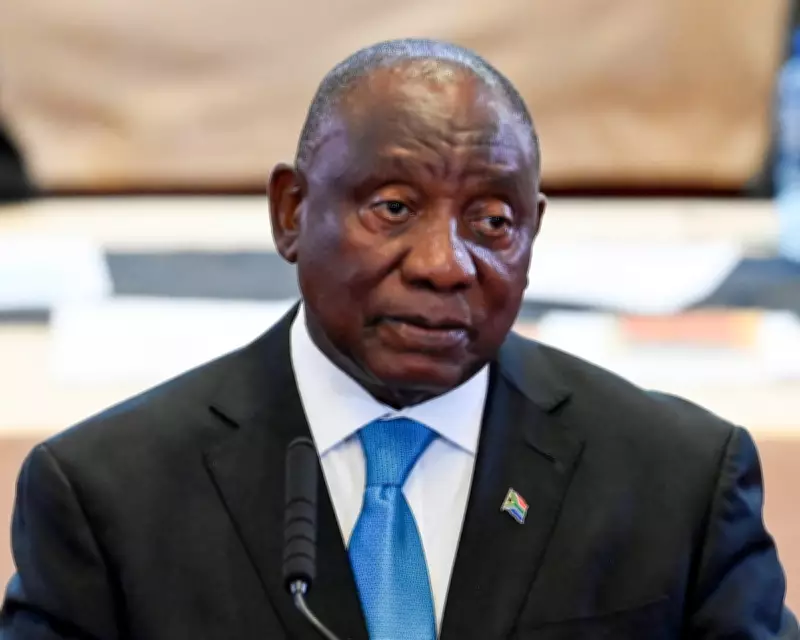
South African President Cyril Ramaphosa challenged the pre-emptive justification offered for the war, asserting that self-defense is only permissible in response to an actual armed invasion. "There can be no military solution to fundamentally political problems," Ramaphosa declared, questioning the legal basis for the offensive.

Diplomatic Process Interrupted
Brazil expressed grave concerns that the attacks occurred while negotiations between the US and Iran over nuclear programs and missile capabilities were still underway. The Brazilian government emphasized that dialogue represents the only viable path to sustainable peace in the region.
Turkey's President Recep Tayyip Erdoğan blamed Israeli Prime Minister Benjamin Netanyahu for instigating the conflict, while Oman's Foreign Minister Badr Albusaidi revealed that a diplomatic agreement had been within reach before the military action began. "I urge the US not to get sucked in further. This is not your war," Albusaidi stated, as Oman reported downing two drones with another crashing near Salalah port.
Broader Global South Reactions
The condemnation extended across multiple continents:
- Cuba accused the US and Israel of seriously endangering regional and international peace, stability, and security
- Malaysia insisted disputes must be resolved through dialogue and diplomacy rather than military force
- Indonesia expressed deep regret over the failure of Iran negotiations, with its president offering to travel to Tehran to reopen dialogue
- The Indonesian Ulema Council urged withdrawal from the Board of Peace in protest of the war
Many developing nations also criticized Iran's attacks on Gulf neighbors, though they maintained their primary objection to the US-Israeli offensive.
Analysts Decry Imperial Undertones
Political analysts framed the conflict within historical patterns of Western intervention. Siphamandla Zondi, Professor of Politics at the University of Johannesburg, argued that "this is a war of domination and subordination, therefore it has imperialist undertones and motives." He noted that Western nations often view wars as having moral purpose, while the global south typically sees conflict as inherently destructive.
Amitav Acharya, author of The Once and Future Global Order, observed that the United States has shifted from seeking influence and legitimacy to relying primarily on coercion. "Many countries in the global south are going to look for a coalition of powers that will stand up to the United States, as the United States is seen as so aggressive, so imperial," Acharya predicted.
Criticism Without Endorsement of Iranian Regime
Several commentators emphasized that condemning the war does not equate to supporting Iran's government. Heraldo Muñoz, former Foreign Minister of Chile, stated: "I condemn the Iranian theocratic regime for its dictatorial and repressive nature, but these ongoing attacks are a violation of international law." He suggested domestic US politics played a significant role in the decision to attack.

Erosion of International Norms
Analysts noted the Trump administration bypassed both United Nations Security Council approval and domestic congressional authorization, setting dangerous precedents. Oliver Stuenkel, Professor of International Relations at Fundação Getulio Vargas in São Paulo, warned of systematic erosion of international law with profound consequences for militarily vulnerable nations rich in natural resources.
Maleeha Lodhi, Pakistan's former ambassador to the US, accused the Trump administration of negotiating in bad faith, using talks as a smokescreen while preparing for military action. "Who can trust the Trump administration now? It acts unilaterally in total defiance of international law and any norms of diplomacy," Lodhi stated, adding that this approach would eventually backfire.
The widespread condemnation from global south nations highlights growing frustration with what many perceive as Western disregard for international legal frameworks and diplomatic processes, potentially reshaping future geopolitical alliances and conflict resolution mechanisms.





