

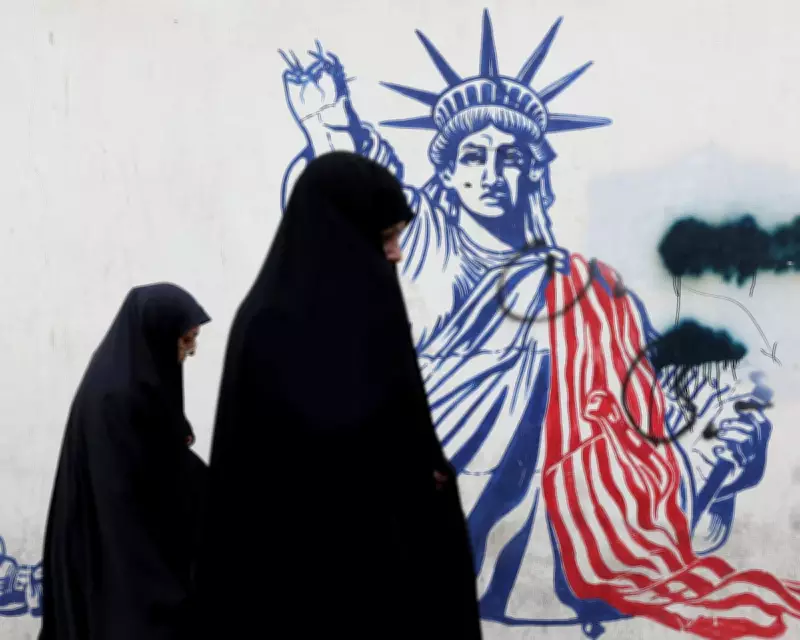
Women walk past an anti-US mural on a street in Tehran, Iran, a visual symbol of the deep-seated tensions that continue to define the relationship between the two nations. As diplomatic talks loom, the atmosphere is thick with uncertainty and strategic posturing.
Iran's Surprising Bullishness in the Face of Adversity
Despite being significantly weakened by a series of devastating airstrikes, crippling international sanctions, and widespread domestic unrest, Iran is approaching the upcoming negotiations with the United States with a surprisingly confident and maximalist stance. This position appears largely unchanged from the five previous rounds of talks, which were abruptly halted last June following a surprise Israeli attack on Iranian soil.
A Weakened State Persists
The intervening eight months have not been kind to Tehran. The 12-day war with Israel exposed critical vulnerabilities in Iran's air defence systems and revealed deep penetration by Israeli intelligence into the country's political, military, and scientific elite. The conflict resulted in the deaths of more than 30 Iranian military commanders and over 160 strikes on key military targets.

On 22 June, the United States launched a decisive assault using B-2 bombers and 30 Tomahawk missiles, targeting Iran's three major nuclear sites at Fordow, Isfahan, and Natanz. This operation effectively eviscerated Iran's nuclear programme, dealing a severe blow to its strategic capabilities. In September, UN-wide sanctions were reimposed after European powers withdrew their objections, and in January, President Trump tightened the economic vice further by imposing a 25% tariff on goods from countries that continue to trade with Iran.
Economic Turmoil and Domestic Unrest
The cumulative impact of these pressures has been profound. Since June, Iran's currency has more than halved in value against the dollar, while food inflation is soaring towards treble figures. These economic hardships were key factors in sparking the nationwide protests in January, which revealed the security services' willingness to use lethal force against thousands of fellow Iranians. The government's anxiety over public sentiment remains palpable, with internet censorship still in place more than a month after it was initially implemented.
Diplomatic Confidence or Strategic Bluff?
Yet, Iran's diplomatic corps is not behaving as if the regime was on the brink of collapse or even fears a return to conflict that could reignite street protests. Instead, Tehran is acting as though it can dictate the parameters, venue, and primary topics of the talks with the United States.
Iran's negotiators are renowned for their experience, stamina, and toughness. They are legalistic, well-prepared, and never prone to showing weakness. According to Wendy Sherman, the chief US negotiator for the 2013-15 nuclear deal, "One more thing" is a favourite phrase of Iranian negotiators, indicative of their relentless approach.
Calculating the US Response
The simplest explanation for Iran's hardball tactics may be that the regime simply does not believe President Trump will carry out his threats of military action, given the significant risks involved. Retaliatory strikes by Iran on Israel and US military bases could be disproportionate, potentially destabilising the region further and straining Washington's relations with Gulf states.
Hamidreza Azizi, a visiting fellow at the German Institute for International and Security Affairs, notes a consensus among Iran's security elite that President Trump "doesn’t want prolonged and messy wars at high cost." Therefore, Iran's strategy appears to be to make any potential conflict as unpredictable, messy, and costly as possible in human and economic terms.
The Question of Regime Change
There is a further, perhaps more critical, dimension to Iran's confidence. Tehran does not believe that the Trump administration has a coherent strategy for fostering change inside Iran, nor does it show significant interest in linking up with opposition groups both inside and outside the country.

As recently as last week, Senator Marco Rubio was disarmingly frank in admitting that the US lacks a concrete plan for what follows if the Iranian regime were to fall. Comparing the situation to Venezuela, he suggested that Iran would be "even far more complex" due to the regime's long tenure.
Internal Divisions and External Hopes
Within the Iranian diaspora and among some domestic dissidents, there are voices calling for external intervention. Supporters of Reza Pahlavi, the son of the deposed Shah, argue that a US attack could galvanise the masses to return to the streets, better organised and with hardened resolve despite previous crackdowns.
Saeed Ghasseminejad, a close supporter of Pahlavi, claims that "Iranians want the regime to be bombed," suggesting that security forces might lose the political will for further repression if the government is seen as having spurned a diplomatic solution.
Some dissidents inside Iran, such as human rights lawyer Nasrin Soutoudeh, acknowledge that many citizens, feeling completely powerless against tyranny, are looking outward for hope. She told Iranwire that "many people are waiting for this strike" as a last resort.
Opposition to Foreign Intervention
However, many prominent opposition figures firmly reject external intervention. Mir Hossein Mousavi, the former prime minister and Green Movement leader currently under house arrest, advocates for a peaceful and democratic transition, though he is less clear on how to achieve it given the current repression.
Mehdi Mahmoudian, an Oscar-nominated screenwriter, warns that war would undermine domestic democratic agency, deepen social divisions, and prevent a homegrown democratic transition built around a referendum. He asserts that no patriotic Iranian would support an external attack on their country.
In a powerful statement issued on 2 January, a collective known as the Group of 17—including Nobel prize-winner Narges Mohammadi—demanded change that is neither reformism nor revolution. They called for prosecuting those responsible for repression, ending the current system, and enabling people to determine their political future democratically. Three signatories have since been arrested, with Vida Rabbani reportedly refusing to cooperate with authorities, and Mohammadi on hunger strike.
A Precarious Balancing Act
For now, President Trump appears to have lost interest in those imprisoned or seeking radical change within Iran. However, this could shift rapidly if Iranian negotiators overplay their hand in the upcoming talks. The regime is betting that Trump lacks both the appetite for a costly war and a viable plan for regime change, allowing Tehran to maintain its defiant posture despite immense pressures. The outcome of this high-stakes diplomatic gamble remains profoundly uncertain, with the potential to reshape the geopolitical landscape of the Middle East.





