

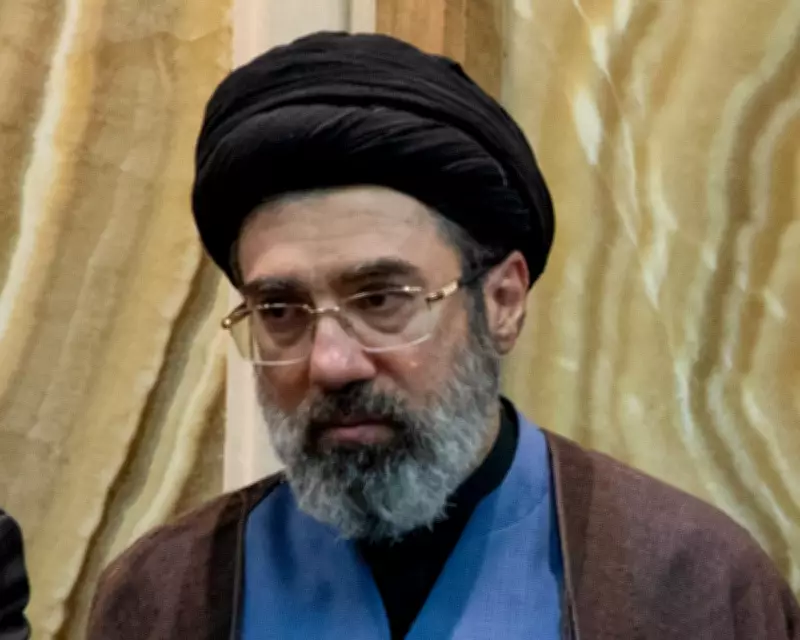
Iran's New Supreme Leader Injured in Fatal Strike, Ambassador Reveals
Iran's new supreme leader, Mojtaba Khamenei, sustained injuries during the devastating attack that claimed the lives of six members of his family, including his father, according to confirmation from Tehran's ambassador to Cyprus. The revelation provides new details about the circumstances surrounding the leadership transition in Iran following the deadly assault.
Ambassador's Detailed Account of the Attack
In an exclusive interview conducted at the Iranian embassy compound in Nicosia, Ambassador Alireza Salarian provided specific information about the injuries suffered by the 56-year-old cleric. "He was also there and he was injured in that bombardment but I haven't seen that reflected in the foreign news," Salarian stated during his conversation with journalists. "I have heard that he was injured in his legs and hand and arm ... I think he is in the hospital because he is injured."
The ambassador emphasized that Khamenei was fortunate to survive the strike that completely destroyed the residence of the late ayatollah. The attack occurred on February 28th, coinciding with the opening day of US-led airstrikes against Iran and falling on the tenth day of the holy month of Ramadan.

Family Tragedy and Leadership Succession
Salarian provided heartbreaking details about the family members who perished in the attack, which targeted the sprawling presidential complex in central Tehran. Among the victims were Khamenei's wife, Zahra, and his teenage son, Mohammad Bagher. The ambassador confirmed that Ayatollah Ali Khamenei was at his residence with multiple family members when the strike occurred.
"The [late] supreme leader was killed with his wife, with his daughter, with his son-in-law and with his daughter's 14-month-old baby," Salarian revealed. He added that top military commanders who had been invited to the residence also lost their lives in the attack.
The ambassador addressed questions about why the new supreme leader has not made any public appearances or statements since assuming power on Sunday. "I don't think he is comfortable [in any condition] to give a speech," Salarian explained, suggesting the injuries may be preventing public appearances.
Political Context and International Reactions
The leadership transition has occurred amid significant international tension. US President Donald Trump has publicly criticized Khamenei's election by an 88-member committee of clerics, calling it "an unacceptable choice" and predicting the new leader would not remain in power for long. Meanwhile, Israel has issued warnings that it would not hesitate to target the Shia cleric, who is believed to share his father's hardline political stance.
Salarian provided insight into the succession process, noting that the late ayatollah had initially resisted the idea of his son replacing him. "High-ranking clergymen did ask him but the late supreme leader said 'no' because he didn't want a dynastic system," the ambassador explained. "He was elected. [After the attack] top-ranking clergymen said: 'This is your job; you have to obey.'"
Security Concerns and Future Implications
Western intelligence agencies believe the new supreme leader is being deliberately kept out of public view due to legitimate fears of assassination attempts. The ambassador acknowledged these security concerns, stating: "I don't know if he [the new leader] is worried or not, but we know that the US, and especially Israel, will target him."
Earlier this week, Iranian state television described the regime's new leader as a "wounded veteran of the Ramadan war" without providing specific details about his injuries. Government adviser Yousef Pezeshkian had previously mentioned that Khamenei was wounded but offered limited information about the extent of his injuries.
The attack and its aftermath represent a significant moment in Iran's political landscape, with the new leadership facing both internal challenges from the tragic loss and external pressures from international adversaries. The full extent of Khamenei's injuries and his capacity to govern effectively remain subjects of intense speculation within diplomatic and intelligence circles worldwide.






