

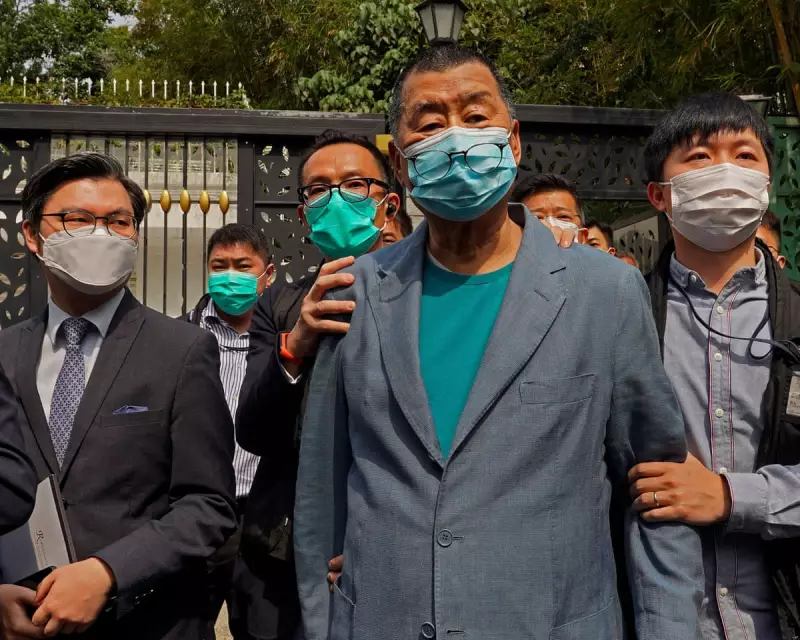
The recent conviction of British citizen and Hong Kong publisher Jimmy Lai on what the UK government calls "politically motivated" charges has cast a long shadow over Prime Minister Keir Starmer's planned diplomatic and trade mission to China. The move is seen by foreign affairs commentators as a deliberate provocation, setting a hostile stage for the Prime Minister's visit to Beijing and Shanghai scheduled for January.
A Politically Motivated Verdict and a Hollow Protest
Jimmy Lai was found guilty last week by Beijing-appointed judges in Hong Kong on charges of conspiring to publish seditious material and colluding with foreign forces. Foreign Secretary Yvette Cooper condemned the trial, protesting to the Chinese ambassador that it was a politically motivated act. However, Beijing's apparent contempt for Britain's stance underscores a significant power imbalance, highlighting the breaking of China's post-1997 promises on Hong Kong's freedoms.
This conviction forms a sombre backdrop to Starmer's key foreign policy engagement. Speaking at a City of London banquet this month, the Prime Minister framed the visit as a "duty," necessary to improve relations with a country he described as "a defining force in technology, trade and global governance." While acknowledging national security threats posed by China, Starmer notably downplayed them, focusing instead on the potential for economic cooperation.

The High-Stakes Gamble: Trade Versus Security
The Labour government's rationale is rooted in economic necessity. Chancellor Rachel Reeves, who is also visiting China in January, has pointed to a potential £1bn opportunity for UK jobs and growth. With a stagnant economy craving foreign investment and China remaining a major export market, the commercial imperative is clear.
Yet critics argue the security and diplomatic cost is prohibitive. MI5 has repeatedly warned that Chinese intelligence routinely targets UK businesses, parliament, and MPs. Recent cyber-attacks, including one on the Foreign Office reportedly linked to China, and the unexplained collapse of a spy prosecution this autumn, amplify these concerns. Furthermore, China's support for Russia's war in Ukraine, its human rights record in Xinjiang and Tibet, and its military threats towards Taiwan represent a fundamental challenge to the international rules-based order Britain claims to champion.
Navigating the Authoritarian Playbook
Starmer's attempt to separate trade from politics and security is viewed by analysts as naive. In authoritarian states like China, the security apparatus, the economy, and the ruling Chinese Communist Party (CCP) are inextricably linked. This reality was previously acknowledged by the UK government when it banned Huawei from the national 5G network.
Beijing is already testing Starmer's resolve, linking permission for a new fortress-like embassy near Tower Bridge to the success of his visit. If plans are not approved by mid-January, the trip may be cancelled—a stark lesson in how politics and security intersect in China. This mirrors Starmer's difficult experience with Donald Trump's administration, where a much-heralded £31bn "tech prosperity deal" was recently reneged upon.
Instead of walking into a potential bear trap in Beijing, some argue Starmer should recalibrate his foreign policy focus. A more energetic pursuit of stronger ties with democratic allies in Europe, based on shared security concerns and values, is presented as a more sustainable and principled alternative. As the Prime Minister finalises his travel plans, the fate of Jimmy Lai remains a powerful symbol of the profound challenges at the heart of engaging with Xi Jinping's China.






