Friedrich Merz's Tense Washington Visit Amid Trump's Middle East Conflict
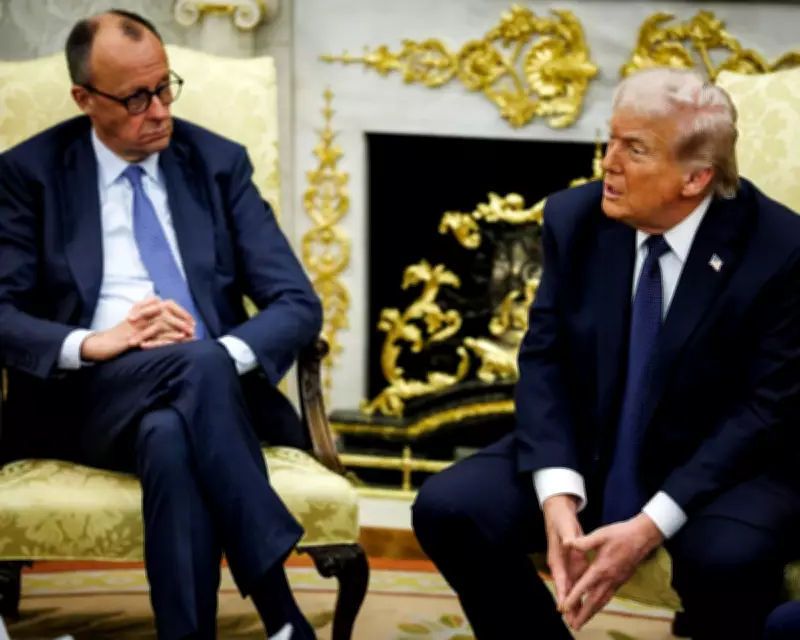
A tight-lipped German Chancellor Friedrich Merz arrived in Washington on Tuesday for a critical meeting with former US President Donald Trump, as Europe faces escalating uncertainty from the Middle East conflict. The visit, captured in official photographs, occurred against a backdrop of geopolitical turmoil that threatens to engulf European stability.
The Diplomatic High-Wire Act
Merz's Washington stop offered little respite from domestic political challenges, with Trump's risky Iran gamble dominating discussions. Fresh from high-stakes trade negotiations in China, the unpopular chancellor boarded the government jet Konrad Adenauer bound for the United States following seismic weekend developments in the Middle East.
The US-Israeli military operations have left European leaders appearing as spectators in an unsettling new landscape of great power politics. However, the conflict carries incalculable economic, political, and security implications for Europe that cannot be ignored.

As the first European leader granted Oval Office access since hostilities began, Merz faced pressure to perform what observers described as a diplomatic "high-wire act"—defending European interests without antagonizing an increasingly erratic Trump administration.
Navigating Dangerous Waters
During his brief time in the White House hot seat, Merz carefully identified common ground while emphasizing the stakes of American actions to his often-distracted counterpart. This cautious approach prevented him from publicly challenging Trump's attacks on allies Spain and the United Kingdom, or from raising international law concerns.
"We are on the same page in terms of getting this terrible regime in Tehran away. And we will talk about the day after," Merz stated regarding Iran's future, leaving many questions unanswered about the conflict's trajectory.
The chancellor spoke frankly about Operation Epic Fury's economic consequences, noting: "This is, of course, damaging our economies. So that's the reason why we all hope that this war will come to an end as soon as possible." The military action has sent stock markets reeling and energy prices soaring across Europe.
European Strategic Dilemmas
While Trump remained fixated on Iran, Merz repeatedly attempted to redirect discussions toward Europe's primary concerns: unpredictable US tariff policies and ongoing support for Ukraine. German-American political scientist Cathryn Clüver Ashbrook, author of "The American Wake-up Call," highlighted Europe's limited options for maintaining relations with the Trump administration.
"Merz is in a terrible situation, as are any European leaders at this point. They have very few areas of influence," Ashbrook explained. "We're in a world where all areas are now weaponized."
She suggested Europe's limited course of action involves demonstrating utility to the United States despite enduring stinging rebukes on defense, free speech, trade, and immigration policies. This strategy requires significant rearmament progress and increased responsibility for Ukraine, alongside leveraging Europe's collective economic power as strategic influence in future industrial policy and trade disputes.
Domestic Political Pressures
Both leaders face economic headwinds with pivotal elections approaching. The US midterms could become a disastrous referendum on Trump's presidency, while Merz's Christian Democratic Union confronts five challenging state elections between this Sunday and September, with the far-right Alternative für Deutschland gaining momentum in several races.
Merz often appears more confident internationally than domestically. Regarding Iran, he recognizes many celebrate the death of Supreme Leader Ali Khamenei, responsible for numerous compatriot deaths. Last weekend, jubilant Iranian diaspora members marched through Berlin's Friedrichstraße waving Iranian, US, and Israeli flags in spring sunshine.
However, German officials express concern about potential regional conflagration as conflict spreads to neighboring countries. Berlin diplomats, who describe Germany as Israel's staunchest European ally, emphasize their extensive investment in the 2015 nuclear accord that Trump abandoned during his first term and criticized again during Tuesday's meeting.

Economic and Security Implications
The German electorate demands economic recovery already threatened by Trump's tariff policies and now endangered by Middle East conflict. German shipping, insurance, and tourism corporations face significant uncertainty, while the AfD—despite aligning with Trump administration positions—has criticized Iran actions and warned about potential refugee influxes from regional turmoil.
A potential bright spot emerged this week as France and Germany agreed to a landmark nuclear deterrence accord after months of bilateral tensions undermining European Union cohesion. Germany will participate in French nuclear exercises and strategic site inspections, coinciding with Paris announcing nuclear arsenal expansion—significant progress toward Merz's pledge of greater European security independence that may capture presidential attention.
The Washington meeting revealed Europe's precarious position in global power dynamics, with Merz walking a diplomatic tightrope between defending continental interests and managing an unpredictable American administration. As conflict repercussions continue unfolding, European leaders must navigate increasingly complex geopolitical terrain with limited influence over superpower decisions that directly impact their economic and security futures.