

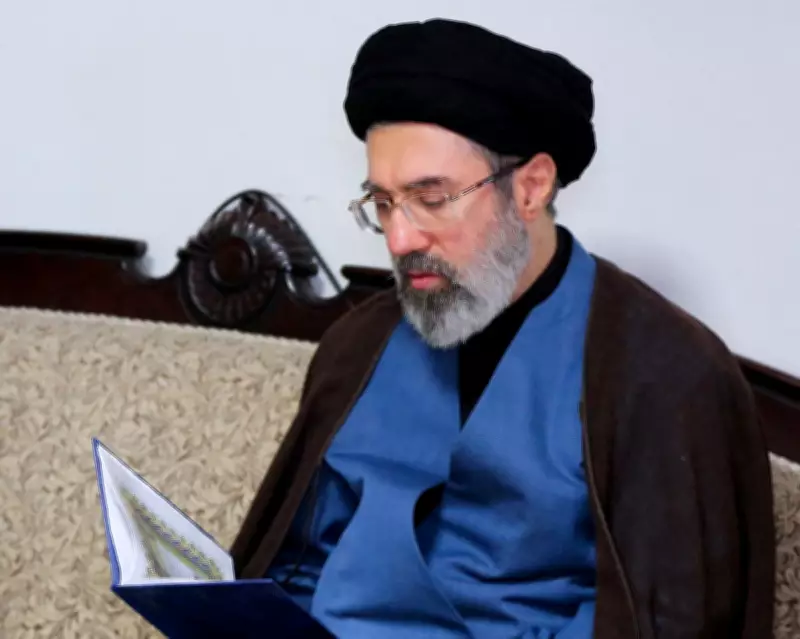
Mojtaba Khamenei Emerges as Frontrunner for Iran's Supreme Leadership
Mojtaba Khamenei, the second son of Iran's late Supreme Leader Ali Khamenei, is being heavily tipped to succeed his father as the country's next head of state. This potential appointment would place a staunch anti-western hardliner at the helm during one of the most turbulent periods in Iran's 48-year history, sending a clear signal that the Islamic Republic has no intention of changing its current course.
Assembly of Experts Nears Decision Amid Regional Tensions
The 88-member Assembly of Experts, the body responsible for selecting Iran's supreme leader, is reportedly close to making its decision. While no official confirmation has been issued, and the announcement may be delayed until after Ali Khamenei's funeral, sources indicate Mojtaba Khamenei has emerged as the leading candidate among six possible contenders.
Ayatollah Seyed Khatani, a member of the Assembly of Experts, confirmed the assembly is nearing its selection process. The choice of Mojtaba Khamenei would represent a powerful, if unsurprising, symbol that Iran's leadership is not seeking accommodation with the United States.

Hardline Credentials and Political Background
Born in 1969, Mojtaba Khamenei studied theology after high school and served in the Iran-Iraq war at age 17. He emerged as a significant political figure in the late 1990s following the landslide defeat of his father's preferred presidential candidate, Ali Akbar Nategh Nuri, in the 1997 election.
Reformists have accused Mojtaba Khamenei of playing an instrumental role in suppressing the 2009 protests that followed allegations of election rigging. Mostafa Tajzadeh, a senior reformist party member imprisoned after the vote, alleged that his legal case was under Mojtaba Khamenei's direct supervision.
Institutional Support and Controversial Succession
Mojtaba Khamenei is believed to be the preferred candidate of the Islamic Revolutionary Guard Corps (IRGC), Iran's powerful military force. His closest political allies include newly appointed IRGC commander Ahmad Vahidi, former IRGC intelligence head Hossein Taeb, and current parliament speaker Mohammad Bagher Ghalibaf.
In 2022, he received the title of ayatollah, essential for his promotion to supreme leader. He has been a regular presence at his father's political meetings and has played influential roles in both the Islamic Republic's Broadcasting Corporation and the administration of his father's substantial financial empire.
Regional Reactions and Security Concerns
Israeli Defense Minister Gideon Saar has warned that Mojtaba Khamenei would be assassinated if appointed. Israel reportedly struck a building in Qom, one of Shia Islam's main seats of power, where the Assembly of Experts was scheduled to meet, though the building was empty at the time according to IRGC-affiliated media.
U.S. Secretary of State Marco Rubio recently described Iran's leadership as "religious fanatic lunatics," and former President Donald Trump stated the worst-case scenario would be if Khamenei's successor was "as bad as the previous person."
Reformist Opposition and Hereditary Concerns
The potential hereditary succession has long been resisted by reformists. Former Prime Minister Mir Hossein Mousavi questioned in 2022 why authorities hadn't denied succession rumors that had circulated for 13 years if they weren't truly pursuing such a plan.
The Assembly of Experts responded by denouncing "meaninglessness of doubts" and asserting they would select only "the most qualified and the most suitable" candidate. Speculation about Mojtaba Khamenei's succession grew significantly after President Ebrahim Raisi, another favorite of Ali Khamenei, died in a helicopter crash.






