

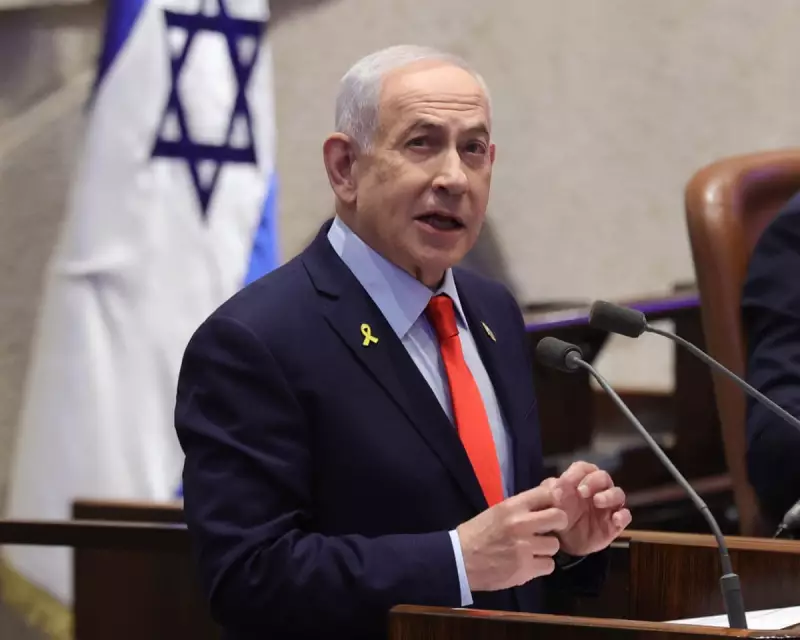
Netanyahu Accepts Role on Trump's 'Board of Peace' Despite Prior Criticisms
Israeli Prime Minister Benjamin Netanyahu has announced his agreement to join a US-backed "board of peace" proposed by former President Donald Trump, a decision that comes despite his office's earlier objections to the body's executive committee makeup. The announcement was made on Wednesday, marking a significant shift in Israel's stance towards this controversial international initiative.
From Gaza Ceasefire Oversight to Global Conflict Brokerage
The board was initially presented as a limited forum of world leaders tasked with overseeing a ceasefire in Gaza. However, recent developments suggest the initiative has expanded considerably beyond this original remit. The Trump camp has extended invitations to dozens of countries, with suggestions that the board could evolve into a vehicle for brokering conflicts far beyond the Middle East region.
Countries that have already agreed to participate include the United Arab Emirates, Morocco, Vietnam, Belarus, Hungary, Kazakhstan and Argentina. Other nations, including the United Kingdom, Russia and the European Union's executive arm, have confirmed receiving invitations but are yet to provide definitive responses.

Previous Objections and Diplomatic Concerns
Netanyahu's office had previously objected to the composition of the board's executive committee, which notably includes Turkey, a regional rival of Israel. In a brief statement, the Israeli government said the committee had been formed without coordination with Israeli authorities and was "contrary to its policy," though no further elaboration was provided.
Diplomatic circles have expressed significant concerns that the proposed board could undermine the work of established international institutions, particularly the United Nations. When questioned by reporters about whether the board should replace the UN, Trump responded: "It might." The former president criticised the world body for not being "very helpful" and failing to "live up to its potential," though he acknowledged the UN should continue operating due to its theoretical potential.
Financial Requirements and Governance Structure
A draft charter circulated to approximately sixty countries by the US administration outlines specific financial requirements for sustained membership. According to documents seen by Reuters, member states must contribute $1 billion in cash if they wish their membership to extend beyond three years.
The charter states: "Each member state shall serve a term of no more than three years from this charter's entry into force, subject to renewal by the chairman. The three-year membership term shall not apply to member states that contribute more than $1,000,000,000 in cash funds to the board of peace within the first year of the charter's entry into force."
Expansive Powers and Institutional Challenges
The draft charter grants sweeping powers to the board's chair, including authority to remove member states – subject to a two-thirds veto by the board – and to appoint a successor in the event of the chair's departure. Membership would be restricted to states specifically invited by the chairperson.
Diplomatic observers have warned that the proposed board appears designed to challenge existing international institutions. The charter explicitly states that the committee must possess "the courage to depart from approaches and institutions that have too often failed," language widely interpreted as criticism of current multilateral frameworks.
Domestic Political Context and Regional Implications
The announcement comes amid domestic political pressures within Israel. Far-right members of Israel's governing coalition recently rejected the US-backed plan for postwar governance in Gaza, criticising Netanyahu for failing to annex the Palestinian territory and establish new Israeli settlements there.
Trump has maintained longstanding criticism of the United Nations, announcing earlier this month that the United States would withdraw from sixty-six international organisations and treaties, approximately half of which are affiliated with the UN system. This context adds significant weight to concerns about the board's potential impact on global diplomatic architecture.

The development represents a notable evolution in international peacekeeping initiatives, with uncertain implications for Middle Eastern diplomacy and broader global conflict resolution mechanisms.





