

North Korea and Belarus Forge Strategic Alliance with Comprehensive Treaty
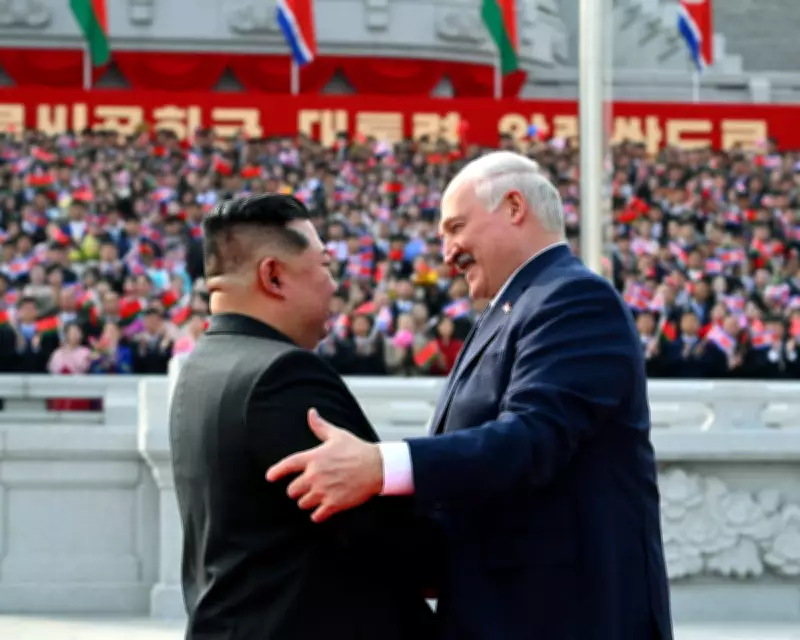
In a significant diplomatic development, North Korean leader Kim Jong-un and Belarusian President Alexander Lukashenko have signed a comprehensive "friendship and cooperation" treaty during Lukashenko's inaugural visit to Pyongyang. The agreement marks a substantial strengthening of ties between two nations that both face extensive Western sanctions and have been accused of serious human rights violations.
Lavish Welcome Ceremony Sets Stage for Strategic Partnership
The two-day visit commenced with an elaborate welcoming ceremony featuring an artillery salute and precision goose-stepping soldiers parading before a massive flag-waving crowd at Kim Il Sung Square. State media from both countries reported that Kim "gladly" met and "warmly" welcomed Lukashenko, with the Belarusian leader reciprocating the enthusiasm.
During the ceremony, Lukashenko emphasized the historical continuity of relations between the two nations, stating: "The friendly relations between our states, born during the era of the Soviet Union, have never been interrupted. Today, thanks to comprehensive and steady development, we are entering a fundamentally new phase."

Shared Geopolitical Alignment Against Western Order
The treaty signing represents a consolidation of what analysts describe as an "anti-western bloc" of nations seeking to challenge Western hegemony. Both Belarus and North Korea have provided substantial support to Russia's war against Ukraine, with Belarus serving as a launchpad for the invasion and North Korea reportedly sending thousands of soldiers to Russian frontlines, primarily in the Kursk region.
Lukashenko, who has ruled Belarus since 1994 and has firmly aligned with Moscow since Russia's 2022 invasion of Ukraine, underscored the geopolitical significance of the partnership: "In the modern realities of global transformation – at a time when the world's major powers openly ignore and violate the norms of international law – independent countries must cooperate more closely and consolidate their efforts aimed at protecting their sovereignty."
Symbolic Gestures and Strategic Implications
During his visit, Lukashenko paid respects at the Kumsusan Palace of the Sun, where the embalmed remains of Kim's father and grandfather lie in state. In a notable symbolic gesture, the Belarusian leader laid a bouquet on behalf of Russian President Vladimir Putin, highlighting the triangular relationship between Minsk, Pyongyang, and Moscow.
The strategic partnership follows Russia and North Korea's 2024 agreement that obliges either side to provide "military and other assistance" should the other be attacked. Analysts note that North Korea is receiving financial aid, military technology, food, and energy supplies from Russia, reducing Pyongyang's traditional reliance on China.
Economic Cooperation and Future Prospects
Belarusian Foreign Minister Maxim Ryzhenkov indicated that beyond the friendship treaty, the two nations would expand cooperation across multiple sectors including agriculture and information technology. While current trade between the countries remains "modest," significant growth potential exists in Belarus exporting pharmaceutical products and food to North Korea.
Ryzhenkov emphasized the mutual nature of the relationship: "Our greatest interest ... is strengthening truly friendly, partnership relations. We have friends here, and they are waiting for us. Just as we await them in Belarus."
Broader Geopolitical Context and International Reactions
The visit occurs within the context of what Chinese leader Xi Jinping and Vladimir Putin describe as efforts to create a "multipolar world" to counter Western dominance. South Korean and Western intelligence agencies estimate that North Korea has sent thousands of soldiers to Russia along with substantial military equipment including artillery shells, missiles, and rocket systems.
Lee Ho-ryung of the Korea Institute for Defense Analyses told AFP that the visit was intended to "show solidarity" among nations opposed to the Western order, noting that "Kim will try to use the occasion to raise its diplomatic profile and strengthen solidarity among the so-called anti-western bloc."

The diplomatic developments come as former US President Donald Trump has sought to build ties with Belarus during his second term, easing sanctions and welcoming the country to his "Board of Peace" initiative. Trump previously met Kim Jong-un three times during his first presidential term, and speculation continues about potential renewed engagement between Washington and Pyongyang.





