

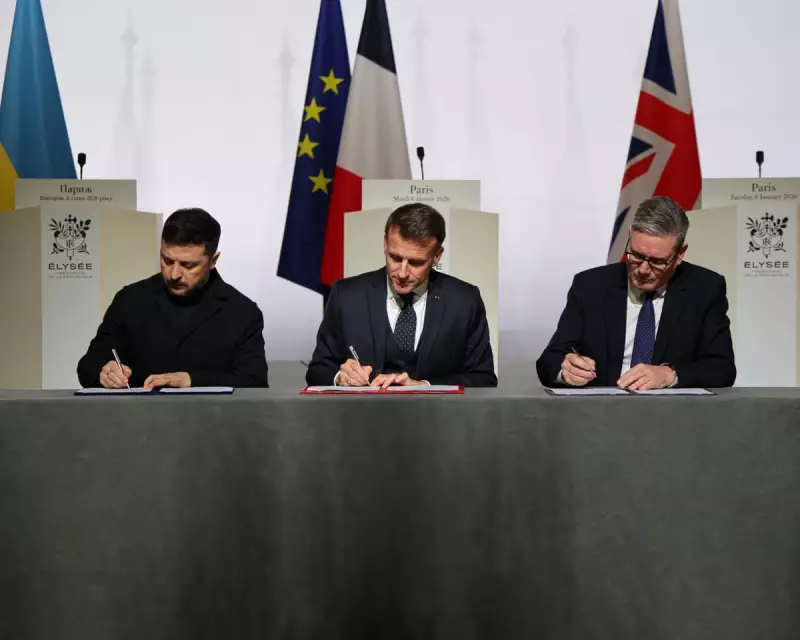
A significant international coalition has taken a major step towards ending the devastating conflict in Ukraine. More than one hundred nations have formally endorsed a detailed peace blueprint known as the Paris Declaration, setting out a clear and unified path to halt the fighting.
The Core Demands of the Paris Declaration
The declaration, agreed upon by a vast coalition of states, presents a series of non-negotiable conditions for peace. The central and most critical demand is the complete and unconditional withdrawal of all Russian military forces from the entirety of Ukraine's internationally recognised territory. This includes areas occupied since the full-scale invasion began in February 2022, as well as the Crimean peninsula, which was annexed by Russia in 2014.
Beyond the primary demand for withdrawal, the document outlines several other fundamental principles. It calls for the restoration of Ukraine's full sovereignty and territorial integrity. Furthermore, it insists on holding Russia accountable for the widespread devastation caused by the war, including the obligation to contribute substantially to Ukraine's future reconstruction. The safety of the Zaporizhzhia nuclear power plant, Europe's largest, which has been under Russian control since the early stages of the conflict, is also a key point of concern addressed in the declaration.

A Global Coalition for a Sovereign Ukraine
The backing for the Paris Declaration represents a formidable display of global solidarity. The coalition includes a wide array of nations from across Europe, the Americas, Africa, and the Asia-Pacific region. This diverse support underscores that the conflict is not merely a regional issue but a fundamental challenge to the international rules-based order. The unified stance sends a powerful message to Moscow about the sustained international resolve to see Ukraine prevail and its borders restored.
Diplomatic efforts to build this consensus have been intensive. The declaration itself is seen as a tool to crystallise global opinion and create a common framework for future negotiations. It moves beyond general statements of support, providing a concrete set of objectives that any genuine peace process must achieve. The hope among signatories is that this clarity will isolate Russia diplomatically and strengthen Ukraine's position at any future bargaining table.
The Road Ahead: From Declaration to Action
While the Paris Declaration marks a crucial diplomatic milestone, the path from agreement on paper to peace on the ground remains fraught with challenges. Russia has thus far dismissed the initiative, repeating its unfounded assertions that it is engaged in a defensive war against Western aggression. The Kremlin's rejection sets the stage for a protracted struggle, where continued military, economic, and humanitarian support for Ukraine will be essential to pressure Russia into eventually accepting the coalition's terms.
The declaration also implicitly addresses the nature of a just peace. It firmly rejects any outcome that would reward aggression or legitimise the seizure of territory by force. This principle is vital not only for Ukraine's future but for global security, establishing a precedent that such actions will be met with unwavering opposition. The international community, through this declaration, has committed to a peace that ensures Ukraine's long-term security and sovereignty, rather than a fragile ceasefire that could allow future hostilities.
The coming months will test the cohesion and endurance of the supporting coalition. Sustaining unity in the face of potential war fatigue and Russian disinformation campaigns will be critical. The Paris Declaration has now set the benchmark; the world will be watching to see if this collective will can be translated into a lasting and just conclusion to Europe's largest conflict in decades.






