

South Africa Orders Israeli Diplomat to Leave Over Social Media Attacks
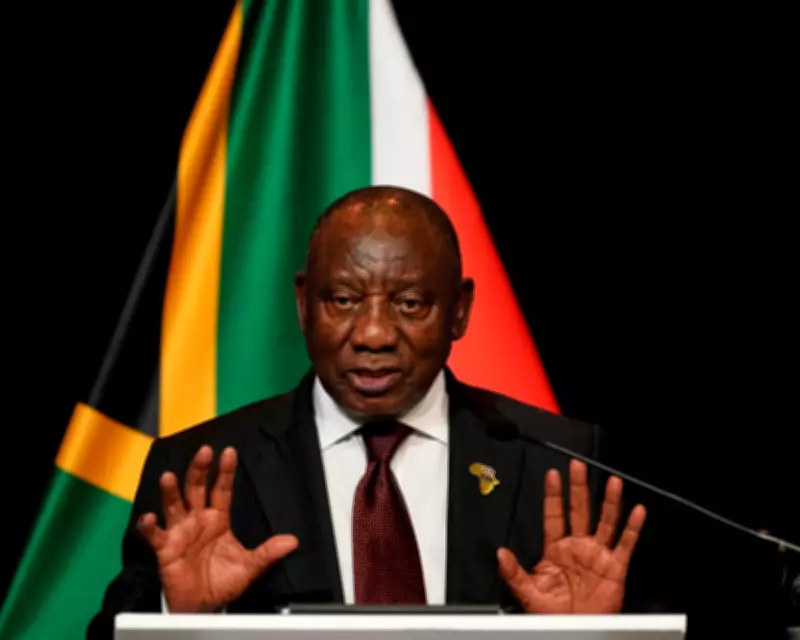
South Africa has taken the decisive step of expelling Israel's top diplomat from the country, citing a series of insulting social media attacks directed at President Cyril Ramaphosa and violations of diplomatic protocol. Ariel Seidman, the chargé d'affaires at Israel's embassy in Pretoria, has been declared persona non grata and given just 72 hours to depart.
Diplomatic Breaches and Sovereignty Concerns
The South African Department of International Relations and Cooperation (DIRCO) announced the expulsion in a statement released on Friday afternoon. The department highlighted that this action follows unacceptable violations of diplomatic norms which directly challenge South Africa's sovereignty. These violations include the repeated use of official Israeli social media platforms to launch personal attacks against President Ramaphosa, as well as a deliberate failure to inform DIRCO about visits by senior Israeli officials.
DIRCO emphasised that such actions represent a gross abuse of diplomatic privilege and a fundamental breach of the Vienna Convention on Diplomatic Relations. The Israeli embassy has not provided an immediate response to requests for comment regarding the expulsion.

Historical Tensions and Recent Escalations
Relations between South Africa and Israel have been strained for decades, primarily due to South Africa's staunch support for the Palestinian cause. This historical context dates back to Nelson Mandela's embrace of Palestinian leader Yasser Arafat shortly after his release from prison in 1990. Mandela famously stated in 1997 that "Our freedom is incomplete without the freedom of the Palestinians." Many South Africans draw parallels between apartheid-era white minority rule and Israel's control over occupied Palestinian territories, a comparison that Israel strongly refutes.
The relationship deteriorated significantly in December 2023 when South Africa initiated a case at the International Court of Justice (ICJ), accusing Israel of committing genocide against Palestinians in Gaza. In January 2024, the ICJ ruled that the claim of genocide was plausible, though the case has since slowed, with experts not expecting a judgment before the end of 2027. Israel has rejected these accusations as outrageous and false.
Social Media Provocations and Undermining Actions
Israel's embassy in South Africa has frequently used social media to criticise the government. In November, the embassy posted on X, claiming that the South African government had wasted R100 million (approximately £4.6 million) attacking Israel at the ICJ, with another R500 million to be wasted the following year, describing it as "0% of value for South Africans, 100% political theatre." Later that month, when President Ramaphosa commented that boycott politics don't work, the embassy sarcastically noted it as a "rare moment of wisdom and diplomatic clarity."
Tensions were further inflamed earlier this week when Israeli diplomats met with Thembu King Buyelekhaya Dalindyebo in the Eastern Cape province to discuss potential aid in agriculture, water, and health, without first informing the South African government. King Dalindyebo, who is pro-Israel and visited the country in December, was welcomed by Israeli Foreign Minister Gideon Sa'ar during his trip.
Eastern Cape Premier Lubabalo Oscar Mabuyane rejected what he called the sinister deal between the king and Israel, viewing these actions as an attempt by the Israeli government to undermine South Africa's sovereign right to manage its international affairs. The Israeli embassy subsequently posted videos of King Dalindyebo welcoming the aid offers on X, accompanied by the caption: "These are the videos the South African media didn't want you to see." Notably, Nelson Mandela was also a member of the Thembu clan, whose historic kingdom is now home to over 400,000 people.






