

Starmer's Beijing Visit: A Strategic Opportunity for China's Global Narrative
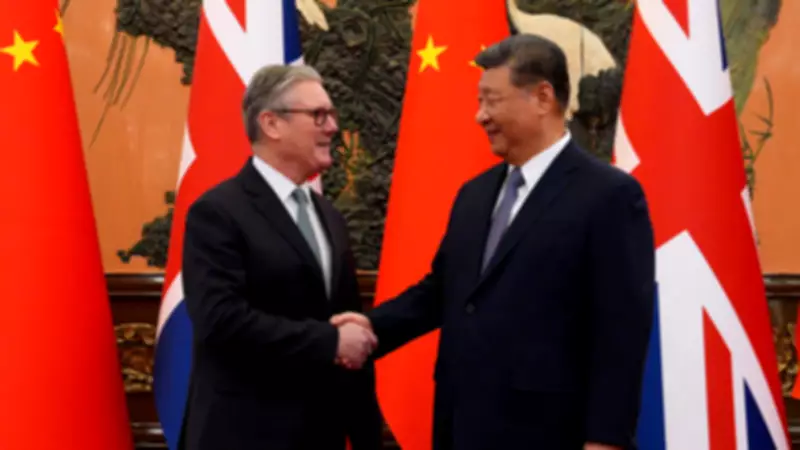
Sir Keir Starmer's recent trip to China has unfolded at a pivotal moment, offering Beijing a chance to showcase itself as the world's most reliable superpower. The prime minister's arrival could not have been timed better for China, which is actively working to steer global attention away from the United States. In the eyes of Chinese leadership, this visit serves as a powerful visual statement amid shifting international dynamics.
Perceptions of the UK in China
Let's be candid: within China, the United Kingdom is not viewed as a dominant global force. Instead, it is seen as a middling power with certain strengths, particularly in service industries and knowledge-based economies. However, its global influence has notably waned in the post-Brexit era. Compounding this are a decade of inconsistent policies towards China, limited diplomatic outreach, and increasingly hawkish sentiments in both the British Parliament and among the general public. Given these factors, it is hardly surprising that China did not extend the full red-carpet treatment to Starmer that it reserves for some visiting leaders.
Signs of Optimism and Reset
Despite these challenges, there were clear indications that China welcomed the British prime minister's presence, not least for the positive optics it provided. Much of the public discourse during the visit was marked by a tone of optimism and even warmth, suggesting that Chinese officials perceive this as a moment for resetting relations and seizing genuine opportunities. While the Chinese releases did not delve into extensive detail on specific agreements, there was a palpable sense of progress. Discussions highlighted hopes for enhanced cooperation in education, healthcare, and financial services, as well as potential joint research into forward-looking fields such as artificial intelligence, biosciences, new energy, and low-carbon technologies.

This appears to be a mutually beneficial arrangement: services constitute the UK's most significant export to China, while China leads the world in manufacturing green energy technologies and is continually seeking to expand its markets for these products.
Navigating Sensitive Issues
It is evident that more contentious topics were also addressed behind closed doors, areas where China aims to maintain tight control over the narrative. On Taiwan, the UK reaffirmed that its position remains unchanged and will not change. Taiwan, a self-governing island that China claims as its own, is not officially recognised as an independent entity by most countries, including the UK. Securing public reiterations of this stance is of paramount importance to China.
Additionally, Sir Keir Starmer had pledged to raise the case of Jimmy Lai, the imprisoned Hong Kong democracy campaigner. The Chinese readout succinctly stated that both parties agreed Hong Kong's prosperity and stability are in the common interest of both countries, which likely translates to China acknowledging the issue but standing firm on its position.
Subtle Hints at US Dynamics
Perhaps the most intriguing aspects of the visit were the not-so-subtle references to the United States, the other major power in this geopolitical equation. Chinese officials highlighted concerns over unilateralism, protectionism, and power politics, describing the current era as turbulent and fluid. From China's perspective, the significance of Thursday's events lay not in concrete achievements but in the audience watching—particularly as traditional transatlantic partnerships face disruption under figures like Donald Trump.
The Long Game of Chinese Strategy
The optics of the British prime minister revitalising this relationship at a time when US alliances are under strain are exquisite for China. Under President Xi Jinping, China has long cultivated a narrative portraying itself as the world's most dependable superpower, advocating for nations to seek stable global leadership from Beijing rather than Washington. The current chaos fuelled by Trump and the eagerness of European powers to engage with China bolster this sales pitch.

China does not anticipate abrupt shifts in allegiance but believes the broader situation presents significant opportunities. In his opening remarks, Xi Jinping quoted a Chinese proverb by Chairman Mao: range far your eyes over long vistas. This implies a strategic focus on the bigger picture, avoiding distraction by short-term gains or losses. China consistently plays a long and calculated game, and revitalising ties with a middling power like the UK is a deliberate part of that strategy.





