

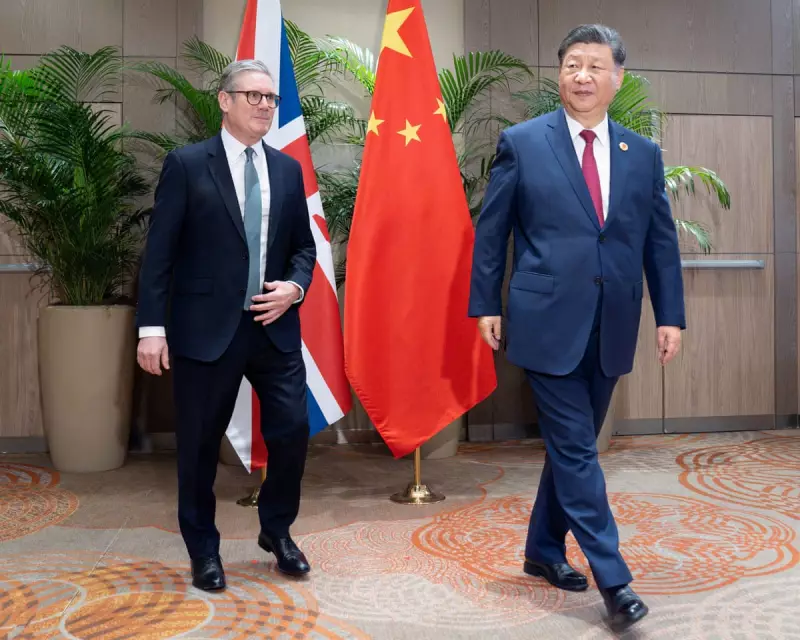
Prime Minister Keir Starmer Set for High-Profile China Visit with Business Leaders
Prime Minister Keir Starmer is reportedly preparing to lead a significant delegation of British business leaders on a visit to China next week, according to recent media reports. This diplomatic and economic mission comes at a pivotal moment in UK-China relations, following the controversial approval by the UK government for Beijing to construct a new embassy complex in London.
Business Delegation and Revamped CEO Council
The delegation is expected to include representatives from several major British corporations, often described as blue-chip companies. Reuters has indicated that firms such as BP, HSBC, Intercontinental Hotels Group, Jaguar Land Rover, and Rolls-Royce will be part of the trip. These same companies are also anticipated to participate in a revitalised "UK-China CEO council," which aims to strengthen commercial ties between the two nations.
This council was originally established in 2018 during the tenure of then Prime Minister Theresa May and then Chinese Premier Li Keqiang, a period that was frequently referred to as a "golden era" in bilateral relations. On the Chinese side, the council is likely to feature representatives from prominent state-owned enterprises, including Bank of China, China Construction Bank, China Mobile, and the Industrial and Commercial Bank of China.

Background and Preparatory Diplomacy
The groundwork for Starmer's visit was laid in November, when Jonathan Powell, the UK's national security adviser, travelled to Beijing for discussions with China's top diplomat, Wang Yi. This preparatory meeting was part of the broader strategy to facilitate the prime minister's anticipated trip, reflecting the careful diplomatic choreography that often precedes such high-level engagements.
Starmer's visit marks the first by a UK prime minister to China since Theresa May's trip in 2018. However, other senior UK officials have maintained contact with Chinese counterparts over the past year. Chancellor Rachel Reeves visited China with a business delegation in January, announcing approximately £600 million in new investments. Additionally, Energy Secretary Ed Miliband and Trade Secretary Peter Kyle have also conducted talks in China, while senior Chinese government figures have made several visits to the UK during the same period.
Embassy Approval Sparks Local Opposition
The path for Starmer's visit was notably cleared last week when Communities Secretary Steve Reed granted planning permission for China to build its new embassy near the Tower of London. This decision followed assessments from UK intelligence agencies, which advised that potential risks to national security could be managed and mitigated effectively.
Despite this governmental approval, the project has faced significant local opposition. Residents in the vicinity of the Royal Mint Court site have raised £145,000 to fund legal challenges against the planning decision. They are expected to file an application for a judicial review within the next six weeks, likely arguing that Reed had predetermined the outcome without fully considering all relevant evidence.
In response, China's foreign ministry spokesperson, Guo Jiakun, stated on Wednesday that Beijing has conducted all planning for the new UK embassy in strict compliance with international diplomatic norms and applicable laws. Guo emphasised that providing support and facilities for diplomatic premises is an international obligation of the host country.
Broader Diplomatic Context and Challenges
These developments occur against a backdrop of ongoing turbulence in UK-China relations. Last year, controversy arose over the abandonment of charges against two individuals accused of espionage for Beijing, highlighting the sensitive nature of security concerns. Furthermore, the UK's delicate handling of its relationship with China is influenced by wider international dynamics, including the diplomatic crisis surrounding Greenland.
US President Donald Trump has asserted that Greenland should become American territory to counter perceived security threats from China and Russia in the Arctic region. This geopolitical context adds complexity to Starmer's mission, as the UK seeks to balance economic engagement with China against broader strategic and security considerations.

As of early Wednesday, Downing Street had not issued an official comment on the reported visit. The trip underscores the Labour government's efforts to navigate a challenging diplomatic landscape, fostering trade and investment while addressing domestic and international scrutiny over security and sovereignty issues.





