

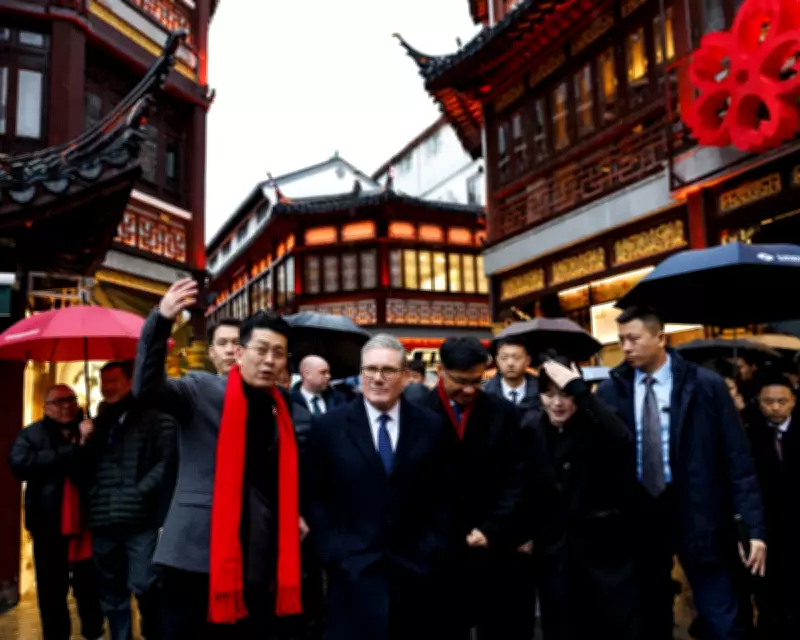
Keir Starmer has visited the historic Huxinting tea house in Shanghai's Yu Yaun Gardens during his significant diplomatic trip to China. The British prime minister's journey represents a deliberate effort to warm relations between the two nations after what he has previously described as an "ice age" in bilateral ties.
A Delicate Diplomatic Balancing Act
The prime minister's approach demonstrates careful navigation between potential economic rewards and substantial security concerns. While China represents the world's second-largest economy and offers valuable opportunities for a growth-seeking Britain, recent years have seen serious tensions including accusations of espionage, cyber-attacks, and aggressive trade practices.
Starmer's visit marks the first by a British prime minister since Theresa May's 2018 trip, during which security concerns were so heightened that officials reportedly advised dressing under bedcovers to avoid potential hidden cameras. The current prime minister has adopted a more measured stance, acknowledging security risks while pursuing diplomatic engagement.

Ceremonial Welcome and Substantive Discussions
The Chinese government extended significant diplomatic courtesies to Starmer, including a ceremonial welcome, military march-past, and lavish banquet. Most importantly, the prime minister secured more than three hours of discussions with President Xi Jinping, a crucial element for any meaningful progress in UK-China relations.
British officials have suggested that the UK's recent approval of a new Chinese mega-embassy in London helped facilitate the visit, though they stress this decision involved no political involvement. The diplomatic groundwork appears to have created conditions for substantive engagement.
Tangible Outcomes and Future Prospects
The visit yielded several concrete agreements, including a visa waiver arrangement, reductions to whisky tariffs, and commitments for British investment in China. Perhaps most significantly, the two nations signed ten different agreements that British officials describe as "jam tomorrow" deals – promising future benefits rather than immediate results.
Trade Secretary Peter Kyle emphasized that "this trip is just the start" of a more sophisticated relationship between the UK and China. However, this sophistication requires careful management to avoid repeating what some critics call a problematic "golden age" of relations that overlooked Beijing's aggressive international behavior.
Addressing Human Rights Concerns
Prior to his departure, Starmer committed to raising difficult issues during his discussions with Chinese leaders. The prime minister followed through on this promise, addressing the cases of pro-democracy activist Jimmy Lai and the persecuted Uyghur community. While the immediate impact of these discussions remains uncertain, they represent an important diplomatic stance.
One clear breakthrough emerged from the talks: China agreed to lift sanctions from six serving British parliamentarians, a significant gesture that may signal willingness to improve parliamentary relations between the two nations.
International Context and Domestic Challenges
Starmer's diplomatic efforts occur within a complex international landscape. Former US President Donald Trump has characterized the UK's engagement with China as "very dangerous," highlighting the delicate position Britain occupies between its traditional ally and the emerging superpower.
Meanwhile, the prime minister faces substantial domestic challenges upon his return. While he appears comfortable and effective on the international stage, his team recognizes that domestic perceptions often contrast sharply with this diplomatic confidence. Leadership speculation, though temporarily subdued during his overseas trip, continues to simmer beneath the surface of British politics.
As Starmer prepares to return to Westminster, he carries with him both the confidence boost from successful diplomatic engagement and the sobering reality of domestic political challenges. The ultimate test will be whether he can translate international diplomatic progress into sustainable policy achievements at home, navigating what promises to be a difficult political landing in the coming weeks and months.






