

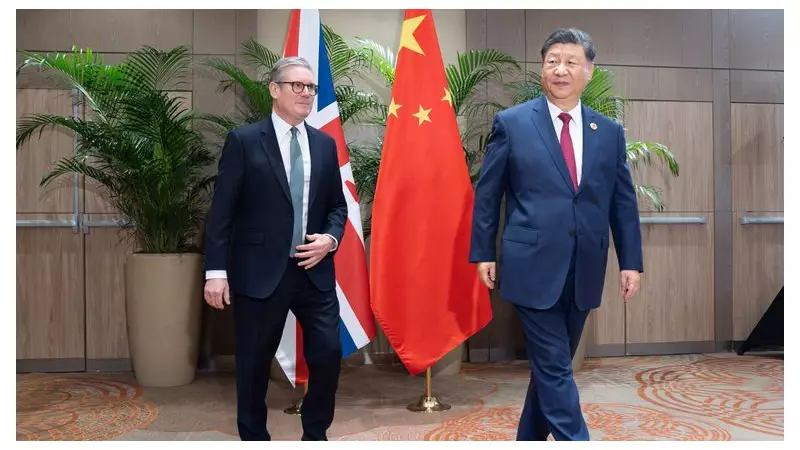
Sir Keir Starmer's Diplomatic Mission to China: Navigating Trade, Security and Human Rights
Prime Minister Sir Keir Starmer's visit to China represents a significant diplomatic endeavour, occurring a decade after the so-called "golden era" of UK-China relations symbolised by former Prime Minister David Cameron sharing a pint with Chinese leader Xi Jinping in a Buckinghamshire pub. Much has transformed since that 2015 photo opportunity, with bilateral ties experiencing a notable downward spiral. China has grown more self-sufficient, assertive, and wary of Western nations, while the UK has exhibited a decade of inconsistent China policy characterised by limited engagement and a lack of coherent strategy. Indeed, the last prime ministerial visit to Beijing was Theresa May's trip eight years ago, underscoring the prolonged diplomatic hiatus.
Revamping Relations Amid Public Skepticism
Sir Keir Starmer has articulated a clear intention to cautiously revamp UK-China relations, asserting that disengaging from the world's second-largest economy is "no choice at all." However, this diplomatic balancing act presents considerable challenges. The prime minister must navigate potential economic gains against a backdrop of heightened public skepticism toward China, driven by human rights crackdowns, increased military assertiveness, and the lingering impacts of the COVID-19 pandemic. Critics are poised to scrutinise any perceived softness, making it imperative for Starmer to demonstrate strategic acumen without appearing overly conciliatory.
Trade and Investment: A Priority Agenda
Trade and investment will undoubtedly dominate discussions during Starmer's visit, as evidenced by his accompaniment of a substantial UK business delegation. The complementary economic strengths of both nations offer mutual benefits: the UK excels in exporting services such as legal, financial, accounting, and education sectors, with tens of thousands of Chinese students attending British universities. Conversely, the UK primarily imports manufactured goods from China, including electronics, technology, and clothing.

While a comprehensive trade agreement remains politically fraught and years away, observers anticipate focused deals aimed at enhancing market access, eliminating non-tariff barriers, and fostering cooperation in pivotal sectors like renewable energy. Both countries are also likely to explore strategies to hedge against their dominant trading partner, the United States, whose recent unpredictability has prompted reassessments of global economic alliances.
National Security and Espionage Concerns
National security and espionage represent formidable obstacles in the UK-China relationship, often described as the "elephant in the room." Starmer must exercise extreme caution to ensure that any agreements do not expose the UK to vulnerabilities. Recent allegations of Chinese state actors cultivating relationships with influential figures in British public life, including a notable case involving a businessman linked to Andrew Mountbatten-Windsor, have amplified these concerns.
The head of GCHQ has characterised China as an "epoch-defining challenge," highlighting its sophisticated espionage and influence networks. Although these issues may not be explicitly addressed in formal talks, Starmer must remain vigilant about both the reality and optics of security risks. This is particularly pertinent following the controversial approval of a new Chinese "mega embassy" in London, which critics argue could serve as a base for espionage activities and jeopardise critical communication infrastructure.
Thorny Issues and Diplomatic Stumbling Blocks
The discussions will inevitably confront a range of contentious issues where UK and Chinese positions fundamentally diverge. Starmer is expected to raise Russia's war in Ukraine, urging President Xi to leverage influence with Vladimir Putin to halt hostilities. China has maintained a stance of neutrality while providing financial, component, and diplomatic support to Russia, making this a delicate topic.

President Xi may counter by emphasising Taiwan, which China regards as an integral territory and insists the West should not interfere with. However, the most pressing human rights case likely to be tabled is that of Jimmy Lai, the imprisoned British citizen and former media tycoon who is a prominent pro-democracy voice in Hong Kong. The UK views his conviction on national security charges as politically motivated, and Starmer faces the daunting task of advocating for his release amidst China's rigid judicial framework.
China's Strategic Perspective and Geopolitical Calculations
From China's vantage point, the UK is not a predominant player in its geopolitical landscape, ranking outside its top ten trading partners and perceived as overly aligned with the United States. Unlike many European counterparts, the UK has not pursued substantial overtures in recent years, diminishing its influence. Nevertheless, Starmer's visit presents a significant political opportunity for China, especially following Donald Trump's disruptive threats toward Europe, which have prompted some nations to reconsider their alliances.
China aims to capitalise on this moment by portraying itself as a reliable global superpower, contrasting with Trump's fracturing of transatlantic relations. Gestures of goodwill, such as potential visa-free travel for British citizens, may be extended to reinforce this narrative. However, China will steadfastly pursue its long-term strategic interests, refusing to concede on core issues and aggressively advancing its agenda within the evolving geopolitical context. The visit thus encapsulates a complex interplay of economic pragmatism, security dilemmas, and ideological divides, testing Starmer's diplomatic prowess on the world stage.





