

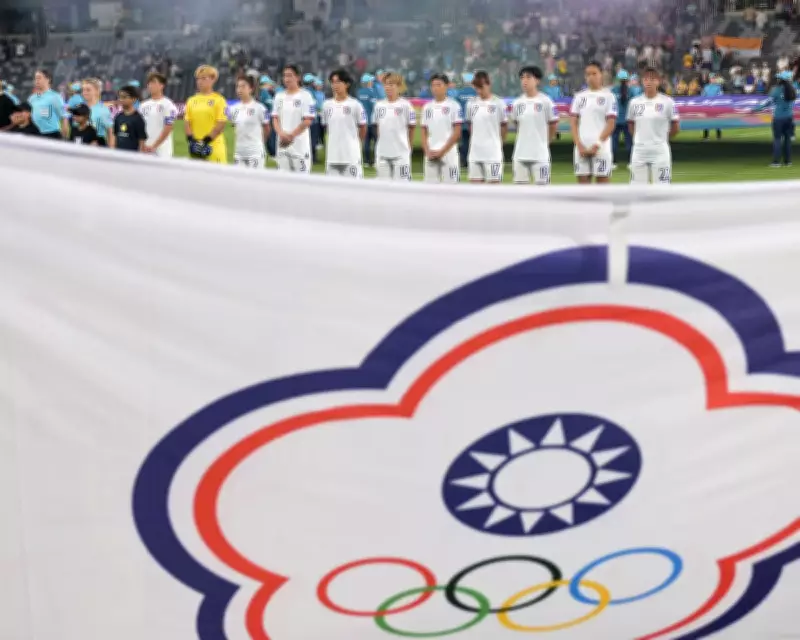
Taiwan Chant Controversy at Women's Asian Cup Sparks Diplomatic Tensions
A recent incident at the Women's Asian Cup has reignited longstanding diplomatic tensions, as a political chant during a match involving Chinese Taipei drew sharp reactions from officials and fans alike. The event, which took place during a high-stakes football tournament, underscores the complex interplay between sports and international politics, particularly in the context of Taiwan's contested status.
Incident Details and Immediate Reactions
During a match at the Women's Asian Cup, supporters of the Chinese Taipei team were heard chanting slogans that referenced Taiwan's sovereignty, a move that quickly escalated into a diplomatic flashpoint. Chinese officials condemned the chant as a violation of the One-China principle, which asserts that Taiwan is an inalienable part of China. In response, Taiwanese representatives defended the expression of national identity, arguing that sports should be a platform for cultural representation free from political interference.
The controversy has prompted swift reactions from football governing bodies, with calls for stricter enforcement of apolitical conduct at international sporting events. Fans and analysts have noted that such incidents are not isolated, reflecting broader geopolitical struggles that often spill over into the world of athletics.

Historical Context and Ongoing Disputes
This incident is rooted in decades of diplomatic friction over Taiwan's status. Since the Chinese Civil War, Taiwan has operated as a self-governing entity, but China claims it as a province. In international sports, Taiwan competes under the name "Chinese Taipei" to navigate these tensions, a compromise that has often been tested by moments like this chant controversy.
Past events, such as the Olympics and other Asian Cup tournaments, have seen similar clashes, where symbols or chants related to Taiwan's independence have led to protests and official complaints. The Women's Asian Cup case highlights how football arenas can become arenas for political expression, challenging the notion of sports as a neutral ground.
Implications for Future Sporting Events
The fallout from this controversy raises questions about the future of international sports diplomacy. Organizers may face increased pressure to implement clearer guidelines on political expressions, balancing freedom of speech with the need to maintain event neutrality. For teams like Chinese Taipei, navigating these waters will require careful diplomacy to avoid sanctions or boycotts.
Moreover, this incident could influence fan behavior and security measures at upcoming tournaments, as authorities seek to prevent similar disruptions. The broader impact on Taiwan-China relations remains to be seen, but it underscores how sports can amplify geopolitical tensions in unexpected ways.






