

Thailand and Cambodia have formally commenced high-stakes negotiations aimed at halting a series of deadly military confrontations along their shared border. The urgent diplomatic move follows a significant escalation in violence linked to a long-standing territorial dispute surrounding the ancient Preah Vihear temple.
Roots of the Conflict: A Temple Dispute Reignites
The immediate trigger for the recent hostilities was a disagreement over the venue for a planned meeting between military commanders. Cambodian officials insisted the talks be held on its side of the border, a condition rejected by Thailand. This procedural stalemate quickly spiralled into armed conflict, resulting in at least seven reported fatalities and dozens more injured among military personnel from both nations.
This latest violence is a severe flare-up of a dispute that has simmered for decades. The core issue centres on the sovereignty of the land surrounding the 11th-century Preah Vihear temple, a UNESCO World Heritage site. While the International Court of Justice awarded the temple itself to Cambodia in 1962, the adjacent territory has remained a contentious and heavily militarised zone.

Diplomatic Channels Open Amidst Tension
In response to the crisis, diplomatic efforts have been swiftly activated. The current talks are being facilitated by Indonesia, which chairs the Association of Southeast Asian Nations (ASEAN) this year. This intervention underscores the regional concern over the instability. A spokesperson for the Thai foreign ministry confirmed that discussions are now underway, with the primary objective being an immediate cessation of hostilities and a mutual troop withdrawal from the contested area.
Analysts note that domestic political pressures within both countries are influencing the standoff. The situation presents a critical test for ASEAN's principle of non-interference and its ability to mediate conflicts between its own member states. The international community, including neighbouring Vietnam, has issued calls for maximum restraint and a peaceful resolution.
Pathways to Peace and Regional Implications
The success of the nascent negotiations is far from guaranteed. Key hurdles include establishing a verifiable ceasefire mechanism and agreeing on a permanent framework for border security. Previous agreements have broken down, leading to cycles of violence, most notably in 2008 and 2011. A lasting solution would likely require renewed bilateral border demarcation efforts, potentially with third-party observers.
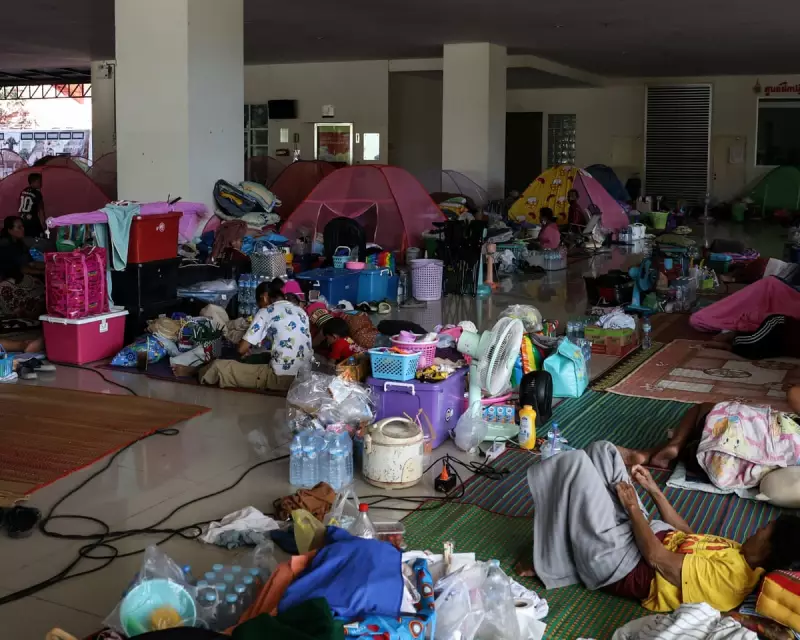
The economic and human cost of the clashes is mounting. Beyond the military casualties, the fighting has displaced local villagers and threatens to disrupt trade and tourism in the border region. The outcome of these talks will be closely watched as a barometer for broader security and diplomatic cooperation in Southeast Asia. A failure to de-escalate risks a prolonged military stalemate with the potential for further, more widespread conflict.
For now, the opening of dialogue provides a fragile hope for stability. The coming days will be crucial in determining whether both nations can step back from the brink and commit to a durable diplomatic solution over contested ground that has claimed too many lives.






