

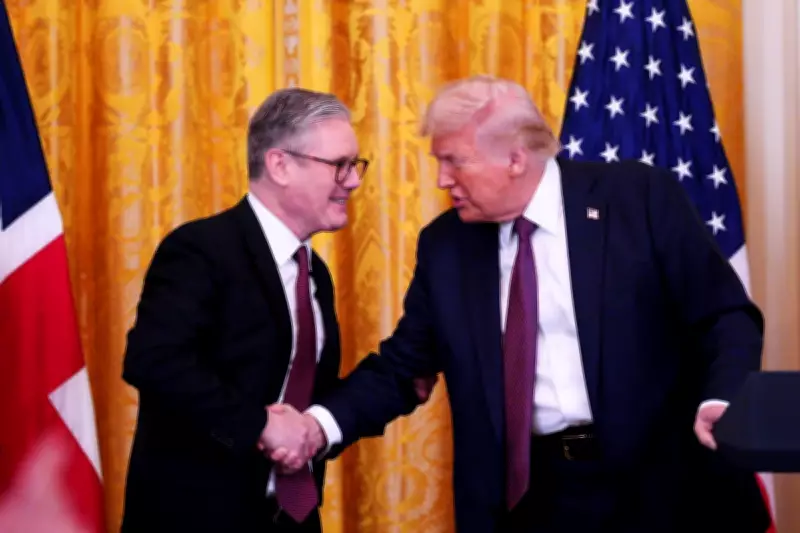
Trump's Scapegoat Search Targets Starmer Amid Iran Escalation
President Donald Trump's established pattern of deflecting responsibility – what observers call Trump Always Blames Others (TABO) – is now turning toward international allies as the Iran crisis deepens. With energy prices climbing, the strategic Strait of Hormuz effectively closed, Tehran's regime holding firm, and US midterm elections approaching, the American president appears to be hunting for someone to blame for what looks like a deteriorating situation.
Starmer's Principled Stand Makes UK a Likely Target
Prime Minister Keir Starmer's decision to keep Britain out of direct conflict with Iran and deny US forces access to British military bases, while legally sound and domestically popular, perfectly positions him as Trump's potential scapegoat. The UK leader's stance, supported by international law, British public opinion, and Labour MPs, nevertheless contradicts Trump's escalating demands for allied military involvement.
The Trump administration continues to prioritize reopening the Strait of Hormuz, making conflict with Iran a central political objective. Consequently, US allies should brace for intensified pressure and public criticism for what Washington perceives as insufficient commitment.

Trump's Playbook: Burden-Shifting to Allies
Following his established methodology, Trump is expected to demand that NATO members and energy-importing nations like the United Kingdom assume greater responsibility for securing the vital waterway. The argument will grow increasingly vocal: as American forces expend billions intercepting drones and missiles while suffering casualties, allies cannot simply free-ride on US military might to ensure their energy access.
This pressure campaign has already commenced. Trump has publicly called on Starmer to deploy British naval vessels to the Strait of Hormuz, despite recent operational challenges that saw a Royal Navy ship require over two weeks to reach a British base under attack due to contractor disputes about work-life balance.
British Hopes for Reasonable Engagement Likely Futile
Many in Whitehall wonder whether Trump might acknowledge Britain's constraints and Europe's expanding defense commitments elsewhere – often undertaken at American urging. Some recall the state visit and hope for diplomatic consideration. Others more realistically question whether Trump will suddenly transform into a different leader entirely.
The sober assessment suggests such hopes are misplaced. As one observer noted regarding expectations of presidential reasonableness: "Good luck, as they say, with that."
Broader Policy Observations from Michael Martins
The analysis extends beyond immediate geopolitical tensions to domestic policy considerations. Martins argues that the Department for Business and Trade deserves recognition as a Great Office of State, giving risk-takers, employers, and investors equal standing with more politically charged portfolios.
On judicial reform, he advocates paying jurors, particularly self-employed individuals, noting the contradiction in providing untested benefits while expecting citizens to serve unpaid in this fundamental justice system component.
Regarding military efficiency, Martins questions UK defense spending after Iran demonstrated how inexpensive equipment and training can prove devastatingly effective. He cites the Ministry of Defence spending £250,000 to train just five drone pilots compared to Ukraine's more cost-effective mass training programs.
Finally, he draws parallels between Michael Crichton's Jurassic Park and contemporary AI debates, noting similar narratives of created beings developing consciousness, exaggerated promises to attract investment, and apocalyptic fears that ultimately prove manageable.






