

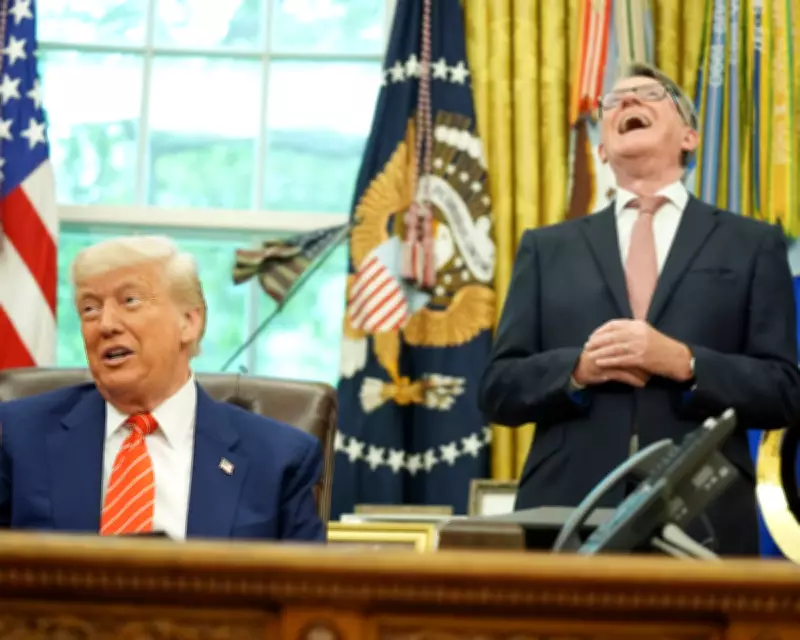
Trump Administration Attempted to Block Mandelson's US Ambassador Appointment
According to recent reports, Donald Trump's presidential transition team made repeated efforts to interfere with UK Prime Minister Keir Starmer's decision to appoint Peter Mandelson as the ambassador to the United States. The intervention, which occurred during the critical period of government transition, highlights the tensions and behind-the-scenes maneuvering in international diplomatic appointments.
Direct Intervention from Trump's Aides
Politico reported this morning that Trump's aides communicated on more than one occasion with Starmer's national security adviser and former chief of staff, Morgan McSweeney. They explicitly expressed a preference for Mandelson's predecessor, Karen Pierce, to remain in the position. This message was reportedly conveyed during a meeting in Palm Beach in December 2024, as per a source close to the president.
Later in the same month, the transition team escalated their concerns by calling Powell to voice their dissatisfaction with Pierce's treatment and their opposition to Mandelson's appointment. Trump's aides were particularly agitated by Mandelson's past public remarks that disparaged the president, according to officials familiar with the matter.

Internal Opposition and Mandelson's Downfall
Susie Wiles, Trump's chief of staff, is understood to be among those unhappy with Mandelson's appointment. One source described her view of Mandelson as "arrogant" and noted his rudeness to staff. Despite these objections, Mandelson was initially appointed but ultimately sacked just nine months into the job. His dismissal came after new details emerged about his ties to Jeffrey Epstein, the convicted child sex offender.
In February, released files revealed that Mandelson, while serving as business secretary, had passed information to Epstein, including market-sensitive data that sparked a criminal investigation. This scandal compounded the political friction surrounding his appointment.
Broader Political Context and Other Developments
In other related news, Donald Trump created an awkward moment with Japan's Prime Minister Sanae Takaichi in the Oval Office. When asked by a Japanese reporter about the US attacking Iran without warning allies like Japan, Trump joked about Imperial Japan's surprise attack on Pearl Harbor in 1941. Takaichi later explained that Japan's ability to deploy military forces overseas, as Trump desires, is still limited by the post-World War II constitution drafted by the United States.
Additionally, a federal arts commission approved the final design for a 24-karat gold commemorative coin bearing Trump's image to celebrate the US's 250th birthday on July 4. The John F. Kennedy Presidential Library Foundation announced it is awarding Profile in Courage awards to staunch opponents of Trump, including Federal Reserve Chair Jerome Powell and the people of the Twin Cities in Minnesota.
Senator Thom Tillis, a North Carolina Republican who has shown willingness to cross Trump since announcing he will not run for re-election, stated he will not vote to eliminate the filibuster to force changes to US election law. These events underscore the ongoing political divisions and diplomatic complexities in US-UK relations and broader international affairs.






